You're a facilities director, architect, or maybe the guy who drew the short straw to fix the campus wayfinding system. I get it. You've got buildings from 1962 next to a glass box from 2019. You've got freshmen who can't find the dining hall and maintenance staff who can't find the electrical panel. The last sign vendor sold you aluminum letters that started fading after two winters. Here's the ugly truth: most signage companies don't know the difference between a student union and a storage shed. They're selling chrome and buzzwords. I'm selling something that works for 15 years.
School and university campus signage isn't a brochure. It's a battle against UV rays, 18-year-olds on skateboards, budget committees, and Americans with Disabilities Act requirements that have teeth. I've built signs for Shanghai's top high school and a community college in Ohio that needed 300 identical building IDs. The same problems pop up everywhere: materials that yellow, LEDs that die mid-semester, and wayfinding systems that make more sense on paper than in snow.
Here's what nobody tells you: wayfinding is not about design. It's about psychology and logistics. You need signage that works from 50 feet away and convinces a tired student that the math building is to the left, not up the hill. The biggest mistake I see is overcomplicating color-coding. You don't need 17 custom Pantone shades. You need three. Entrance. Primary path. Destination. That's it.
Modular signage systems sound great. Slap on new panels when the bookstore moves to the old gym. But here's the catch: modular means joints. Joints collect water. Water freezes. Ice expands. Aluminum cracks. I've seen it a dozen times. If you're going modular, spec stainless steel 304 with silicone-sealed seams. For a school in Michigan, use 316 marine grade on anything ground-level. The salt from snow melt eats aluminum like candy. That's a $5,000 mistake you don't make twice.
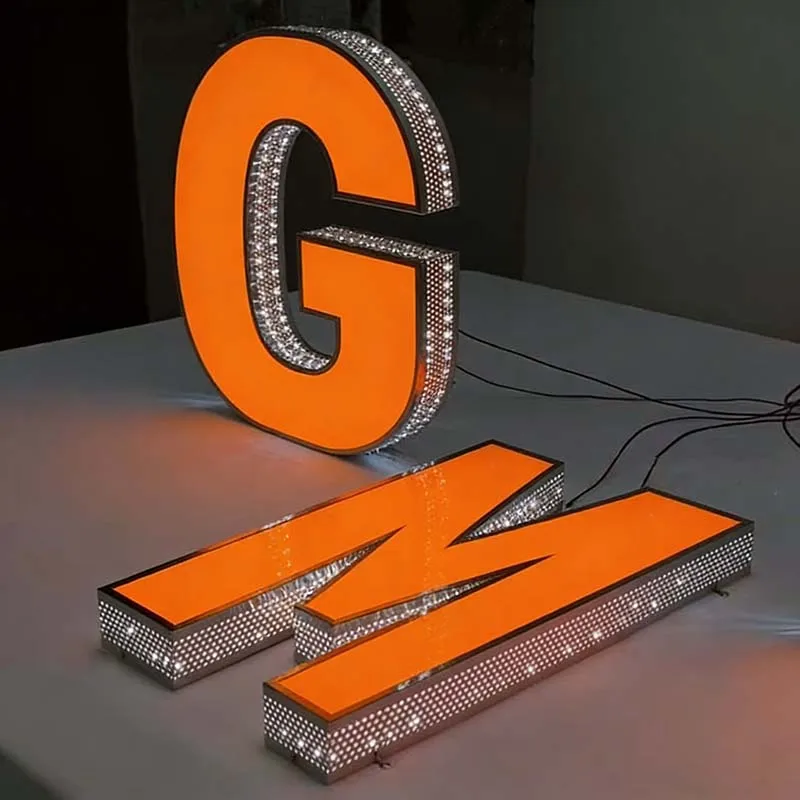
Let's talk building IDs. The ones that say "Smith Hall" in 8-inch brushed aluminum with backlit acrylic faces. They're the most visible signs on campus. And the most abused. I've replaced letters on a science building that took a direct hit from a lacrosse ball. Twice. Here's the hard fact: for outdoor building IDs on a university campus, never use domestic acrylic. You need Mitsubishi or Degussa acrylic with UV resistance rated for 5-8 years. The cheap domestic stuff yellows in 12-18 months. I've seen it turn the color of a nicotine addict's thumb.
The ugly truth is that most campus sign specs call for 2mm acrylic faces to save money. That's fine for a 20-inch letter. For a 36-inch building ID, that 2mm face warps in direct sun after two summers. Step up to 3mm or 5mm if the sign is over 2.5 meters tall. The extra 2% light loss from 3mm acrylic (92% transmission vs 90% for 2mm) is invisible to the human eye. The 40% material cost bump? Actually cheaper than replacing warped faces every four years.
I've watched a facilities manager pay $800 for a single channel letter from a domestic shop. My factory in Anhui, China ships that same 304 stainless letter with Samsung SMD 2835 LEDs (100-150 lm/W, L70 rated for 50,000 hours) for $120. That's not a hack. That's how supply chains work. You pay 50-65% less, get a 2-year LED warranty and 1-year power supply warranty, and the sign shows up in about 5-15 days. The only catch is you need to spec the right LEDs. Cheap modules die in 12-18 months. Quality ones — Osram, Samsung, or Bluish — run 5+ years. I've pulled dead modules out of a job where the buyer went with the bottom-dollar supplier. Every single solder joint was dull gray. Signs for college. We test every batch in an 8-12 hour aging cycle before it leaves the factory. You can't do that with a $12/hr helper.
Look, you can have the perfect sign in a crate. But if your installation team doesn't know that historic brick from 1908 crumbles under a hammer drill, you're in trouble. Or that the new glass atrium reflects direct sunlight that bakes acrylic letters from the inside. Or that the dormitory entrance floods every spring because some genius put the sign at grade instead of flood level.
Here's what I've seen go wrong: a university in Virginia bought 80 backlit halo letters for a new engineering building. Stainless steel, acrylic faces, IP65 rated. Installed on a wall that faced west. Two years later, the LEDs were half dead because the afternoon sun turned the interior into an oven. The installer didn't check the thermal specs. 2835 LEDs run fine up to 85°C. But inside a sealed steel letter with direct sun? You're baking at 110°C. They had to retrofit ventilation holes. That's a $14,000 tuition, of the school's money. Don't be that school.
Another one: ADA compliance. NEC Article 600 means every electrical sign has to be grounded and bonded. And ADA requires tactile signs at 48-60 inches mounting height with Grade 2 Braille and non-glare finishes. But every campus has a historic building with a 30-inch stone wall. You can't drill into that. So you surface-mount on a post or a decorative bracket. I've done 47 signs for a Gothic quad where every mounting point had to be field-fabricated from 304 stainless. Plan for that. Don't assume your vendor includes custom brackets in the quote. Ask. If they say "we usually..." hammer them for a detailed line item.
The ugliest truth in campus signage is that most decision-makers compare initial invoice prices and ignore total cost of ownership. That $40 aluminum letter from a local shop? It's 1.0mm aluminum with a 5-year outdoor life. Replace it twice in 10 years. That's $80 plus labor. My factory-direct 1.5mm 304 stainless steel letter costs $55. It lasts 10+ years. You save $25 per letter over the decade. For a campus with 200 building IDs? That's $5,000.
I've seen a school spend $45,000 on a wayfinding system from a domestic fabricator. Same spec from a reliable overseas partner: $18,000 plus $2,000 shipping (sea freight about 65 days at $200/m³ for LCL, or air freight at $4-12/kg if you're in a hurry). The difference pays for a new roof on the sign shop. Seriously, I'm not exaggerating. The only real caveat is shipping damage. LCL crates get handled 6-8 times between dock and campus. But if you pay for plywood crates and foam inserts — we do it standard — and insist on shrink-wrapping, damage rates drop below 2%. I've shipped over 500 signs worldwide. Lost exactly one to a forklift through the crate. That's a claim, not a nightmare.
Then there's certification. Some buyers think UL means the sign is bombproof. UL 48 for electric signs costs $4,000-15,000 and takes 4-9 months. Most Chinese factories don't have it. We don't either for every sign — we do CE, RoHS, and ISO 9001. UL makes sense if you're a US distributor selling to a chain. But for a university? The local inspector will accept CE and a letter from the manufacturer stating compliance with NEC. I've done it a hundred times. Just ask the factory for the certificate. If they can't produce it with today's date, walk away.
Q: How long does a campus wayfinding sign really last?
Depends on what you buy. 304 stainless with quality LEDs (Samsung or Osram) and UV-stable acrylic: 10-15 years outdoors, easy. Aluminum with cheap LEDs: 4-6 years before fading and dead diodes. A 2mm domestic acrylic face? Yellowing in 18 months. Sorry, that's the difference between $30 and $80 per letter. You get what you spec, not what you hope for.
Q: Can I order just one sign for a single building? MOQ is a myth, right?
Wrong. Most factories have a minimum order quantity. But my place does MOQ of 1 piece. I literally shipped one 12-inch channel letter to a school in Texas last month. Cost more in shipping than the sign. But yes, you can. And no, you don't need to order 500 identical signs unless you're rebranding the whole system. For a single building ID, expect lead time about 5-15 days, plus shipping. Air freight will get it there in about 10 days. Sea freight is only for quantity orders under 1 cubic meter — it's not worth it for one letter.
Q: Should I spec 316 stainless for a coastal campus building sign?
If the building is within a mile of saltwater, yes. 316 marine grade has 2-3% molybdenum that resists chloride pitting. Cost premium is 20-30% over 304. For a campus in Miami or San Diego, it's not optional. For a landlocked university in Kansas, 304 is fine. I've replaced 304 signs on a Florida campus that corroded in 4 years. The maintenance guy called me yelling. I told him to read the spec sheet. He didn't. Now he does.
Q: Can you make signs that look like solid brass but don't cost a fortune?
Yeah, through PVD coating on stainless steel. You get a brass finish that doesn't tarnish, no maintenance, and you're not paying $400 per letter for actual brass. We do PVD on 304 stainless all the time. Works for alumni-funded projects where they want old-money aesthetics without the budget. Just don't put it next to real brass — experienced donors will see the difference from 20 feet. But for wayfinding? No one cares. They want to find the bathroom.

Real photo from our production floor — every sign we ship is made here.
Products mentioned or relevant to this topic — factory-direct, custom built.
From $24/letter · MOQ 1 piece · Flexible lead time · CE & UL certified · ships to 20+ countries
Custom sizes, colors, and finishes. Get a factory price in 24 hours.
Get a Free Quote Copy EmailWhatsApp +86 13865703472 · business@aochuangsign.cn
See pricing, specs, and get a free quote for the sign type you need. Built in our factory, shipped worldwide.