I've burned my hands on hot acrylic and argued with LED suppliers about binning since 2010. A sign factory isn't magic — it's a series of boring, critical steps done right or done cheap. I work at Aochuang Sign in Lu'an, Anhui, China. We run a 3,000m² facility with 50-plus skilled workers. We've shipped to every continent except Antarctica. We've seen every rookie mistake a buyer can make.
Nobody tells you this: the difference between a good sign factory and a bad one isn't the equipment. The real difference? Whether anyone bothers to calibrate it.
Our 10-step production process doesn't have a single secret. Design confirmation takes 1 day. Laser cutting runs ±0.1mm and takes 1-2 days. Then TIG welding, grinding, polishing, CNC acrylic forming, LED assembly, sealing with neutral silicone. Every sign sits through an 8-12 hour aging test before QC checks 100% of the order. Total lead time: about 5-15 days, not 3 weeks, not "whenever."
I've watched buyers get burned because they never asked about the aging test. A sign that works at 4pm on a Friday might fail at 2am on a Tuesday. The aging test catches that. Ask your factory if they run one. If they pause, you've got your answer. Walk away.
MOQ is 1 piece. We don't play games with minimum orders. If you need one front-lit letter for a test project, we'll make it. That's not a favor — that's how we earn your next 500.
The ugly truth? Most sign buyers overpay for materials they don't need, then cheap out on the ones they do.
Acrylic is the easiest place to spot this. UV-resistant acrylic from Mitsubishi or Degussa keeps its clarity for 5-8 years outdoors. Domestic acrylic? 1-2 years before it yellows like an old newspaper. We use the good stuff. A sign that looks tired after 18 months kills your reputation. If you're ordering acrylic LED letters for an exterior wall, demand Mitsubishi or Degussa by name. Don't accept "imported grade" — that's not a spec, it's a shrug.
One more fact on acrylic: a 3mm face cuts 92% light output. A 2mm face cuts 90%. Your customer won't notice the 2% difference. They will notice the 40% cost bump if you spec 3mm where 2mm works. Use 5mm or thicker only when the letter height exceeds 2.5 meters. Flex and wind load become real.
Stainless steel is where people get lied to most. 304 stainless steel has 18% chromium and 8% nickel. You'll get 10-plus years outdoors in Ohio or Georgia. 316 stainless adds 2-3% molybdenum and survives 15-plus years in salt air. 316 costs 20-30% more. For a strip mall in Ohio, 304 is fine. For Miami Beach, pay for 316 or you're replacing letters in 3 years.
I've seen sign shops pay $800 for a front-lit letter from a domestic fabricator. Same 304 stainless, same Samsung LEDs. We ship that letter for $120.
Aluminum weighs one-third of steel, lasts 8-12 years outdoors, and doesn't rust. Ever. If someone sells you steel for a coastal sign because "aluminum is weak," walk away. They're either clueless or clearing inventory.
Factory prices are not landed costs. Repeat that until it sinks in.
A front-lit channel letter runs $20-80 per letter at factory price. A back-lit halo letter runs $35-120. Stainless steel non-lit letters start at $15-40. In the US, retail installed prices hit $200-700 per front-lit letter and $400-1,000 for halo-lit. That's a 50-65% savings on product, but only if you know the real landed math.
Nobody tells you this: your actual cost is product + shipping + tariff + broker fees + rework reserve. For a small batch, express shipping is $30-100 and takes about 5-15 days. Air freight runs $4-12 per kg and lands in about 10 days. Sea freight LCL costs $80-200 per cubic meter but takes about 65 days. Section 301 tariffs add roughly 30% on US imports. Brokers take their cut. And you should always set aside 3-5% for rework or transit damage.
If your quote doesn't account for those, you're lying to yourself.
I've watched sign shops blow their entire margin because they compared factory unit price to domestic unit price and ignored the freight container sitting at customs. Do the landed cost spreadsheet before you order. Your accountant will thank you.
Look, you can't fly to Anhui every time you order. But you can ask five questions that separate a real factory from a trading company with a nice website.
First, ask for a video of the CNC machine running your file. Not a stock video — your actual DXF file with your order number on the screen. If they can't do that, they don't have a CNC machine. We cut acrylic and metal on CNC every day. That's not a state secret.
Second, ask about LED module binning. Quality factories buy modules in batches with consistent color temperature and brightness. Cheap factories grab whatever's on the shelf. You'll see the result as a sign that looks pink on one letter and blue on the next.
Third, ask about paint booth conditions. Powder coating in a dusty corner produces fish eyes and orange peel. A clean, ventilated booth with curing temperature logs is a must for a finish that lasts.
Fourth, ask to see the CE certificate with today's date. CE marking costs 20,000-50,000 RMB and takes 2-8 weeks. Most factories will say they have it. Ask for the certificate with today's date and watch them sweat. We hold CE, RoHS, and ISO 9001. You can verify all of them. If a factory gets defensive, move on.
I've seen this go wrong: a buyer ordered 200 signs from a "factory" that was actually a middleman. The signs arrived with no IP65 sealing, rusty steel backs, and LEDs that died in four months. The buyer lost $40,000. The middleman couldn't produce a single photo of their welding station. That was the red flag. Ask for photos of the specific work area, not the showroom.
And don't worship IP ratings. IP65 means dust-tight and protected from water jets from any direction. That doesn't mean your sign survives a Florida hurricane. For coastal or industrial exposure, spec IP66 or IP68. If your factory can't tell you the difference, that's a problem.
The quickest way to spot bad LED modules is to look at the solder joints. Dull gray solder won't last 18 months. Shiny silver is proper lead-free solder. That's not a secret — it's basic electronics. But cheap factories will show you the pretty acrylic face and hope you never open the back panel.
Here are the LED specs that actually matter. SMD 2835 modules produce 100-150 lumens per watt and are the workhorses for channel letters. SMD 5050 is RGB-capable — good for color-changing signs, but less efficient for white light. SMD 5730 pushes 40-60 lumens per chip and gives the highest brightness for large-format signs.
Quality modules from Samsung, Osram, or Blueview last 5-plus years in real outdoor conditions. Cheap modules die in 12-18 months.
I've had suppliers tell me their no-name LEDs are "just as good as Samsung." Then the binning report shows 30% variance in color temperature and the lumen output drops 20% after six months. Do you want to explain that to your customer in February? Me neither.
If you're doing an RGB project, make sure the driver is matched to the module type. Ask for a DMX compatibility sheet if you're running animations. We handle color-changing acrylic letters with proper DMX programming, not some toy controller that flickers after three weeks.
Warranty is not a marketing line. We give 2 years on LED modules and 1 year on power supplies. That's real. If a factory offers 5 years on cheap modules, ask what happens in month 37 when half the letters are dim. You'll get silence.
Nobody tells you this: LCL sea freight means your crate gets handled 6-8 times between our dock and yours. Every touch is a chance for damage. That's not in the brochure.
We pack every sign in foam, then a double-wall carton, then a plywood crate. That costs more than shrink wrap and bubble wrap. But your letters arrive without bent corners and cracked acrylic.
If your factory doesn't use plywood crates for sea freight, budget for a 10% defect rate. I've seen entire orders arrive looking like they fell off the back of the truck because someone saved $40 on crating.
The ugly truth? Tariffs are now part of your landed cost and they won't go away just because you forgot them. US Section 301 tariffs on Chinese sign products run about 30%. That applies to the invoice value, not the final retail price. If your quote doesn't include tariff line items, you're going to get a call from your customs broker that ruins your afternoon.
Sea freight FCL runs $1,200-3,000 for a full container. LCL is $80-200 per cubic meter. For a small order, air freight at $4-12 per kg might actually be cheaper once you factor in warehousing and time. Do the math. Don't default to sea freight because it "feels cheaper."
I've seen this go wrong: a shop ordered 300 letters via LCL sea. The factory used a single-wall carton, and the crate got crushed. The buyer refused delivery at the port, but the factory had already been paid. The broker charged storage for two weeks. The whole mess cost more than the signs. Ask for photos of the pallet before it leaves the factory. We do that automatically now. If your factory won't send loading photos, find another factory.
What's your minimum order quantity?
One piece. We've said that for 15 years. One letter, one lightbox, one tiny acrylic sign. We don't have a sales rep inventing a minimum to inflate their commission. Order one. See the quality. Then talk about volume.
How long do LED signs really last?
Quality modules from Samsung or Osram with proper sealing and a real power supply will last 5-plus years before any noticeable dimming. Cheap modules: 12-18 months. The failure is never even — one letter goes dark, then another, then your customer calls you angry. The L70 rating on a module datasheet means 50,000 hours at 70% brightness. That's a lab number. Real weather knocks it down. Budget for 5 years of good life, not 10.
Is 304 stainless good enough for outdoor signs?
For 95% of the US, yes. 304 stainless lasts 10-plus years. 304 rusts only in one situation: you put it near salt water without regular cleaning. If you're within five miles of the coast or in an industrial zone with acid rain, use 316. 316 costs 20-30% more. Replacing rusted letters in 3 years costs 300% more. You do that math.
What's the real lead time?
about 5-15 days from final design approval to factory exit. That doesn't include shipping. Express adds about 5-15 days. Air adds about 10 days. Sea adds about 65 days. Customs delays? Extra. If a factory promises 3 days and you believe them, I have a bridge in Lu'an to sell you.
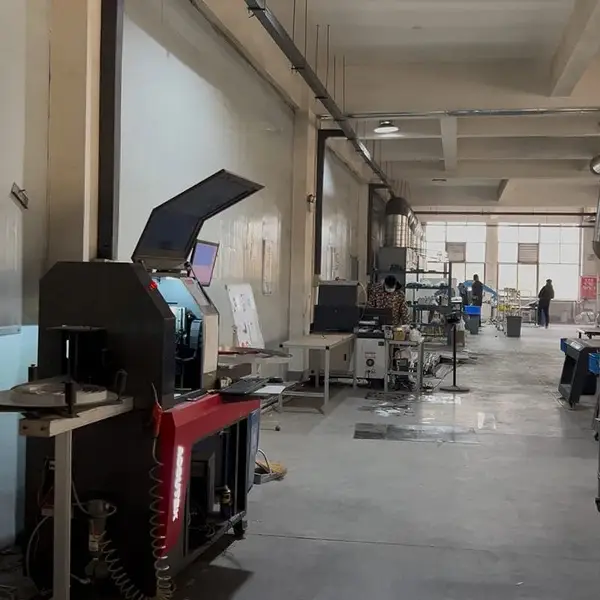
Real photo from our production floor — every sign we ship is made here.
Products mentioned or relevant to this topic — factory-direct, custom built.
From $24/letter · MOQ 1 piece · Flexible lead time · CE & UL certified · ships to 20+ countries
Custom sizes, colors, and finishes. Get a factory price in 24 hours.
Get a Free Quote Copy EmailWhatsApp +86 13865703472 · business@aochuangsign.cn