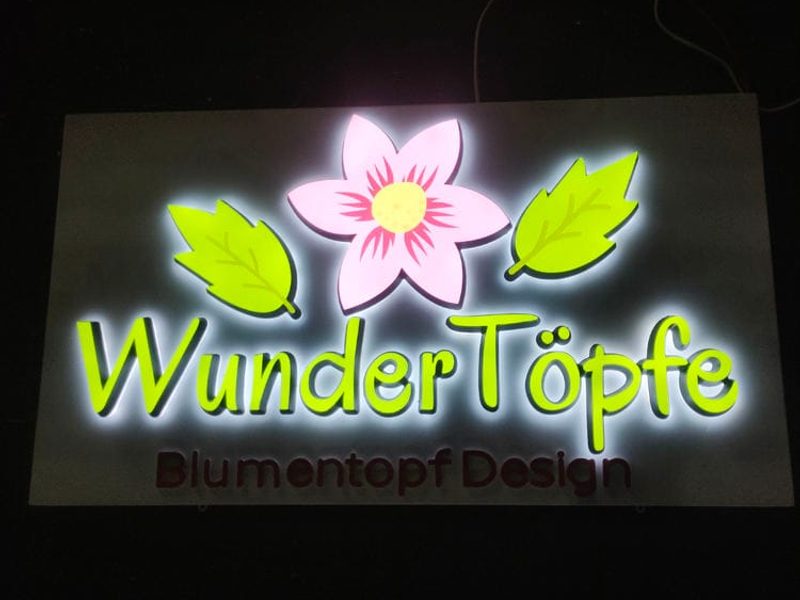
You've got a CFO who thinks signage is just "pretty letters on a wall." I've been explaining this for 12 years. The truth is, choosing the wrong material costs you real money—sometimes 3x what you budgeted, just in replacement and maintenance. This isn't about aesthetics. It's about total cost of ownership, supply chain risk, and lifetime value. Let's get into the numbers.
Acrylic – It's the most popular face material for lit signs. Here's the split nobody tells you: premium Japanese or German acrylic (Mitsubishi, Degussa) gives you 90-92% light transmittance and 5-8 years before yellowing. Domestic stuff? 1-2 years, max. I've walked into warehouses where the boss bragged about "saving 30% on acrylic." Three years later, every letter looked like a nicotine stain. That's a full replacement cost for 1–2 years of extra cheap material. Don't do it. For channel letters over 2.5m tall, you need 5mm acrylic—not 3mm—or you'll get flexing and cracking within a year.
Stainless steel – 304 vs 316 is the question. 304 has 18% chromium, 8% nickel, density 7.93 g/cm³. It's fine for 90% of inland applications—10+ years outdoors. But 316 contains 2-3% molybdenum. That makes it marine-grade, for coastal or industrial environments. The cost premium is 20-30% over 304. Here's where most new buyers mess up: they spec 304 for a Miami Beach storefront. Within 3 years, pitting corrosion makes the sign look like crap. That's a total redo. Pay the premium for 316 if you're within 10 miles of saltwater. For a strip mall in Ohio, 304 is overkill—save the money.
Aluminum – Weight is 1/3 of steel, outdoor life 8-12 years. Common thicknesses: 1.0-1.6mm. Finishes: anodized, powder coated, brushed. It's naturally rust-proof, but powder coating adds another 5 years. I use aluminum for frame structures and non-lit letters when budget is tight. It's not sexy, but it works. One caveat: thin aluminum (under 1.0mm) dents easily during shipping—LCL sea freight will punish it. Spec 1.2mm minimum for letters.
LED modules – Here's where the biggest lies live. Quality chips (Samsung, Osram, or branded like Lan Jing) give you L70 ≥50,000 hours—that's 5+ years real life. Cheap modules? 12-18 months, then half your sign goes dark. Quickest way to spot the difference: look at the solder joints. Dull gray means they cheaped out on lead-free solder. That module won't last 18 months. Shiny silver joints = proper manufacturing. Also: SMD 2835 is the workhorse (100-150 lm/W). SMD 5730 is brighter per chip (40-60 lm/chip) but less efficient. For outdoor channel letters, I spec 2835 with at least 120 lm/W. Anything less and you're paying for higher electricity over the sign's life.
I've watched sign shops pay $800 for a single front-lit letter from a domestic fabricator. Same 304 stainless, same Samsung LEDs. We ship that letter for $120. That's factory-direct from Aochuang Sign. Retails markups are insane because local shops have overhead—rent, salespeople, installers. But you're a procurement manager. You can go direct.
Here's what your boss will ask: "How much are we really saving after shipping and tariffs?" Fine. Let's break it down. Factory price per letter: front-lit channel letters $20-80, back-lit halo $35-120, stainless steel non-lit $15-40, 3D fabricated $40-120, aluminum $10-25. For a typical 10-letter storefront sign, that's $200-800 at factory cost. Domestic retail installed? $2,000-7,000 for the same thing. You're saving 50-65% on the product itself.
Shipping: Express courier for small signs (under 30kg) costs $30-100, takes 7-10 days. Air freight for medium signs: $4-12 per kg, about 10 days. Sea freight LCL: $80-200 per cubic meter, but it's about 65 days and your crate gets handled 6-8 times between our dock and yours. Every touch is a chance for damage—bent edges, scratched acrylic, loose modules. That's not in the brochure. For any sign over $1,500 factory cost, I insist on plywood crating and sea freight. Then I add 5% to my budget for minor touch-ups on arrival. You have to factor that in.
US Section 301 tariff: currently ~30% on Chinese-origin signage. So your $1,000 factory price becomes $1,300 landed before freight. Still way cheaper than domestic. But stay current on tariff codes—they change. I've seen buyers get hit with retroactive duties because they didn't check HTS codes. Painful.
Let me run a real scenario. You're opening 50 retail locations across the Southeast. Each needs a front-lit channel letter sign, 12 letters, 3mm acrylic with 304 stainless backs, Samsung LEDs. Factory quote: $60 per letter = $720 per sign. Domestic retail: $400 per letter = $4,800 per sign. For 50 stores, that's $36,000 vs $240,000. Even after adding 30% tariff ($10,800), air or sea freight (say $200 per sign = $10,000), and a 5% contingency ($1,800), your total landed cost is around $58,600. You're still saving $181,400. The ROI works out to about 300% in the first year. Plus, you own the signs—they're assets on your balance sheet. Leasing from a local sign shop? That's a recurring expense, not an asset. Your CFO will smack you if you lease.
But durability is the long game. Premium acrylic: $50/sheet vs domestic $25/sheet. Spread over 100 letters, the difference is maybe $250 total. But the cheap acrylic yellows in 18 months. Replacing 100 letters (labor + materials + shipping) costs $5,000 minimum. That $250 "savings" just cost you $4,750. Total cost of ownership matters.
Here's another brutal truth: CE marking costs 20,000-50,000 RMB. Most factories will say they have it. Ask to see the certificate with today's date. Watch them sweat. I've had three factories this year claim CE compliance—only one could show me a valid certificate. Without genuine CE, your sign gets stopped at customs in EU markets. Same for UL listing—$4,000-15,000 and 4-9 months to get it. If you're selling into the US and the sign needs UL, don't skip this. I've seen buyers get forced to redo entire productions because they bought unlisted signs. That's a 6-month delay and a $20,000 re-spend.
IP65 sounds impressive. It means dust-tight and protected against water jets from any direction. It does NOT mean your sign survives a Florida hurricane. For coastal installations, you need IP66 (powerful jets) or even IP68 (submersible). I've replaced hundreds of IP65 signs that got blasted by sideways rain in a Category 2 storm. The seals failed, water got into the LED channels, and half the modules shorted within a week. Spec IP66 minimum for any outdoor sign within 50 miles of coast. The cost bump is maybe 10-15% on the waterproofing. It's worth it.
Stainless steel doesn't rust – that's a half-truth. It rusts if you use the wrong grade or if the welds aren't passivated properly. After TIG welding, you have to grind, polish, and then apply a chemical passivation. I've opened crates where the welds already had rust spots. That's because the factory skipped the passivation step. Always ask for a photo during production showing the weld treatment. If they can't provide it, assume it's missing.
LEDs last 50,000 hours. Yes, but that's L70 (time until brightness drops to 70% of original). In real-world heat, with poor thermal management, that drops to 20,000 hours. Cheap modules use inferior thermal adhesive—they overheat and fail. I've tested modules from five suppliers: the ones with aluminum-backed PCBs and silicone glue lasted 4 years. The ones with fiberglass PCB and cheap epoxy failed in 18 months. You get what you spec.
Start with the environment. Indoor strip mall? Acrylic letter with 304SS back and SMD 2835 LEDs, 4000-5000K neutral white. That's a $40-60/letter solution. Coastal outdoor? Go 316SS, 5mm UV-resistant acrylic, IP66 sealed modules, and stainless steel screws. That pushes it to $80-120/letter, but it lasts 10 years instead of 3.
For high-traffic areas (airports, stadiums), consider aluminum with powder coating for non-lit signs—durable, lightweight, easy to install. For back-lit halo letters, you need perfect welding to avoid light leaks. I always specify TIG welding with a full bead, not spot welds. Spot welds pop over time, and then you have a dark spot on your halo.
About size: letters over 2.5m must use 5mm acrylic. I've seen buyers spec 3mm "to save weight" and then the letters warp under their own mass. Full replacement. Also, for LED modules, space them no more than 6 inches apart for even illumination. More modules = higher cost, but it prevents "hot spots" and uneven brightness that looks cheap.
When I crunched the numbers on a recent project for a 50-store hotel chain, we went with premium acrylic (5-year UV guarantee), 304 stainless, and Samsung 2835 LEDs. Total factory cost: $45,000 for 60 signs. Domestic equivalent: $180,000. We spent an extra $3,000 on plywood crates and $1,500 on air freight for a faster install. Total landed: $55,000. Signs are now
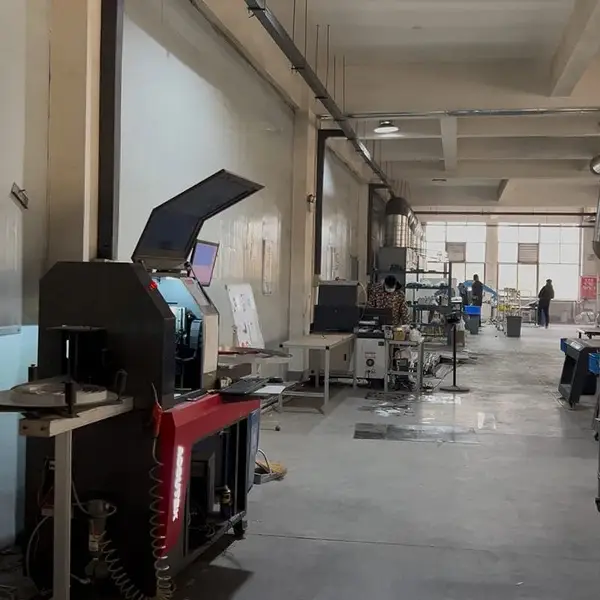
Real photo from our production floor — every sign we ship is made here.
Products mentioned or relevant to this topic — factory-direct, custom built.
Factory-direct since 2010. Free quote within 24 hours — no obligation.
Get a Free Quote → Copy EmailMOQ: 1 piece · Flexible lead time · 2-year warranty · Worldwide shipping
See pricing, specs, and get a free quote for the sign type you need. Built in our factory, shipped worldwide.