Look, I've been building signs since before some of you were born, and I'm tired of watching customers waste money on the wrong metal.
It's not their fault, either. Every supplier's website shows the same shiny photos and the same empty promises. "Stainless steel lasts forever!" "Aluminum never rusts!" Then the client's sign shows up with brown streaks or peeling paint, and the installer gets blamed. I've seen it all. I've also seen sign shop owners pay $800 for a front-lit letter that we ship for $120, same 304 stainless, same Samsung LEDs, same weld quality. That gap exists because nobody tells you the real differences.
Here's what nobody tells you: stainless steel is not rust-proof. It's rust-resistant. In a coastal city with salt air, cheap 304 will pit and bleed. In Arizona, it'll outlive the building.
The ugly truth is most aluminum signs fail in the first few years, but it's almost never the aluminum's fault. It's the coating. Powder coat over a bad pretreatment peels like sunburn. That's not a metal problem. That's a factory problem.
---
## We Need to Talk About "Rust-Free" Marketing
Let me kill the biggest lie right now. That salesman bragging about "rustproof stainless" has clearly never watched a welder grind a joint, wipe off the heat tint, and then watch it rust a week later because he never passivated the steel.
Stainless steel gets its corrosion resistance from a chromium oxide layer. That layer forms when the surface is clean and exposed to oxygen. When you weld it, grind it, or scratch it, that layer is gone. If the factory doesn't properly pickle, passivate, or at minimum acid-wash the welds, you're shipping a rust bomb.
I've seen this go wrong: a Chicago contractor ordered 316 stainless letters for a lakefront property, paid the premium, and had brown rust stains within six months. The factory had ground everything sharp and polished it to a mirror finish — gorgeous, but they'd destroyed the passive layer. He blamed the material. I blamed the process.
A good factory treats stainless like a precision product. We use TIG welding, not MIG, for visible joints. We grind, then polish, then acid-wash, then final passivation. That's the difference between a sign that looks good for a year and one that looks good for a decade.
---
## The Metallurgy, Minus the Boring Parts
### Stainless Steel 304
The workhorse. 18% chromium, 8% nickel. Density 7.93 g/cm³. We stock it in 1.0mm to 3.0mm thickness.
- Outdoor life: 10+ years with proper finishing
- Finishes: brushed #4, mirror #8, PVD, powder coated
- Chromium oxide layer self-heals when exposed to oxygen — unless fully sealed by paint
### Stainless Steel 316
For coastal and industrial environments. Adds 2-3% molybdenum, which resists chloride corrosion. 15+ year marine life. But it costs 20-30% more. For a strip mall in Ohio, 304 is fine. For Miami Beach, pay for 316.
### Aluminum 5052 or 6061
Weight is 1/3 of steel. Density 2.7 g/cm³. We stock 1.0-1.6mm.
- Outdoor life: 8-12 years
- Naturally rust-proof — no iron, no oxidation flakes
- Finishes: anodized, powder coated, brushed
- Can't be soldered; welded only by skilled TIG operators
Here's the catch with aluminum: it's soft. A 1.2mm aluminum letter bends if someone leans on it. Stainless 1.0mm is stiffer and tougher. For tall letters mounted on a storefront, you'll feel the difference in a strong wind.
---
## Real Lifespan Numbers (Not Sales Numbers)
I've pulled signs out of the field for 16 years. Here's what actually survives, not what's on the spec sheet:
| Material | Condition | Real Lifespan | Failure Mode |
|----------|-----------|--------------|--------------|
| Aluminum 5052, powder coated | Interior | 15+ years | Coating fade |
| Aluminum 5052, powder coated | Exterior, mild climate | 8-12 years | UV fade, chalk |
| Aluminum, anodized | Coastal | 6-8 years | Pitting (rare) |
| Stainless 304, brushed | Exterior, urban | 10-15 years | Tear streaks, weld rust |
| Stainless 316, mirror, passivated | Coastal | 15-20 years | Freckling in marine spray |
| Stainless 316, PVD coated | Coastal | 20+ years | Coating wear at edges |
Note that "UV-resistant acrylic" on the face has nothing to do with the metal frame. But it matters — a 2mm domestic acrylic lens yellows in 1-2 years and makes your brand-new stainless sign look like a 1990s relic. If we're building you a
stainless steel letters sign for outdoor use, we stubbornly recommend Mitsubishi acrylic. It costs more, but it's the only way the sign looks new in year five.
Aluminum is easier to fabricate into
aluminum letters because we can bend it with tighter radii and cut it faster. But that convenience comes with a size penalty. Anything over 2.5m, we move to 3mm or 5mm acrylic or demand structural backing.
---
## The Cost Per Letter Breakdown
Let's talk numbers. The prices below are what you pay us at the factory in Lu'an, Anhui, China. Not retail, not installed, not marked up by a middleman.
**Non-lit metal letters, per letter:**
- Aluminum: $10-25
- Stainless steel 304: $15-40
- Stainless steel 316: $20-50
**Front-lit
channel letters, per letter:**
- Stainless steel face: $20-80
- Aluminum body with acrylic face: $20-50
**Back-lit halo letters, per letter:**
- Stainless, halo: $35-120
- Aluminum, halo: $30-80
That gap between $10 aluminum and $40 stainless comes from three factors: material price, fabrication time, and finish complexity.
Stainless steel is denser and heavier. A 400mm 3D letter in 1.2mm aluminum weighs 1.1 kg. The same letter in 1.0mm stainless weighs 2.4 kg. Heavier means more material — and more shipping cost. But the bigger cost driver is finishing. Getting a perfect mirror #8 finish without any distortion takes a skilled polisher. That's not a machine operation; it's a hand craft. You're paying for a human who's done it 5,000 times.
When you buy through a US retail sign shop, the same letter jumps to $200-700 installed. That's not greed — that's their overhead, insurance, and profit. But if you're an importer or business buyer, going factory-direct saves you 50-65% on product. That's the entire reason our factory exists.
---
## Shipping, Tariffs, and the Hidden Math
Every comparison that ignores logistics is B.S. Let's be direct about the numbers.
- **Express** (DHL/FedEx for small signs): 7-10 days, $30-100 for small packages. Fine for 1-10 small letters.
- **Air freight**: about 10 days, $4-12 per kg. Good for mid-sized signs.
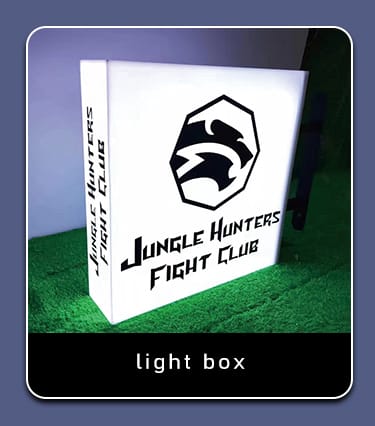
- **Sea freight LCL**: about 65 days, $80-200 per cubic meter. Best for anything with big channel letters or light boxes.
- **Sea freight FCL**: $1,200-3,000 per 40ft container. That's your volume play.
Aluminum's weight advantage is real on air freight. I calculated a 500mm logo sign: aluminum version weighs 18 kg, stainless weighs 42 kg. By air, aluminum saves about $150 in freight. But if you're shipping by sea, the cost is based on volume, not weight. A heavier stainless sign sits in the same container space as a lighter aluminum one. So don't let a supplier upcharge you for "lightweight" if you're going LCL — it doesn't matter.
And here's the tax-man's kicker: US Section 301 tariffs add roughly 30% to imports from China. We've had it in every quote for years. If a factory isn't talking about tariffs, they don't work with US clients.
---
## When Aluminum Is the Smarter Pick
I'll save you money. Choose aluminum when:
1. **You're shipping by air.** The weight difference is enormous at scale.
2. **The sign is indoors.** Why pay for stainless when aluminum will outlive the store interior?
3. **Budget matters.** You're building six light boxes for a franchise roll-out, and the price difference is $2,000 total.
4. **The design is playful.** Aluminum bends beautifully into
neon flex signs frames and vinyl-backed backlit panels. It's also easier to make interlocking 3D shapes.
A common use we see every week: restaurant chains ordering
food menu signs in aluminum. The metal sits behind an acrylic face and never sees rain. Aluminum is perfect there. No corrosion worries, and the weight saves on mounting hardware.
Another underrated option: anodized aluminum. The anodizing process creates a hard, sapphire-like surface layer. It doesn't fade like paint, it doesn't chip like powder coat, and it's excellent for bare-metal designs. We use it for modern architectural signs in dry climates.
---
## When You Absolutely Need Stainless
Don't give these jobs to aluminum:
1. **Coastal locations.** Salt-laden air eats painted aluminum over the years. Stainless 316 is your only honest choice.
2. **Premium branding.** A luxury hotel, a private bank, a high-end dealership — clients can tell the difference between brushed stainless and painted aluminum. The visual weight is not the same.
3. **Industrial environments.** Chemical fumes, car wash chemicals, food processing acids — 304 or 316 resists all of them. Aluminum's coating won't survive chemical washdowns.
4. **High-traffic vandalism zones.** Stainless is harder to dent, scratch, and bend. A 1.0mm stainless letter shrugs off a shopping cart that would fold a 1.5mm aluminum one.
5. **Long-term exterior investment.** If the client plans to stay in the building for 15+ years, stainless is the better lifetime value, even at 2x the upfront price.
Our
back-lit halo letters in stainless are the factory's best-seller for architecture firms. The hole-shot halo glow against a brushed stainless face looks expensive because it is expensive. But it converts a $500 sign into a $2,000 installed sign for the reseller.
---
## The Corrosion Trap Nobody Warns You About
I need to be brutally honest about a mistake I see in every second order.
**Bimetallic corrosion.** This happens when stainless steel and aluminum touch each other directly, especially in wet environments. The aluminum becomes the sacrificial anode and corrodes quickly. You see it on cheap signs where the stainless face is screwed directly into an aluminum frame with no isolation gasket.
When we build mixed-metal signs, we use nylon washers, rubber gaskets, or a stainless-to-aluminum isolation strip. In coastal areas, we add a marine-grade sealant between facing surfaces. If your factory doesn't mention this, they haven't learned the lesson yet.
The second trap is fastener selection. Clients love to swap out our stainless screws for cheap zinc-plated ones at installation. In two years, you get a rust ring around every screw head. A stainless sign with carbon steel screws is a contradiction in terms.
---
## What Our Factory Can't Promise You
Here's the honesty part. Aochuang Sign has a 3,000m² workshop, 50+ workers, and we export worldwide. We can do a lot. But we won't lie to you.
We can't promise that your local electrician will wire it properly. A sign that's installed wrong will fail no matter how good the metal is. We've seen 304 stainless letters killed by a bad junction box leak — water ran down the conduit and into the LED power supply. That's not a material failure.
We don't fake certifications. Our LED components meet L70 ≥50,000 hours, and our
acrylic light boxes use Samsung/Osram or equivalent LED modules. But we don't do per-project UL certification — it costs $4,000-15,000 and takes 4-9 months. If your project requires a UL-listed sign, we'll build to UL spec and you'll have an inspection agency verify it locally. If you want ETL or CE, we can supply certificates from our materials suppliers.
We can't offer 1-week delivery on a 50-letter stainless sign. Our 10-step process is about 5-15 days. Accurate machining takes time. While we laser-cut at ±0.1mm precision in 1-2 days, the following grinding, polishing, and finish work is not automated for a reason. Hand-polishing is slower, but the result is a mirror you can shave in. The aging test alone is 8-12 hours for every sign.
We can't get you 316 stainless at 304 prices. It costs us 20-30% more in raw material. Anyone who promises otherwise is lying to you.
---
## The One-Question Test Before You Order
Forget every spec sheet. When comparing suppliers for stainless steel vs aluminum signs, ask this single question:
**"Show me a photo of the exact manufacturing batch from 18 months ago, on location."**
Not a render. Not a studio shot. An actual photo your customer's customer took.
If they can't produce a real after-photo, the "lifespan" numbers are marketing fiction. We maintain a photo archive of every large order we ship. Not all of our clients send follow-up photos, but the ones who do are the ones who bought the right spec.
Here's the final decision matrix we use internally:
- **Interior, budget tight, short lead time**: aluminum
- **Interior, premium feel, want lasting impact**: stainless 304, brushed #4
- **Exterior, dry climate, small letters**: aluminum with PVDF paint
- **Exterior, urban, wanting stainless look without stainless cost**: stainless 304, brushed, thick enough to withstand weather
- **Coastal or industrial, 15+ year expectation**: stainless 316, passivated, no question
- **Anywhere with extreme UV**: stainless, because no paint fades, and the metal face itself lasts forever
Make the call based on your real environment, not a brochure. And if you want a straight answer from people who've welded thousands of these, talk to us before you order. We'll tell you when aluminum is fine, when stainless is overkill, and when nothing but 316 will do. We've earned that right — we've been doing this since 2010, and we're still here because we put the right metal on the right building.