I've watched sign shops pay $800 for a front-lit letter. Same 304 stainless, same Samsung LEDs. We ship that letter for $120. Same with aluminum—$400 retail installed for a brushed aluminum letter, our factory price is $15-25. These aren't loss leaders. These are what things actually cost when you cut out three layers of markup. But price isn't the whole story. The material you pick will either haunt you for ten years or make you look like a genius. Let's break it down like the invoice you're about to pay.
We make both stainless steel letters and aluminum letters every single day. I'll tell you exactly when to walk away from one and grab the other. No loyalty to either metal—just what's right for the job.
Stainless steel isn't one thing. Our factory uses 304 for 90% of outdoor non-lit letter orders. It's got 18% chromium, 8% nickel, density 7.93g/cm³. That's the sweet spot. Ten-plus years outside, midwest winters, Arizona sun—as long as nobody's splashing de-icing salt directly on it. Then there's 316, the marine grade. It contains 2-3% molybdenum and costs 20-30% more. We use it for coastal projects where salt spray is a daily reality. A strip mall in Ohio? 304 is overkill already. A hotel sign on Miami Beach? Pay for 316 or schedule the replacement in three years.
The ugly truth is most sign shops think "stainless means stainless, it'll never rust." I've seen this go wrong: a client in Tampa ordered 304 letters for a pier-front restaurant. Beautiful mirror finish. Two years later, tea-staining spots everywhere. Salt air and zero maintenance will eat even good steel. They should've gone 316 and wiped the letters down quarterly. That mistake cost them $4,200 in replacements.
Aluminum is a different animal entirely. It weighs one-third of steel. It won't rust—corrosion just forms a dull oxide layer that actually protects the surface. Our aluminum letters come in thicknesses from 0.040" to 0.063" (1.0-1.6mm). That's light enough for indoor ADA signs and sturdy enough for exterior building fascia so long as you spec the right backing. Outdoor life runs 8-12 years on quality anodized or powder coated finishes. But here's the thing: aluminum dents. A shopping cart, a ladder, a kid with a stick—boom, divot. Steel laughs at that stuff.
Factory-direct, no-nonsense. Stainless steel non-lit letters run $15-40 per piece from our floor, depending on size, thickness (1.0mm up to 3.0mm), and finish—brushed #4 is standard, mirror #8 costs a little more, PVD coating for gold or black adds but not crazy. Aluminum letters land at $10-25 each. A full building sign set of 20 stainless letters might be $500 FOB Lu'an. That same set quoted by a US wholesaler? $2,000-3,000. I've seen the invoices.
But walk with me past the product price. Shipping: sea freight at $80-200 per cubic meter LCL, or a full container $1,200-3,000. Express air for rush samples $30-100. And the US Section 301 tariff still sits around 30% on aluminum and stainless signs. So that $500 sign set becomes $650 landed, plus maybe $120 LCL and a customs broker. Still at less than half of domestic supply. Do the math. You pocket the difference, or you outbid competitors and take the job.
Here's what nobody tells you: aluminum is cheaper to ship. Not just weight—raw material moves easier, fewer crating precautions. A set of 10-inch aluminum letters packs in a box, foam, done. Heavy stainless letters need plywood crates, strapping, more labor. So your ex-factory price advantage on stainless shrinks a bit at the freight stage. Just a bit.
A number on a spec sheet doesn't mean anything if the install is garbage. Stainless letters, especially larger sets, are heavy. A 24-inch 304 letter with 2mm thickness is a substantial chunk. You need proper anchors, backing plates, maybe even structural consultation for a high-rise. Aluminum? You can almost hang it with heavy-duty VHB tape in the right indoor setting. Over a parking garage, though, wind load will twist thin aluminum like foil.
Look, I've seen sign companies install beautiful 1.0mm aluminum letters with stud mounts, only to watch them warp after one summer of sun reflecting off a glass building opposite. Thermal expansion can buckle thin metal. For any exterior letter over 12 inches, step up the thickness or choose stainless. That's just physics.
Finishes matter more than base metal sometimes. Brushed stainless is low maintenance—fingerprints don't show much, and minor scratches blend in. Mirror stainless? Looks like a million bucks on a law office door. Also shows every print, every water spot, and requires a quarterly wipe-down. Powder coated aluminum is great for color match, but cheap powder coat peels in 3-4 years even from US shops. Our suppliers use polyester powders rated for 5+ year UV stability, but I'm honest—no powder coat competes with anodized aluminum for raw durability. Anodizing penetrates the metal surface. It's the only finish on aluminum I'd recommend for a 10-year install without a maintenance contract.
Pick stainless steel if: the sign is outside for more than a decade, you're near a busy street with road salt, the client wants a high-end brushed or mirror look, or the letters will be at ground level where they might get kicked, bumped, or scraped. The heft sells luxury. Also, if you're fabricating thin, elegant, rimless styles, steel's rigidity lets you do that without a visible aluminum skeleton behind it.
Pick aluminum if: you're on a tight budget, the sign is indoors or under a canopy, weight is a massive concern (suspended signs, foam walls), the design requires complex shapes with less welding cost, or you're doing a giant set of letters where stainless price would blow the bid. Aluminum's lighter weight also makes installation faster, which can eat some of that price difference in labor savings.
The ugly truth is that many sign makers default to aluminum not because it's right, but because it's familiar and they can bend it in-shop with minimal tooling. That's fine for a temporary promo sign. For anything permanent, you owe the client a discussion about 304 stainless.
Both materials start the same way: design confirmation in a day, laser cutting to ±0.1mm, then hand-finished. Stainless goes through TIG welding that takes skill—too much heat and you warp the letter, too little and the joint fails. Aluminum welding is easier, or we can use folded returns that don't require welds at all for simpler designs. Grinding and polishing stainless takes longer because we're chasing a consistent grain direction. Mirror stainless means multiple buffing compounds and an inspected final wipe. Aluminum gets a chemical brightening or sanding before anodizing or powder.
We do 10 steps for any metal letter, and every single letter goes through an 8-12 hour aging test for lit versions, but for non-lit, it's a dimension check and finish inspection under daylight and fluorescent. No letter leaves without being wrapped in foam, boxed, and crated if necessary. Our MOQ is one piece—that means you can order a sample and see the 304 brush finish in your hand, hold it next to an aluminum sample, put them both outside your shop for a month. I bet you'll notice the steel still looks new while the aluminum shows that first faint chalky oxide unless it's anodized.
Say you install a 20-letter set. Stainless factory cost $500 plus $200 shipping and tariff, $700 total. Aluminum might be $350 landed. You're saving $350 today. But if the aluminum letters need replacing in year 9 while the stainless sails past year 15, that's another install, another permit, and an angry landlord. The stainless letter will outlast the LED power supplies you mount nearby. The aluminum letter might outlast the business that ordered it, but don't bank on it in a harsh environment.
Look, I'm not saying every job needs 316 stainless with a PVD finish. That's insane for a coffee shop. I'm saying work backward from the client's real timeline. If they're a franchise planning a rebrand in five years, sure, aluminum with decent powder coat is the correct business decision. If they're a law firm or hotel with a century-old building, put up stainless and walk away with a clean conscience.
316 stainless costs 20-30% more than 304. For a single letter that might be an $8 difference ex-factory. Over a full sign, maybe $200 more. For that, you get 15+ years within salt-spray zones, industrial areas, or places with brutal winter chemical treatments. 2% molybdenum. That's the secret. We stock 316 plates and can fabricate anything from it. The problem is that many importers cheap out—they order 304 and the factory won't argue. Then the sign corrodes and they blame "Chinese steel." It's not the steel, it's the specification. We'll always flag a job if the address is coastal and the PO says 304. We'll ask, "You sure?"
Most lit channel letters use an aluminum coil housing and acrylic face—different game. But if you're doing open-face LED letters where the metal is exposed, aluminum is a better heat sink. Stainless gets hot to the touch under high-output LEDs. Doesn't ruin the steel, but if someone leans against it, they'll flinch. For rear-lit halo letters, house numbers, anything where the structure is visible, steel's edge stays cleaner over time.
Sea freight about 65 days. Air freight about 10 days. Express 7-10 days for samples. Tariff at 30% under Section 301. These are immovable facts. From Lu'an, our stainless and aluminum letters get wrapped and crated in plywood for LCL because LCL gets tossed around. Express bags are fine for a couple of samples. I've had an aluminum sample arrive with a bent corner once—now we reinforce all sample boxes. Stainless never bends in transit. Point, steel.
ISO 9001 means we track material heat numbers. If I say it's 304 with 18/8 composition, I can send you the mill cert. CE marking covers our entire product range, 20,000-50,000 RMB to maintain. That's not a paper stamp—it's quarterly audits and a quality system. For US buyers, ETL might come up for lit units, but for non-lit metal letters, the key is ensuring no lead in the finishes or paints. We test for that. I'll tell you straight: any factory that can't produce a RoHS compliance sheet for their powder coat isn't a factory you should wire money to.
Nobody actually guarantees a metal letter for life. Our warranty is 2 years on LEDs, 1 year on power supplies. For the metal itself? It arrives without defects. After that, installation, cleaning, environmental exposure—all on you. The manufacturers claiming a lifetime finish on stainless are playing semantic games. Real stainless can discolor if you don't wipe it. Aluminum can oxidize if the anodized layer gets scratched. Warranties in this business promise everything until you file a claim, then they blame the installer. We don't do that. We deliver what's on the spec sheet and stand behind it for those first 24 months. The rest is material science and proper maintenance.
Specify the exact grade: 304 or 316, not just "stainless." For aluminum, ask whether it's 5052 or 6061 series—our standard is 5052 for formability and corrosion resistance. Specify thickness in mm or gauge, and state the finish with a code or sample. Brushed #4, mirror #8, PVD color. For aluminum, say "clear anodized" or "powder coat RAL 9016." If you don't, you'll get whatever the factory had left over from the last job. I've seen that disaster—a whole restaurant set arrived in the wrong gold tone because "gold" meant something different to the buyer's email than it did to the shop floor.
Ask for a pre-production photo. We send one within 24 hours of finishing the first letter. You can see the weld, the grain, the mounting stud locations. If something's off, we fix it before cutting the rest. That's not a special request, it's our process. And if your supplier won't show you a photo, walk away.
For architectural signage that outlasts the building permit, 304 or 316 stainless. For fast jobs, tight budgets, and indoor elegance, aluminum done right. Both metals have their place. I'm not here to sell you the expensive one. I'm here to keep you from buying the wrong one and calling me in five years to complain. Our factory ships both worldwide every month, from a single brushed aluminum letter to a full building set of polished stainless. You pick, we produce, you profit. That's the deal.

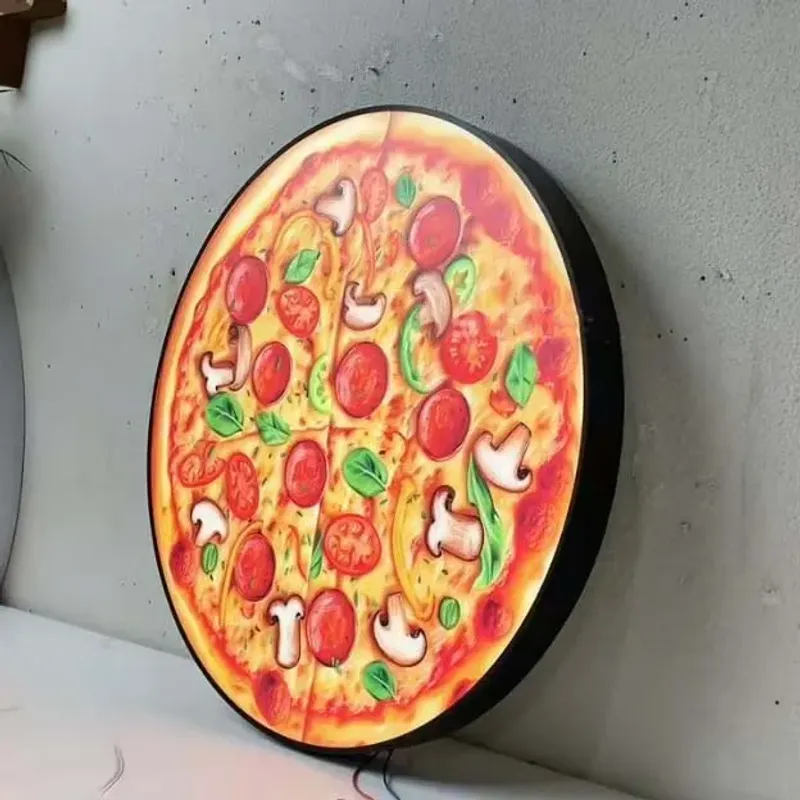
Real photo from our production floor — every sign we ship is made here.
Products mentioned or relevant to this topic — factory-direct, custom built.
From $24/letter · MOQ 1 piece · Flexible lead time · CE & UL certified · ships to 20+ countries
Custom sizes, colors, and finishes. Get a factory price in 24 hours.
Get a Free Quote Copy EmailWhatsApp +86 13865703472 · business@aochuangsign.cn
See pricing, specs, and get a free quote for the sign type you need. Built in our factory, shipped worldwide.