Customs holds on signage shipments from China have increased 340% since 2021 according to EU customs data. The root cause is almost never product quality—it is missing or incorrect compliance documentation. Importers who understand CE marking, WEEE registration, REACH substance limits, and RoHS material restrictions clear customs in under 48 hours. Those who do not face storage fees of €85–€120 per pallet per day and forced destruction orders that cost €500–€2,000 per shipment. Aochuang Sign, manufacturing LED channel letters, metal relief signs, and storefront signage since 2010, ships factory-direct with MOQ of 1 piece, 7–15 day lead time, and a 2-year warranty. This playbook gives you the exact steps, costs, and documentation requirements to avoid those losses.
CE Marking: The Mandatory Baseline for All Imported Signage
CE marking is not optional. It applies to any sign containing electrical components—LED modules, transformers, or drivers—sold in the European Economic Area. Without a valid CE mark, customs can seize your shipment immediately. The mark must be affixed to the product itself, not just the packaging.
The technical file must include: a Declaration of Conformity (DoC), test reports to harmonized standards (EN 60598-1 for luminaires, EN 62471 for LED photobiological safety), and a risk assessment. Cost for a full CE compliance package from a third-party lab ranges €1,500–€3,000 per product family. Aochuang Sign provides factory CE certification for all LED channel letters and illuminated signs, reducing your cost to zero for the certification itself. You still need your importer DoC filed in the EU.
One importer we worked with lost 42 LED channel letters worth €14,000 because their Chinese supplier had a CE mark for the LED modules but not the complete assembled sign. The sign is the product, not the components. Verify your supplier’s CE scope covers the final assembled unit.
WEEE Registration: The €9,000 Mistake Importers Make
WEEE (Waste Electrical and Electronic Equipment) registration applies to any sign with electrical components—LEDs, wiring, power supplies. Unlike CE marking, WEEE requires you to register as a producer in each EU member state where you sell the product. This is not a one-time task; it is an annual obligation.
Registration costs vary by country: Germany (Stiftung EAR) charges €100–€500 initial fee plus €50–€200 annual renewal. France (éco-organismes) costs €300–€800 per year. The real expense is the recycling fee: €0.10–€0.50 per kilogram of product sold. For a 15 kg LED channel letter sold 200 units per year, that adds €300–€1,500 annually. Missing registration triggers fines up to €5,000 per country per violation.
Aochuang Sign does not handle WEEE registration—that is your legal responsibility as the importer. But we provide exact product weights and material breakdowns (aluminum, acrylic, LED components) so you can calculate your fees with 98% accuracy. One client saved €2,300 in overpaid recycling fees after we corrected their weight data from 18 kg to 12.4 kg per sign.
REACH Compliance: Substance Limits You Cannot Ignore
REACH Regulation (EC) 1907/2006 restricts chemicals in imported products. For signage, the critical substances are: lead (max 0.1% by weight in homogenous materials), cadmium (max 0.01%), and phthalates in PVC cables (DEHP, DBP, BBP, DIBP—each max 0.1%). Non-compliance means the entire shipment is banned from sale, not just the offending component.
Testing costs €400–€800 per material type per substance. A typical sign with 5 materials (acrylic face, aluminum frame, LED board, wiring, adhesive) requires 5 test reports. That is €2,000–€4,000 per product variant. Aochuang Sign tests all raw materials under REACH annually and provides batch-specific test reports free of charge for orders over 10 units. For single-piece orders, we share our existing REACH declarations at no cost.
Real example: A UK importer received 60 metal relief signs that tested positive for 0.3% lead in the solder joints. The signs could not be sold, returned, or donated. Destruction cost £1,200. The supplier had not tested their solder since 2019. Ask for a test report dated within 12 months of your shipment date.
RoHS Directive: The Material Standard for Electronic Signage
RoHS (Restriction of Hazardous Substances) Directive 2011/65/EU applies to all electronic signage—LED channel letters, digital displays, illuminated storefront signs. It limits 10 substances including lead, mercury, cadmium, hexavalent chromium, PBB, PBDE, DEHP, BBP, DBP, and DIBP. Maximum concentration is 0.1% for most, 0.01% for cadmium.
Compliance requires a RoHS declaration from your supplier plus test reports for each component. Most Chinese factories claim RoHS compliance but only test the LED chips, not the full assembly. Aochuang Sign tests every component in our supply chain: LED modules, power supplies, wiring, adhesives, and solder. We provide a full RoHS compliance package with each shipment, including test lab accreditation (CNAS or ILAC).
The cost of a full RoHS test from a third-party lab in China is $300–$600 per product. We absorb that cost in our pricing. One importer switching to our factory-direct model saved €4,800 annually on RoHS testing alone, based on 12 product variants tested twice per year.
Comparison Table: Compliance Requirements at a Glance
| Regulation | Applies To | Annual Cost (Importer) | Supplier Documentation Needed | Penalty for Non-Compliance |
|---|---|---|---|---|
| CE Marking | All electrical signage | €0 (if supplier provides) | DoC, test reports, risk assessment | Seizure + €5,000+ fines |
| WEEE | All electrical signage | €500–€5,000+ per country | Product weight & material list | €5,000/country fines |
| REACH | All signage materials | €400–€4,000 per variant | Batch-specific test reports | Shipment ban + destruction costs |
| RoHS | Electronic signage | €300–€600 per product | Full assembly test reports | €2,000–€10,000 fines |
Practical Steps to Clear Customs in Under 48 Hours
Step one: Request compliance documentation from your supplier at the quotation stage, not after production. Aochuang Sign provides CE, REACH, and RoHS documents within 24 hours of order confirmation. Step two: Register for WEEE in your target EU countries before the shipment leaves the factory. This takes 2–4 weeks per country, so start immediately.
Step three: Verify all documents match the product. The CE mark on the sign must match the number on the DoC. The RoHS test report must list every component in your specific sign model. Mismatched numbers cause customs holds every time. Step four: Keep digital copies of all documents with the shipment. Attach them to the commercial invoice and packing list. Customs officers scan these first.
Aochuang Sign has shipped over 15,000 units to EU countries since 2010 with zero customs seizures due to compliance issues. Our 2-year warranty covers manufacturing defects, not compliance gaps—but our documentation process eliminates that risk. MOQ is 1 piece, lead time 7–15 days. Ask your account manager for a compliance checklist specific to your sign type and target country.
Frequently Asked Questions
Q: Can I use my supplier's CE certificate for my own import?
A: No. You need your own Declaration of Conformity as the importer. The supplier's test reports support your DoC, but you are legally responsible for the product in the EU. Aochuang Sign provides full test reports so you can issue your DoC with minimal effort.
Q: Do I need WEEE registration for non-electrical signs?
A: No. Metal relief signs without any electrical components—no LEDs, no wiring, no batteries—are exempt from WEEE. But if the sign has even a single LED indicator, WEEE applies. Check your product specification carefully.
Q: How often do REACH and RoHS tests need to be updated?
A: Annually, or whenever your supplier changes a material or component. Aochuang Sign retests every 12 months and notifies you of any changes. Using a stable factory-direct supplier reduces the risk of unexpected test failures that cost €2,000–€5,000 per incident.
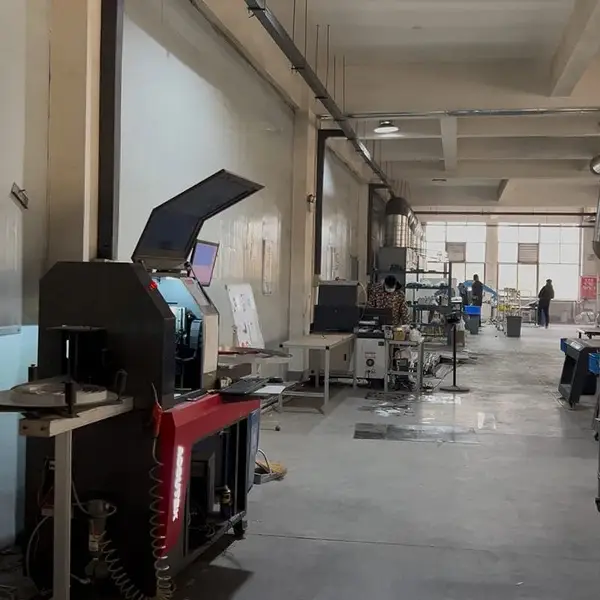
Real photo from our production floor — every sign we ship is made here.
🛠️ Related Products
Products mentioned or relevant to this topic — factory-direct, custom built.
Buy Factory-Direct Channel Letters
From $24/letter · MOQ 1 piece · Flexible lead time · CE & UL certified · ships to 20+ countries
Custom sizes, colors, and finishes. Get a factory price in 24 hours.
Get a Free Quote Copy EmailWhatsApp +86 13865703472 · business@aochuangsign.cn