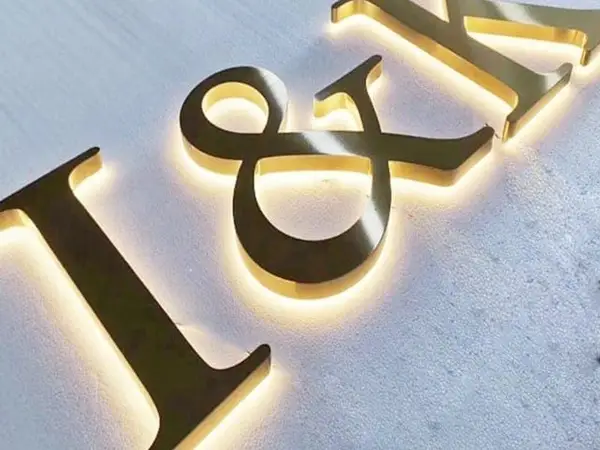
Look, I've been in this industry since 2010, and I've watched buyers fly across oceans with clipboards, ticking boxes on checklists they downloaded from some blog written by a guy who's never touched a welding torch. They check the wrong things.
I've seen buyers walk past a dirty, unorganized factory floor and dismiss them — then order from a clean, shiny one that outsources everything and can't control their own quality. And I've watched the opposite: buyers so obsessed with certificates they forgot to ask who actually assembles the LEDs.
So here's the definitive, no-BS factory audit checklist — not the fluffy corporate version, the one that keeps your sign from falling apart in year two.
---
## First, Stop Auditing the Wrong Things
The ugly truth is that most factory audit checklists are designed to make *you* feel thorough, not to actually protect you. They're full of "cleanliness" and "employee satisfaction" category ratings that don't mean a damn thing when your
channel letter shorts out in month eight.
Here's what nobody tells you: **your factory audit starts with your purchase order, not with the factory tour.** If you don't know exactly what materials you're paying for, you'll see what you want to see on the floor. The tour should confirm what's in your spec, not decide it.
So bring your spec sheet. The one that says "2mm acrylic, UV-resistant" and "Samsung 2835 LEDs." If you don't have a spec sheet, stop reading this and go write one first. You're not ready to audit anyone.
---
## The Certificate Problem: What's Real and What's Theater
Certificates are where rookie buyers get fleeced.
CE marking costs 20,000-50,000 RMB and takes 2-8 weeks. Nearly every factory claims to have it. Ask to see the actual certificate — look at the date. Is it current? Does the factory name match the invoice name? I've seen factories borrow a certificate from their cousin's operation.
Now, here's what you actually need depending on your market:
- **CE, RoHS, ISO 9001** — baseline. We have all three. They matter, but they don't guarantee quality.
- **UL 48** — this is the big one for the US market, along with ETL which is a legit alternative. But these cost $4,000-15,000 and have quarterly audits, so many small factories skip them. If you're selling to US businesses that need UL, a factory without it will cost you in the long run.
- **IP65** — this means dust-tight and protected against water jets. This is the *minimum* for outdoor signs. If a factory pushes IP68 for everything, they're upselling you. You only need IP68 for signs going in flood zones or extreme coastal conditions.
I've seen this go wrong: a customer insisted on IP68 for a sign going above a suburban dentist office. Wasted money. The sign weathered the same as an IP65 would have. Know what you need before you walk in.
---
## Materials: The Truth About What Goes Into Your Sign
Every factory claims "premium materials." So let's get specific.
**Acrylic:** This is where the quality gap is biggest. Mitsubishi and Degussa acrylic gets 90-92% light transmittance and lasts 5-8 years outside before yellowing. Domestic Chinese acrylic? 1-2 years before it starts looking like old tupperware. The price difference is substantial — that's why you need it in writing.
Check the actual faces during your visit. Are they peeling their protective film? Is it cloudy or crystal clear? Ask which supplier they use. If they hem and haw, that's your answer.
**Stainless steel:** 304 is 10+ years outdoors, 316 has 2-3% molybdenum and lasts 15+ even in marine conditions. For a shopping plaza in Omaha, 304 is fine. For Miami Beach? Pay the 20-30% premium for 316.
Here's the catch: *measure it.* A factory quoting you 1.2mm stainless but using 0.8mm steel on the floor is a classic bait-and-switch. Bring the gauge. Check the supplier's stamp on the sheet.
**Aluminum:** Naturally rust-proof, 1/3 the weight of steel, 8-12 years outdoors. Good for large-format signs where weight is a factor, but dents easier than steel. It's fine for most use, but if you're doing a sign for a hammer-wielding client, go steel.
---
## The LED Lie: What's Actually Inside That Module
This is where I get angry.
SMD 2835 modules with Samsung or Osram chips — those give you 100-150 lumens per watt and a real 5+ year lifespan. L70 rating of at least 50,000 hours. That's the good stuff.
Cheap modules will get you 12-18 months. I've ordered "equivalent" modules from Chinese suppliers before. They failed. The factory I work with has banked their whole reputation on using quality LED modules with true Samsung chips.
**Walk the assembly line and look at what's actually being loaded into the letters.** If you see a generic unbranded module with no date code, that's your sign to run.
Also, ask about the power supply. A cheap supply will kill good LEDs. The power supply is the heartbeat of your sign. Make sure it's from a brand with actual support, not a white-box special.
---
## The "Who Actually Does the Work" Question
The biggest audit mistake: buying from a trading company masquerading as a factory.
"I've seen this happen too many times," one importer told me when we were talking about his supplier problems. "They had a beautiful showroom and the tour was great. Turns out they'd hired a workshop three towns over to do the actual fabrication."
When you tour, ask: *Who does the laser cutting?* Is it in this building? Can you show me your welding benches? Are the acrylic faces cut here on a CNC, or subbed out?
We have a 3,000 square meter facility in Lu'an with 50+ skilled workers. Everything — laser cutting, TIG welding, grinding, acrylic CNC, LED assembly — happens in one place. That's not just a feel-good sales pitch. It means we control the tolerances, the QC, and the timeline. If a factory subcontracts its core processes, they don't control your quality — and they definitely don't control your lead time when something goes wrong.
---
## Production Process: What You Should Actually Watch
A real
sign factory has a logical flow. Here's what we do in our plant:
1. **Design confirmation** — 1 day. We finalize the file with you.
2. **Laser cutting** — 1-2 days. Tolerance of ±0.1mm. You can't get that with cheap hand-cut work.
3. **Bending & welding** — 1-2 days. TIG welding specifically, not MIG slop.
4. **Grinding & polishing** — 1-2 days. This is what separates beautiful letters from sharp-edged pain in the asses.
5. **Acrylic face CNC** — 1 day. Precision-cut faces that don't warp or crack at the screw holes.
6. **LED assembly** — 1-2 days. Modules laid out evenly, wired properly.
7. **Sealing** — neutral silicone, not the cheap acid-cure stuff that corrodes wires over time.
8. **Aging test** — 8-12 hours. They run the sign hot to catch early failures.
9. **100% QC inspection** — every single sign gets checked, not a random sample.
10. **Export packaging** — foam, carton, plywood crate. We've shipped worldwide without significant transit damage.
**Watch the transition points.** Sawdust on the LED table is bad. Bending flash not cleaned before powder coating is bad. These are telltale signs the QC process is a slogan, not a system.
---
## The Packaging Question
Saving $50 on packaging can cost you $500 in damage claims.
The ugly truth: I've seen beautifully made letters arrive with cracked acrylic because the factory used thin foam and a single-layer carton.
**Look at the packaging station.** Do they wrap each letter individually? Is there corner protection? A pallet is not packaging. I've seen letters packed loose in a cardboard box with a bunch of packing peanuts. That's how you get a claim filed with your freight forwarder.
If you're shipping sea freight, ask about humidity protection — silica gel, or a vapor barrier. A 50-70 day sea journey in a container that hits 60°C during the day? Moisture will kill your LED power supplies faster than the customer's disappointment.
---
## Hidden Costs: What the Quote Doesn't Show You
Here's some brutal honesty that will burn some bridges. In this industry, the cheapest quote in your inbox usually means one of three things:
**1. They're using cheap materials.** You negotiated hard on price, and now they've planned to install 0.4mm cheaper brand LEDs. This is the most common way factories cheat.
**2. They're going to hit you with extra charges.** Need a sample? $200. Extra mounting hardware? $50. Different silicone? $20. By the time it's shipped, the "cheap" quote equals the mid-ground.
**3. They misquoted something.** The light box manufacturing was quoted at $80/sqm, but you didn't realize that included no LEDs. Oops.
The real, transparent answer from our factory is $20-80 per letter for front-lit letters, $35-120 for back-lit halo, $15-40 for non-lit stainless steel. If it's less, I'd ask why. If it's much less, I'd run.
**Remember the US Section 301 tariff (~30%)** if you're ordering from America. It's a fact of doing business across the Pacific and it's not the factory's fault, but make sure you know what it does to your landed cost.
---
## What No One Checks But Should: The Aging Test
Most buyers see LEDs light up and think "Yep, they work."
But LED failure isn't about "work or don't work." It's about *light output over time*. L70 is the standard — 70% of original brightness after 50,000 hours. Quality modules (Samsung/Osram) hit that. Cheap ones drop below 70% in half that time.
The aging test — 8-12 hours running hot, then checking for failures — is the most basic insurance you can get. It's dirt cheap to do, and factories that skip it are telling you something important about their quality control.
Look, I've had clients who ordered some plastic letters from a factory that shall remain nameless, and by month four, the letters were dark in the middle. Turns out they'd used a cheap LED RGB strip instead of proper SMD modules — no L70 issue, just straight up component failure.
**The buying lesson:** Ask if the factory can show you a test record. If they can't, that's a red flag.
---
## ADA Compliance and Fire Safety: The Hidden Specs That Save You
If you sell signs to US businesses, you need to understand the Americans with Disabilities Act requirements for ADA signs. Tactile letters, Grade 2 Braille, 48-60" mounting height, non-glare finish. I can't tell you how many importers order beautiful signs that can't be used because they didn't check the mounting or braille specs.
Same goes for **NEC Article 600** — that's the US electrical code for signs and outline lighting. Too many imports catch fire risk or fail inspection. We don't want that on our conscience, and you definitely don't want a lawsuit on yours.
---
## AI, CAD, and Artistic Freedom: What a Factory Can and Can't Do
A factory's design department is your best friend and your worst enemy. Ours can turn your AI file into a CAD file in a day. We can handle 3D,
fabricated letters, complex profiles, even
brass letters — the full spectrum of metal fabrication.
What we can't do is **hand you a logo and tell you it's perfect when it's not.** If your artwork is low-res, if your file needs more prep, a lot of factories will push it through and just make what they see. We'll push back. What you want is a factory that reviews your art file *before* cutting, not one that lets your broken vector file ruin a $2,000 sign.
---
## The Bottom Line: Your Audit Is a Conversation, Not an Inspection
You can't catch everything by walking a floor. You'll never see the true cost structure of the factory, you won't know if they're honest about LED sourcing until the product arrives, and you won't know if a rushed project gets the same quality as a standard one.
That's why the relationship matters as much as the checklist.
We'll be straight with you: if you need
front-lit channel letters for a fast-food chain, we'll tell you the best option is a standard front-lit letter, not a
back-lit halo letter that costs double for no reason. If you need a 3m tall letter, we'll tell you you need 5mm acrylic, not 3mm. We've got the experience.
And if you're ready to order? Our MOQ is **one piece**. Our lead time is about 5-15 days. Our warranty is 2 years on LEDs, 1 year on power supplies. But more importantly, we're the kind of people who will tell you when your idea is not a good idea. And even better, we're the kind of factory that sends you a video during the QC check, so you actually know what you're getting before it ships.
That's the real audit: the feeling that you're working with someone who's as invested in your sign lasting as you are. Not because it's a good marketing slogan, but because we've seen what happens when it doesn't.
---
## Your Pre-Order Factory Audit Checklist (The Cliff Notes)
- **Certificates:** Don't just ask "Do you have CE?" Ask for the actual document. Check for the factory name matching the invoice.
- **Materials:** Mitsubishi vs. domestic acrylic. 304 vs. 316 stainless. Watch them cut something. Get the supplier names in writing.
- **LED modules:** Who makes the chips? Samsung or Osram? Ask for a sample module and light it up in front of you to see the color temperature and brightness.
- **Power supplies:** Brand? Wattage? Warranty?
- **Torch test:** If you're ordering
neon flex signs, watch it sear for 30 seconds. Does it smell like burning rubber? Run.
- **Bending and welding:** Look at the corner of a letter. Is it clean? Are the welds flush? Sharp corners mean they don't have a high-quality bending brake.
- **Packaging:** Watch them pack one unit before putting it in a shipping crate. Are they using corner guards? Foam? Inner cartons with a plywood crate? Good. A single box with bubble wrap is bad.
- **Test report:** Ask to see the aging test log. Not a hand-wave. A log.
- **The people:** Are the workers still there after 5pm? In our industry, overtime is common, but a factory that treats its people like garbage is often a factory that cuts corners on your order.
---
I've been at this since 2010, and I've seen more good factories get unfairly penalized by lazy auditing than I care to admit. The good ones are the ones who tell you "no" when you ask for something that will fail. The bad ones will happily sell you a
rimless channel letter that'll warp in two years, because they don't give a damn what happens after your check clears.
Our factory in Lu'an, we're not the biggest, and we're not the cheapest. But when you walk in and see the laser cutter, the TIG welders, the CNC machines, and a stack of crates packed properly for sea freight, you'll understand why we've been exporting worldwide since 2010.
That's the real audit: not crossing off a list of features, but sensing whether the people running the place give a damn about the sign they're sending out into the world. Because if they don't, no checklist in the world is going to save you. And if they do, you can relax, trust the process, and get back to installing signs that make your money back over the next decade.
So that's my deal. Check your materials, know your LEDs, ask the right questions, and if you've done your part, we'll do ours.