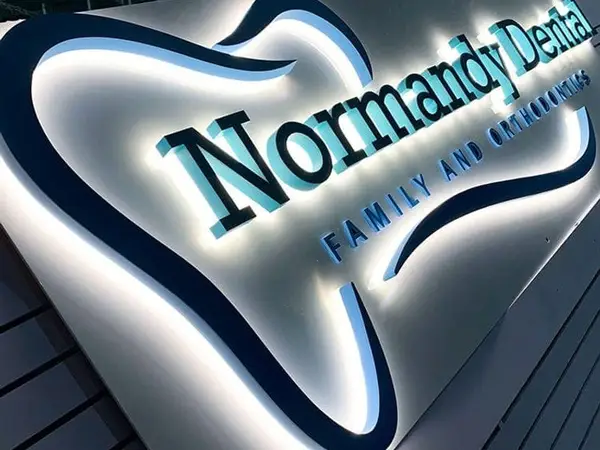
You just dropped $4,800 on a set of back-lit halo letters from Aochuang Sign. Factory lead time was 11 days. Production looked perfect in the QC photos. Then the crate arrives from the port—one corner is crushed, the acrylic face is cracked, and the LED module inside is dead. Your carrier says it’s “inadequate packaging.” Your freight forwarder blames the stevedore. Your insurance adjuster asks for a photo of the sign before it was packed.
You don’t have that photo. You’re out the sign, the installation labor, and the client’s grand opening date.
This happens more often than most sign shop owners want to admit. According to industry data from the knowledge base, factory-direct savings on custom signage range from 50% to 65% compared to US retail. That’s a huge margin—but it disappears fast if you don’t have a real insurance strategy for international freight. The problem is, most guides tell you to buy “full coverage” and move on. That’s lazy advice. For a sign shop, the real money is lost on small, frequent claims—not catastrophic ones. A scratched stainless steel letter isn’t a total loss, but the time you spend filing paperwork could have been spent on the next fabrication job.
Here’s the hard-won truth from the factory floor: you need a deductible buffer, a first-loss policy that covers the top 20% of sign value, and a rock-solid understanding of what your carrier actually owes you. Let’s break it down.
Standard carrier liability under the Carmack Amendment (US domestic) or the Hague-Visby Rules (international ocean freight) is capped at laughably low amounts. For ocean shipments, the limit is about $500 per “customary freight unit”—which usually means one container or one pallet, not one sign. If your crate holds six channel letters worth $3,600 total, the carrier’s maximum payout might be $500. That’s a 86% loss on just the product cost, not counting your time, shipping, or customs clearance.
But here’s the kicker: carriers routinely deny claims by citing “inadequate packaging.” The factory that built your sign used a plywood crate, foam padding, and neutral silicone sealant—that’s standard. But if the crate shifted in the container and the sign’s sharp edge punctured the foam, the carrier will argue the packaging didn’t meet their “sufficient” standard. You’re left holding the bag.
So the first rule of international sign shipping: never rely on the carrier’s liability. You need a separate marine cargo insurance policy. But not all policies are created equal.
Marine cargo insurance covers the full declared value of your goods from warehouse to warehouse—meaning from the factory door in Lu’an, Anhui, all the way to your shop or the job site. Carrier liability only covers the transport leg and only up to a low cap. For LCL (less-than-container-load) shipments—which are common for sign shops ordering one or two signs—the risk is even higher because your crate is stacked with other cargo that can shift, leak, or fall.
| Coverage Type | What It Covers | Typical Payout Limit | Exclusions to Watch |
|---|---|---|---|
| Carrier Liability (Ocean) | Physical loss or damage during sea transit | $500 per pallet/container | Inadequate packaging, inherent vice, delay |
| Marine Cargo (All-Risk) | All physical loss/damage from factory to final destination | Full declared value (minus deductible) | Inherent vice, delay, war, theft from unattended vehicle |
| Marine Cargo (Named Perils) | Only listed events (fire, collision, sinking, etc.) | Full declared value (minus deductible) | Rough handling, scratching, denting, water damage |
Here’s the practical advice: for a typical sign shipment valued under $5,000, a named-perils policy might save you 30% on premium, but it won’t cover the most common damage—scratches, dents, or broken acrylic from rough handling. For any sign with integrated LEDs, digital displays, or delicate acrylic faces (which have 90-92% light transmittance but are brittle under impact), you want all-risk coverage. The premium difference is usually $50-150 on a $3,000 shipment. That’s cheap insurance against a $1,500 claim.
This is where most sign shop owners get burned. They declare the factory invoice value—say $1,200 for a set of stainless steel letters. But that number doesn’t include your design time, your markup, or the installation labor you already quoted the client. If the sign is damaged beyond repair, you don’t just lose the $1,200. You lose the $3,000 you were going to charge the client, plus the $800 in installation labor, plus the $200 in permits and travel.
Here’s the formula I’ve used for 15 years:
Declared Value = (Factory Cost + Shipping + Customs Duties + Your Labor/Overhead) × 1.15
That 15% buffer accounts for the cost of re-ordering, re-shipping, and the lost installation window. For a one-of-a-kind sign—like a custom 3D fabricated logo with PVD-coated stainless steel—there is no “replacement value” because it’s unique. In that case, you need to insure for the full replacement cost, including expedited production (which might be a 7-day lead time instead of 15) and air freight (which runs $4-12/kg).
And don’t forget: if your sign has integrated electronics—SMD 2835 LEDs rated at 100-150 lm/W with a 50,000-hour lifespan—the LED modules and the power supply need separate valuation. A quality module with Samsung or Osram chips can last 5+ years, but cheap ones fail in 12-18 months. If your sign uses the good stuff, declare that higher value. If the LEDs are damaged in transit, you’re not just replacing a light bulb—you’re potentially re-fabricating the entire acrylic face.
Here’s a scenario that isn’t discussed enough: your custom halo-lit sign arrives with a cracked acrylic face and a bent aluminum frame. The repair cost—shipping it back, re-fabricating, re-shipping—is $2,800. The insured value is $4,000. You have a $500 deductible. The math doesn’t work. You’re facing a “constructive total loss,” where repair costs exceed the insured value after deductible.
Most marine cargo policies define constructive total loss as damage exceeding 50% of the insured value. But for custom signage, the threshold should be lower—say 30%—because the sign is often time-sensitive (for a grand opening or trade show) and the delay itself causes loss of business. You need to negotiate this clause into your policy. Ask your broker for a “replacement cost” endorsement and a “constructive total loss” clause at 30%.
And here’s the factory-floor wisdom: when you order from a manufacturer like Aochuang Sign, which has a 3,000m² facility and 50+ skilled workers, ask for a pre-shipment QC video that shows the sign working. LEDs lit, acrylic faces installed, all seals tight. That video is your best evidence if the sign arrives dead. Without it, the adjuster might argue the damage occurred before shipment.
“Inherent vice” is insurance-speak for “the thing failed because of its own nature, not because of an accident.” For signs, this includes:
If your sign arrives and the acrylic is already yellowing, the carrier will deny the claim as inherent vice. The only defense is a material specification sheet from the factory proving they used UV-resistant acrylic (90-92% transmittance, 5-8 year life) and a shipping temperature log showing the container didn’t exceed safe limits. For shipments to hot climates—like Nigeria or Brazil—you should request a temperature-controlled container or add a “heat damage” rider to your policy.
If your sign ships in multiple crates—say, one crate for the aluminum frame, one for the acrylic face, and one for the LED modules—each crate needs its own declared value and insurance certificate. If one crate is lost or damaged, you need to be able to claim for that piece independently. Otherwise, the adjuster might argue the entire sign is “incomplete” and lowball the payout.
For LCL shipments, the risk of damage is 3-5 times higher than FCL (full container load) because your crate is handled multiple times and stacked with other cargo. Insist on a “routing clause” in your policy that covers delays at transshipment hubs—like Shanghai or Singapore—where cargo is often left on the dock in the rain. The knowledge base shows that sea freight takes about 65 days, but transshipment delays can add about 10 days. Your insurance should cover that.
When that damaged crate arrives, your first instinct is to open it and assess the damage. Don’t. Follow this process exactly:
Pro tip: when you order from a factory, request that they include a “pre-shipment inspection report” with photos and a video of the sign lit. This is your baseline. Without it, the adjuster has no proof the sign left the factory in working condition.
For low-value signs—say, an aluminum non-lit letter set under $500—the premium for all-risk coverage might be $50-80. That’s 10-16% of the value. If you ship 20 such signs a year, and only one gets damaged, you’re paying $1,000-1,600 in premiums to cover a $500 loss. That’s a bad deal.
Instead, use a deductible buffer. Set your deductible at $250 or $500 and self-insure the first $500 of every loss. Most carriers offer a “first-loss” policy that covers the top 20% of the declared value. For a $5,000 sign, that means the policy covers losses above $4,000. The premium drops by 40-50%. You absorb the small dings and scratches, and you only file a claim for catastrophic damage.
For signs valued over $10,000—like a large light box at $80-250 per square meter, or a custom digital display—always buy full all-risk coverage. The premium is a fraction of the replacement cost, and the claim process is straightforward if you have documentation.
Some countries have notoriously high theft rates at ports, customs delays that void time-sensitive coverage, and corrupt inspection processes. For shipments to Nigeria, Brazil, or Venezuela, you need:
And never ship to these destinations without a confirmed freight forwarder who has a local office. If your sign is held at customs for 30 days, your insurance might expire. A routing clause that covers delays at transshipment hubs is critical here.
No, not unless you have a specific “all-risk” marine cargo policy. Standard carrier liability only covers catastrophic events like fire, collision, or sinking. Scratches and dents from rough handling are excluded under most “named-perils” policies. You need all-risk coverage with a “rough handling” endorsement. Even then, the carrier will often deny the claim if the packaging appears inadequate—so document the crate condition before opening.
Insure it for the full replacement cost, including expedited production and air freight. Declare the value as: (original factory cost + shipping + customs + your labor) × 1.15 for a buffer. For truly unique signs—like custom 3D fabricated logos with PVD-coated stainless steel—add a “replacement cost” endorsement to your policy. This ensures you’re paid the cost to re-build the sign, not the depreciated value. The knowledge base shows that stainless steel 304 can last 10+ years outdoors, but a custom finish like PVD is irreplaceable if damaged.
This is the most common denial reason. Your defense is the pre-shipment QC video and photos showing the sign properly packed in a plywood crate with foam padding and neutral silicone seals. If the factory used standard export packaging (foam + carton + plywood crate, as per Aochuang Sign’s process), you have a strong case. But you need to file the claim within 48 hours and keep all packing material for inspection. If the carrier still denies, you may need to sue in small claims court or hire a cargo claims specialist.
Yes. A routing clause extends coverage to cover delays at intermediate ports or transshipment hubs, like Shanghai or Singapore. This is critical for LCL shipments, which are often delayed about 10 days. Without a routing clause, your insurance might expire before the sign reaches its final destination. Ask your broker for a “warehouse-to-warehouse” clause with a routing extension for transshipment delays. It typically adds 5-10% to the premium.
For signs under $500, self-insuring with a high deductible ($250-500) is usually cheaper. The premium for all-risk coverage on a $500 sign might be $50-80—that’s 10-16% of value. If you ship 20 such signs a year and only one gets damaged, you’re spending $1,000-1,600 in premiums to cover a $500 loss. Instead, set a deductible buffer and only insure the top 20% of value. For signs over $5,000, always buy full all-risk coverage. The premium is a small fraction of the potential loss.

Real photo from our production floor — every sign we ship is made here.
Products mentioned or relevant to this topic — factory-direct, custom built.
From $24/letter · MOQ 1 piece · Flexible lead time · CE & UL certified · ships to 20+ countries
Custom sizes, colors, and finishes. Get a factory price in 24 hours.
Get a Free Quote Copy EmailWhatsApp +86 13865703472 · business@aochuangsign.cn
See pricing, specs, and get a free quote for the sign type you need. Built in our factory, shipped worldwide.