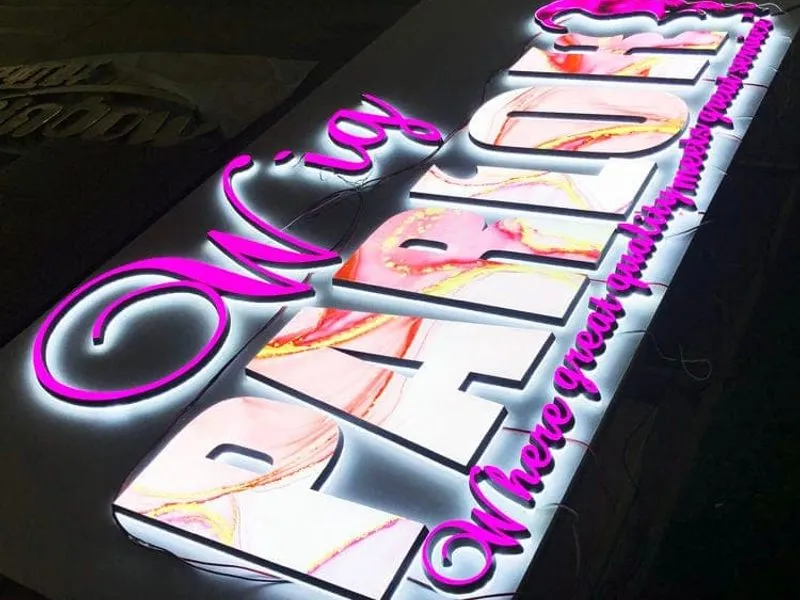
Twenty-seven years on the factory floor. I've burned my hands on hot acrylic, argued with suppliers about which LED module won't die in six months, and watched a thousand signs get installed.
And you know what? The whole trimless vs standard cap returns debate? Nobody talks straight about it. You see glossy brochures showing a "seamless" rimless letter that costs 40% more, and they sell it like it's magic. It ain't magic. It's metalwork, and there's tradeoffs. So let me save you the bullshit and tell you what actually matters when you're staring at a pair of channel letters side by side.
Here's what nobody tells you: trimless doesn't mean frameless. It means the return—that edge that gives a channel letter its depth—is hidden behind the face. The letter still has a return. It just doesn't show from the front. That's it. That's the whole trick.
Pop a standard cap return letter next to a trimless one. Daytime, no lights on. The standard cap has a visible lip—usually 1/8 to 1/4 inch of metal or acrylic that wraps around the face. It's a shadow line. Some people call it "character." I call it "the way it's been done since the 1950s."
Trimless? The face sits flush with the return. No lip. No shadow. From straight on, it looks like the letter is cut right out of the wall. That's the effect. Clean. Modern. Architectural. If you're doing a bank lobby or a law firm's glass entry, trimless is the right call.
But here's the ugly truth: from any angle wider than 45 degrees, you see the sidewall anyway. The illusion only holds if you're looking dead-on. I've seen architects spec trimless for a sign that faces a street at 60 degrees. Wasted money. The lip's invisible from the sidewalk—the cap return would've been fine.
Standard cap returns have a built-in light trap. That lip catches any stray photons trying to escape the face edge. Keeps the light inside the letter, pushing it forward. Clean, even glow.
Trimless? You remove that lip. Now the light can bleed out the side of the acrylic face. If you're using a back-lit halo letter with SMD 2835 LEDs cranked to full brightness, you get a hot edge spot. I've seen guys try to fix it with black paint on the acrylic edge. That works for about 14 months before the paint flakes off. The right move is using a diffusion film or frosted acrylic with 90-92% light transmittance on the face—and that costs 20% more per sheet.
"But the brochure shows a perfect glow!" Yeah. On a white wall with ideal lighting and a photographer who knows Photoshop. In the real world, on a brick facade next to a parking lot light, you'll see that edge bleed unless you spec it right.
Another rookie mistake: acrylic thickness. For a standard cap return, you can get away with 3mm on letters up to 2 feet tall. For trimless, I spec 5mm minimum if the letter face is wider than 18 inches. Why? The face has no structural support from the return. It's just sitting there, glued to the back. Big letters? The face wants to bow inward from heat. I've replaced trimless letters at 18 months because the face sagged and the LEDs behind it hit the acrylic, creating a hot spot that melted the diffusion. That doesn't happen with a proper cap return that locks the face in place.
You can build a trimless letter in 304 stainless steel, aluminum, or acrylic. The material doesn't change the geometry. What changes is the cost and the finish.
Stainless 304 brushed finish? Beautiful. But the hidden return means you're welding from the back. Every weld scar that gets through to the front face is a scrap part. I've seen shops lose 15% of their trimless stainless letters to weld burn-through. That's $400 of material per letter, gone.
Aluminum trimless? Lighter, easier to fabricate. But you can't TIG weld aluminum as cleanly as steel. The heat distortion is worse. And if you're doing front-lit channel letters in aluminum with a trimless face and you live in a freeze-thaw zone—say, Chicago or Denver—the expansion differential between aluminum and the acrylic face will eventually break the adhesive. I've seen it at 3 years. Standard cap returns hide that joint better and give you a drip edge for sealant.
The ugliest truth: every coastal spec I've ever seen that specified trimless 304 stainless is wrong. For Miami, Galveston, Charleston? You need 316 stainless with 2-3% molybdenum for marine-grade corrosion resistance. I've replaced trimless 304 letters on a beachfront hotel at 30 months. Pitting everywhere. The owner paid $6,000 for a set of "premium" letters that rusted. A standard cap return in 316 would've cost the same and lasted 15 years.
Factory prices per letter: front-lit channel letters run $20-80 for standard cap returns. Trimless? Add 25-40%, depending on complexity. A 3-foot tall halo-lit letter with trimless face runs $120-180 from our shop. Same letter with a standard cap? $75-110. That's a $70 swing per letter. Multiply by 10 letters for a storefront sign, and you're looking at $700 more.
Now factor shipping. Trimless letters don't nest together well. They rest face-down, and the face is the most fragile part. We ship them with individual foam separators and a plywood crate—that's $40-60 more per crate for LCL sea freight. And LCL means your crate gets handled 6-8 times between our dock and yours. Every touch is a chance for damage.
Installation costs more too. Standard cap returns can take a 1/4 inch screw through the return without affecting the face. Trimless? You're screwless mounting or using adhesive channels. That's slower. Your local installer's charging $75-120/hour. They'll bill 2 extra hours on a trimless install versus a standard cap.
Standard cap return: pop the face off. Replace the module. Put the face back on. 20 minutes.
Trimless: you have to remove the whole letter from the wall to get to the face mounting screws that are hidden behind the return. Or you cut the silicone seal, pry the face off, replace the module, re-glue the face, and hope it's still waterproof. Our factory uses neutral silicone and a 8-12 hour aging test. Field work isn't that clean. I've seen trimless letters leak water into the return because the field-applied sealant failed at 6 months.
Here's the brutal honest truth: trimless looks cleaner, but it's harder to service. If you're spec'ing a sign for a tenant who will remodel in 5 years and toss the sign anyway? Save the money. Go standard cap. If it's a permanent building sign expected to last 15+ years? Trimless with proper spec—thicker acrylic, quality LEDs (Osram or Samsung modules with L70 ≥50,000 hours), and marine-grade materials—is the right move.
Q: Can I convert a standard cap return to trimless by just removing the lip?
A: No. You idiot. The face alignment and structural support are different. You'll end up with a crooked letter that leaks water. Order it right from the start or leave it alone.
Q: Is trimless worth the 40% cost premium for a strip mall tenant?
A: For a pizza joint in a strip mall? No. For a high-end boutique or corporate lobby? Yes. The customer needs to understand they're paying for a look that only works from certain viewing angles and requires more maintenance. If they're fine with that, take their money.
Q: What's the most common trimless failure you see?
A: Acrylic face delamination at 2-3 years because the adhesive didn't bond to the return edge due to dust or oil during assembly. That's an 80% shop-side problem. We run a 1-day vacuum hold after bonding to prevent it. Not every factory does that.
Q: How do I tell if a Chinese factory can actually make trimless letters right?
A: Ask for a photo of their QC sheet showing the 8-12 hour aging test and laser cutting tolerance to ±0.1mm. If they can't send one within 24 hours, find another supplier. We've been doing this since 2010 in a 3,000m² facility with 50+ workers, exports worldwide. But you gotta vet everyone—including us.
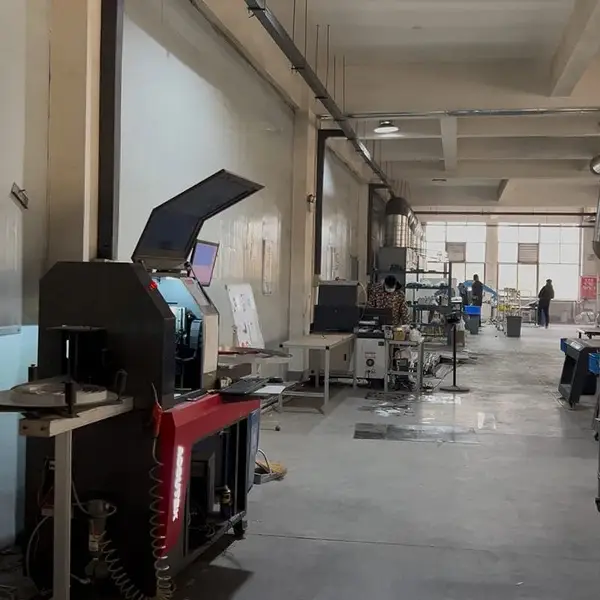
Real photo from our production floor — every sign we ship is made here.
Products mentioned or relevant to this topic — factory-direct, custom built.
Factory-direct since 2010. Free quote within 24 hours — no obligation.
Get a Free Quote → Copy EmailMOQ: 1 piece · Flexible lead time · 2-year warranty · Worldwide shipping
See pricing, specs, and get a free quote for the sign type you need. Built in our factory, shipped worldwide.