Let me start with something every sign shop owner learns the hard way: the return is what makes or breaks a channel letter, and most buyers don't even know it has two flavors.
You're looking at 3D letters. You see the face, the color, the LED glow. But the side wall — the return — and how the face attaches to that side wall, that's the difference between a $500 letter and a $1,500 letter on a storefront. It's also the difference between a sign that looks sharp for a decade and one that screams "2010" by year three.
So let's talk trimless versus standard cap returns. No fluff. No manufacturer fairy tales. Just what you'll actually see when you stand in front of a sign.
What the hell are we actually comparing?
A standard channel letter has three parts: the aluminum return (that's the side profile), the acrylic face, and the back. The face has to attach to the return somehow.
With a standard cap return, there's a plastic trim cap — usually a U-shaped PVC or acrylic strip — that snaps over the edge of the return and holds the face in place. That cap creates a visible border around the face. Smart, cheap, serviceable.
Trimless means no cap. The acrylic face is glued directly to a machined aluminum return with structural adhesive. The face sits flush with the metal. No border. No interruption. Just one smooth, continuous surface.
The visual difference is massive. But so is the headache if you don't understand what you're buying.
Standard cap returns: the old workhorse
Look, I've been building channel letters since before trimless was even a buzzword. Standard cap returns are still 80% of what we ship out of this factory. There's a reason for that.
The trim cap gives you a crisp, defined edge. It visually separates the face from the return. If your client wants that classic "letter with a border" look — think bank logos, law offices, anything trying to look established — a standard cap return delivers it perfectly.
Here's what nobody tells you: the cap is replaceable. If an acrylic face gets cracked by a hail storm or a drunk driver, you don't tear the whole letter apart. You heat the cap, pull it off, swap the face, snap the cap back on. Thirty minutes on a lift, done. Try that with a trimless letter.
Standard cap returns also handle thicker acrylic better. You can run a 5mm face on letters over 2.5 meters tall without worrying about the face popping out. The cap mechanically holds it. That's why our
front-lit channel letters with standard cap returns are still the go-to for storefronts that need to survive real weather.
But let's be honest. Visually, standard cap returns have a shadow line. A thin groove where the cap meets the acrylic. On a dark face, you barely see it. On a white or neon face, it's there. Some designers hate it. They call it "dated." And you know what? They're not wrong for premium architectural work.
Trimless returns: clean, but not simple
The ugly truth is this: trimless looks like a photo rendering come to life. The face is flush with the aluminum return. There's no groove, no seam, no plastic frame. You get this monolithic slab of color that glows from within. When you see a high-end bank or a tech office with those gorgeous, seamless letters — that's trimless.
"Aha," you think. "I want that."
Fine. But understand what you're asking for.
To make trimless work, the aluminum return has to be CNC-machined square. The acrylic face has to be cut and polished to an exact tolerance — we're talking ±0.1mm, not ±0.5mm. Then the face is bonded to the return with structural adhesive. There is no mechanical retention. It's glue and precision.
That means the acrylic thickness matters. For trimless, we commonly use 3mm acrylic for letters under about 1.5 meters. For bigger letters, we use 5mm. And we won't do trimless on letters over 2.5 meters at all — the thermal expansion of acrylic gets too gnarly, and the bond can fail in direct sun.
I've seen this go wrong: a shop in Arizona ordered trimless letters, mounted them facing south, and within eight months the faces started bowing and popping off. Why? They used cheap domestic acrylic with a different coefficient of expansion than the aluminum return. The UV turned the material brittle, and the adhesive let go. The manufacturer blamed the installer. The installer blamed the manufacturer. The client paid twice.
Don't be that shop. If you're doing trimless, you need quality acrylic. We use Mitsubishi or Degussa UV-resistant acrylic with 90-92% light transmittance. That's good for 5-8 years outdoors. Domestic acrylic will yellow in 1-2 years. That's not an upsell — that's physics.
The visual comparison nobody shows you
Let's break it down like you're standing in front of the sign.
- Face profile: Standard cap has a raised border around the face. Trimless is flat and flush.
- Shadow line: Standard cap creates a thin dark groove between cap and acrylic. Trimless has zero.
- Light bleed: With LED modules inside, standard cap can leak light around the cap edges at night if not sealed well. Trimless contains light cleanly because the face is bonded airtight.
- Perceived depth: Standard cap returns look slightly deeper because the cap protrudes. Trimless looks thinner, more refined.
- From far away: At 50 feet, most people can't tell the difference. At 10 feet, everyone can.
That's the honest truth. The visual difference is real, but it's only worth the premium if your client is going to be seen up close. A highway sign? Nobody cares. A lobby entrance or a retail storefront on a walking street? Trimless pays for itself in perceived quality.
Cost and production reality
Let's talk money, because that's what you came for.
At our factory, front-lit channel letters run $20 to $80 per letter on standard cap returns. Trimless adds typically 15 to 25% to the letter cost. Why? Extra CNC time, extra adhesive, extra care in polishing. It's not a huge jump, but it adds up on a 20-letter sign.
If you're comparing to US retail installed prices — $200 to $700 per letter for front-lit — you can see why importers want to order from a factory directly. But don't just chase the cheapest quote. A trimless letter from a shop that doesn't have CNC will be garbage. Ask for production photos. Ask about acrylic source. Ask about adhesive brand. If they can't answer, run.
Here's what nobody tells you: standard cap returns are actually more expensive in labor when it comes to face changes. With trimless, if the face cracks, you're replacing the entire letter. With standard cap, you're replacing just the face. So over a 10-year lifecycle, a standard cap sign might save your client $200 per letter in maintenance. That matters for multi-site retail chains. A trimless sign might look better, but it's a disposable luxury.
What we can and can't do at Aochuang Sign
I'm not going to pretend we're perfect. You want to trust us? Here's the straight talk.
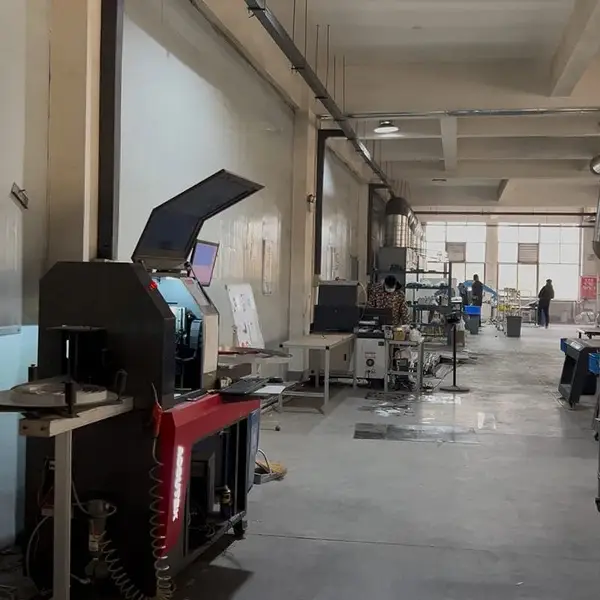
We can do trimless. We've been doing it since 2016. We have the CNC machines, the structural adhesives, and the skilled polishers. We'll make your trimless letters gorgeous. We'll even ship them worldwide with proper foam, carton, and plywood crate packaging. That's our job.
What we can't do is make trimless work for every situation. If your sign is over 2.5 meters, the letters are too big and the acrylic will expand too much. You need standard cap or a different construction. If your site is coastal and you need marine-grade durability, we can build the returns in 316 stainless steel — but don't expect trimless with 316 to be cheap. It's a 20-30% premium over 304, and the machining is slower.
We also can't magically make LED failures disappear. We use quality SMD 2835 modules with a 5+ year lifespan, and we warranty them for 2 years. Cheap modules will die in 12-18 months. We refuse to install those.
And here's the big one: we can't do trimless letters that are also easy to service with standard drivers. The LED driver has to go somewhere. With a standard cap return, we can hide a serviceable driver behind a removable back panel. With trimless, the back is usually sealed. So if the driver dies, you're cutting the letter open or replacing it. We'll tell you that before you order, not after.
Which one should you order?
Look, I've shipped thousands of channel letters. Here's my rule of thumb.
Order standard cap returns if:
- Your client is price-sensitive.
- The sign is above 20 feet or viewed from a car.
- The letters are large — over 1.5 meters.
- You want easy LED access and face replacement.
- You're working with aggressive weather conditions.
Order trimless if:
- The sign is at eye level or near a walkway.
- Your client wants a premium, modern aesthetic.
- The letters are small to medium — under 1.5 meters.
- You're okay with a higher upfront cost and less serviceability.
- It's for an interior sign, a lobby, or a flagship store.
If you're torn, go with standard cap on the exterior and trimless on the interior. That's what I'd do. You get the clean look where people are close enough to appreciate it, and the durability where Mother Nature is trying to destroy it.
A few last hard truths
The ugly truth is that most of the "trimless vs standard cap" articles you'll find are written by marketing interns who've never touched a heat gun. This one isn't. I've burned my hands on acrylic, I've argued with suppliers about LED quality, and I've watched sign shops pay $800 for a letter that we ship for $120. I'm not here to upsell you. I'm here to make sure you order the right thing the first time.
I've seen this go wrong more times than I can count: a contractor buys trimless letters from a cheap factory, doesn't specify acrylic thickness, gets 2mm domestic acrylic on a 1.8-meter letter, and it sagged within a year. That's not a trimless problem. That's a "didn't ask the right questions" problem.
So ask us the right questions. Ask for the acrylic source. Ask for the adhesive spec. Ask what happens when the LED driver dies. If we can't give you a straight answer on any of those, don't buy from us. But if you want a factory that will tell you "yes, that's a bad idea for that location" — that's Aochuang.
For most storefront work,
front-lit channel letters with standard cap returns are the right call. If you're doing an architectural project where the letter itself is the statement, look at our
back-lit halo letters — many of those look better with trimless, and we'll build them both ways depending on your site.
And if you're really chasing that seamless look with a different material altogether, our
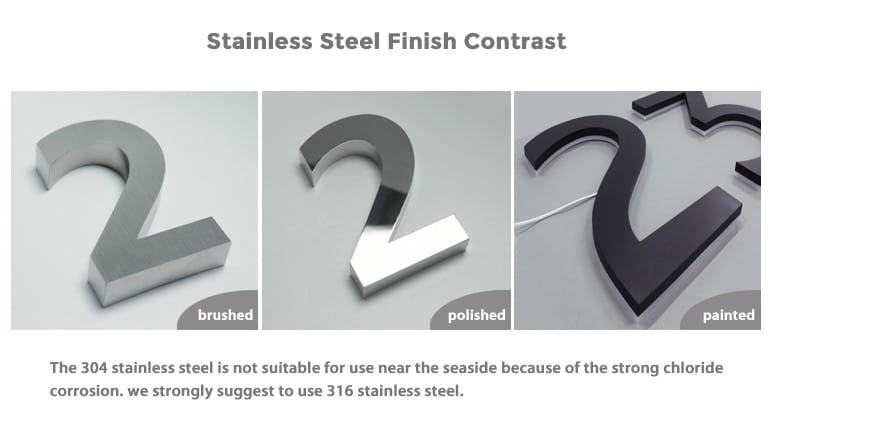
stainless steel letters are inherently trimless — there's no acrylic, just polished metal. That's a whole different product, and yes, we'll be honest about that too.
Decide based on the sign's job, not the trend. The client's sign will be up for a decade. Make sure it still looks good on year eight, and that you can still maintain it on year eight. That's the whole game.