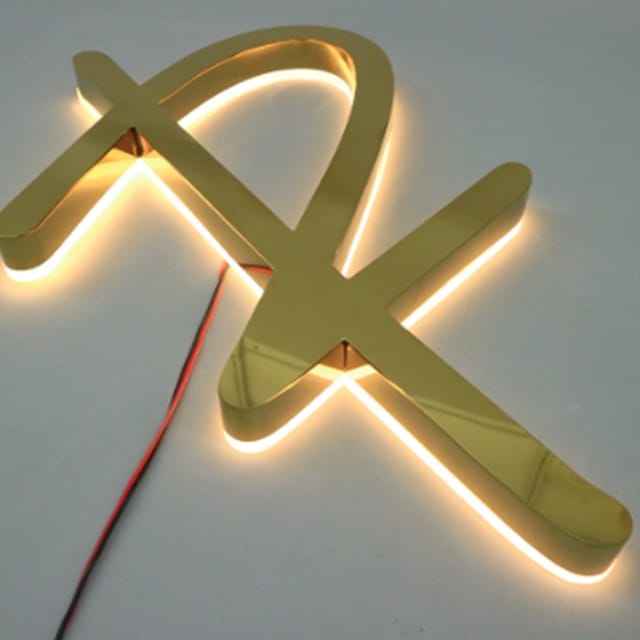
The first custom channel letter I ever built was for a dive bar that smelled like stale beer and regret. The owner chewed me out because the "S" in "SLOTS" went dark after three weeks. I was 25, and I’d used the cheapest LED modules our supplier had. Taught me something I've never forgotten: nobody on the factory floor cares about your deadline or your budget — they care about not getting yelled at twice.
I've been on that floor for 16 years now. I've seen the good, the bad, and the shipments that arrived looking like a forklift used them for a jousting tournament. The ugly truth is that most commercial sign buyers in the U.S. and Europe don't know what happens before a backlit halo letter lands at their shop. They assume all factories are the same, all certifications mean quality, and all LEDs last 50,000 hours. None of that's true.
Here's what nobody tells you: you can buy a perfectly built, UL-listed front-lit letter from a U.S. fabricator for $500 to $700, and that same letter — same 304 stainless, same Samsung 2835 LEDs, same acrylic face — ships from a factory like ours for $120. The difference isn't magic. It's Chinese manufacturing at scale, a 3,000m² facility with 50+ skilled workers who build nothing but illuminated signs, and a direct line from the floor to your door. No distributor markup, no middleman adding 40% for a truck ride from New Jersey to Ohio.
Look, I'm not here to tell you to stop buying local. There's value in walking into a shop and pointing at a sample. But if you’re a sign company placing recurring orders, a general contractor managing multi-location rollouts, or a business owner who wants 20 storefront logos without taking out a second mortgage, the math is simple. Wholesale illuminated letters and logos from a factory in China will run you 50-65% less on product cost than domestic fabrication — and that's before we talk about installation and freight savings when you consolidate a full container.
A set of 15 front-lit channel letters, 12 inches tall, with 3mm acrylic faces and warm-white 4000K Samsung LEDs, costs us about $45 per letter to produce, packaging included. We charge $80. That same letter from a U.S. shop might be $230 before shipping. If you need 15, you just saved $2,250. And the ugly truth is, most of that domestic price isn't better materials — it's labor overhead, local rent, and insurance. The aluminum backs, the LED modules, the Lexal acrylic? Same supply chain. The welding? Done by a guy who's been doing it 8 years, same as mine.
I've seen this go wrong: a Chicago sign installer ordered 40 illuminated logos from a factory that promised 10-day turnaround, CE certification, IP65 waterproofing. They arrived with powder coat flaking off the stainless and LEDs that flickered after six weeks. The factory had used 201-grade stainless painted to look like 304, and the IP65 rating was a sticker they printed themselves. He lost the whole project budget and the client. That's why you need to know what you're actually buying.
Here's a fact: 304 stainless steel has 18% chromium and 8% nickel, and it'll last 10+ years outdoors in a normal climate. Our stainless steel letters come in 1.0mm to 3.0mm thickness, with a brushed #4 or mirror #8 finish, and they don't pit unless you install them in salt spray. For coastal or industrial zones, 316 stainless with 2-3% molybdenum buys you 15+ years — but it costs 20-30% more. I've had a buyer who insisted on 316 for a strip mall in Nebraska. He paid extra for nothing. If you’re not within five miles of saltwater or heavy chemical exposure, 304 is plenty.
Acrylic faces: we use Mitsubishi or Degussa UV-resistant sheets that stay clear for 5-8 years without yellowing. Domestic acrylic? About 1-2 years before that warm white turns khaki. A 3mm face blocks 92% of light output; a 2mm face blocks 90%. Your client will never miss that 2%, but they’ll notice the 40% cost difference when you spec 2mm for letters under 2.5 meters. Don’t overspend on thickness that doesn't matter. The ugly truth is, a lot of factories push 5mm faces on everything because it's easier to handle, not because it looks better.
Look, I'm going to say something that will make some people angry: aluminum letters are not "cheap stainless." Good 0.063-inch aluminum with a powder-coated finish lasts 8-12 years outdoors, weighs a third as much, and costs $10-25 per letter at our factory. For interior wayfinding or retail soffits, it's a smarter choice than polished stainless. But so many sign specs call for 304 stainless because the architect saw it in a magazine. I've burned my fingers enough times on hot acrylic to know that function beats fashion every time.
Here's what nobody tells you: the best way to spot garbage LED modules is to look at the solder joints. Shiny silver? Proper lead-free solder, and those modules will likely hit 50,000 hours L70 lifespan. Dull gray? They used cheap tin-lead mix, and you'll be replacing letters in 12-18 months. I don't care if the spec sheet says "Long life 50,000 hours." Look at the solder. Or better yet, ask for a photo of a cut module. If the factory won't send it, walk away.
Our standard is SMD 2835 Samsung or Osram chips, 100-150 lumens per watt. The real-world lifespan is 5+ years under continuous nighttime operation, not the fantasy 11 years printed on a box. For RGB, you'll use SMD 5050, and if you need maximum brightness — think highway pylons — SMD 5730 at 40-60 lumens per chip. Color temperature matters: 3000-3500K warm white for hospitality, 4000-5000K neutral for corporate lobbies, 6000-6500K cool white for industrial or highway signs. If your factory can't tell you the exact binning of the LEDs they use, they're buying whatever's cheapest that week. That's how you end up with three channel letters in one sign that all look a subtly different shade of white.
Day-night dual-lit letters or full-body glow panels add complexity. The wiring and density change. Our back-lit halo letters often use a different LED arrangement behind the letter to create that clean architectural glow without hotspots. I've seen shops install halo letters with standard front-lit modules just turned around, and the illumination looks like a dim, uneven bruise. Don't be that guy.
I've seen this go wrong: a buyer places a $5,000 order for front-lit channel letters for a strip mall, chooses LCL sea freight to save $400, and then calls me screaming when the crate arrives with crushed corners and water damage. LCL means your crate gets handled 6-8 times between our dock and yours. Every touch is a chance for a forklift spike. That's not in the brochure. Pay for a dedicated pallet in a consolidated container, or better yet, pay for air freight on anything under 200kg. Express shipping for sample letters runs $30-$100 and gets there in 7-10 days. Sea freight is about 65 days, and that's if customs doesn't pick a random Wednesday to inspect everything.
U.S. Section 301 tariffs on Chinese sign products are around 30% right now. That's on the declared customs value, not the retail equivalent. So if your factory invoice is $2,000, you pay about $600 in duty. Still, you're miles ahead of domestic pricing. The real pitfall is brokers who misclassify illuminated signs as something else to save you
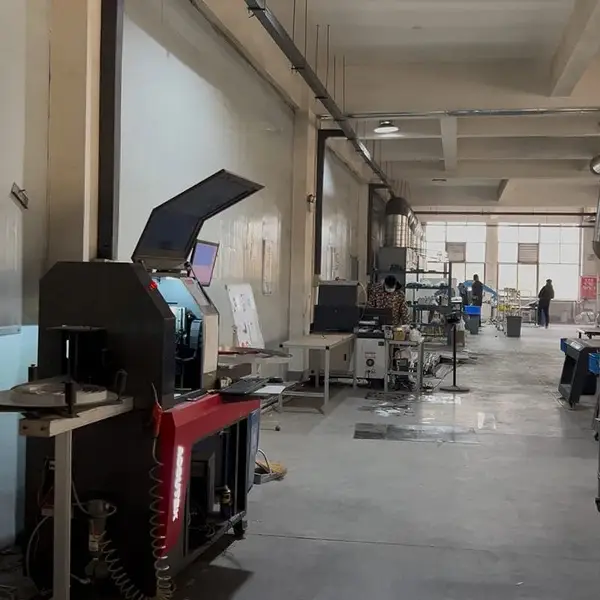
Real photo from our production floor — every sign we ship is made here.
Products mentioned or relevant to this topic — factory-direct, custom built.
From $24/letter · MOQ 1 piece · Flexible lead time · CE & UL certified · ships to 20+ countries
Custom sizes, colors, and finishes. Get a factory price in 24 hours.
Get a Free Quote Copy EmailWhatsApp +86 13865703472 · business@aochuangsign.cn
See pricing, specs, and get a free quote for the sign type you need. Built in our factory, shipped worldwide.