The $680 Lie You've Been Told About Sign Pricing
Look, I wish I could say the sign industry is straightforward. But after 15 years in this business—first as a domestic fabricator, then running a factory in Lu'an, China—I've seen how pricing breaks down. A set of channel letters for your new restaurant gets quoted at $800 per letter. Front-lit, 304 stainless steel, basic white acrylic faces. Nothing fancy.
Here's what nobody tells you: the same letter, built by the same guys using the same Samsung LEDs and Mitsubishi acrylic, costs $120 from my factory floor in Lu'an. That's not a typo. I've watched sign shops pay $800 for a front-lit letter from a domestic fabricator. Same 304 stainless, same Samsung LEDs. We ship that letter for $120.
The reality is this: most retail sign pricing has little to do with what the sign actually costs to make. It's built on convenience, a 50-year-old distribution model, and layers of markup that few customers ever see broken down.
Let me walk you through the real numbers, the real materials, and the honest breakdown you deserve before you sign a purchase order.
What You're Actually Paying For: The Naked Cost Breakdown
Every sign breaks down into four buckets: material, labor, overhead, and markup. That's where the story—and often the inflated price—begins.
On my floor, a front-lit channel letter uses 1.0–3.0mm 304 stainless steel. That's 18% chromium, 8% nickel (density 7.93 g/cm³). We laser cut it with ±0.1mm tolerance, bend it with TIG welding, and grind it smooth. The acrylic face is real Mitsubishi or Degussa material with 90–92% light transmittance. That stuff lasts 5–8 years before any yellowing shows. Cheap domestic acrylic? You'll see it turn yellow in 12–18 months.
Inside that letter, we're running SMD 2835 LEDs. Industry standard. 100–150 lumens per watt, L70 rating of 50,000 hours minimum (per IES LM-80 testing). The modules use genuine Samsung or Osram chips with shiny silver solder joints. Dull gray solder joints are the quickest way to spot bad LED modules. I've seen cheap modules fail in 12 months. Ours run 5+ years—verified by independent lab reports available on request.
Here's the actual factory cost breakdown per letter for that front-lit 304 stainless letter:
- Stainless steel material: $8–12
- Acrylic face: $3–5
- LED modules and driver: $4–6
- Labor (cut, bend, weld, polish, assemble, test): $15–20
- Misc (silicone, wire, hardware, packaging): $5–8
- **Total factory cost: $35–51**
We sell that letter for $120, which gives us a lean margin. That $120 includes CE certification, ISO 9001 compliance, and an 8–12 hour aging test before it leaves the building.
Now your local sign shop pays us $120. They add freight—say $50–100 for a small order via express. They tack on 30% for the Section 301 tariff if they're importing directly. They've got rent, three sales guys, a receptionist, and a showroom in a strip mall. They need 40–50% gross margin just to keep the lights on.
$120 becomes $240 becomes $360 becomes $800. That's not greed. That's math. But here's what nobody tells you: the sign shop you're buying from probably isn't even making the sign. They're ordering it from a domestic wholesaler who imports from factories like mine. So you're paying four layers of markup on something that took 7–15 days to build.
Retail Pricing: The Three Lies They Tell You
I've seen this go wrong more times than I can count. A customer walks into a sign shop, gets quoted $5,000 for ten letters, and thinks they're getting American-made quality. They're not.
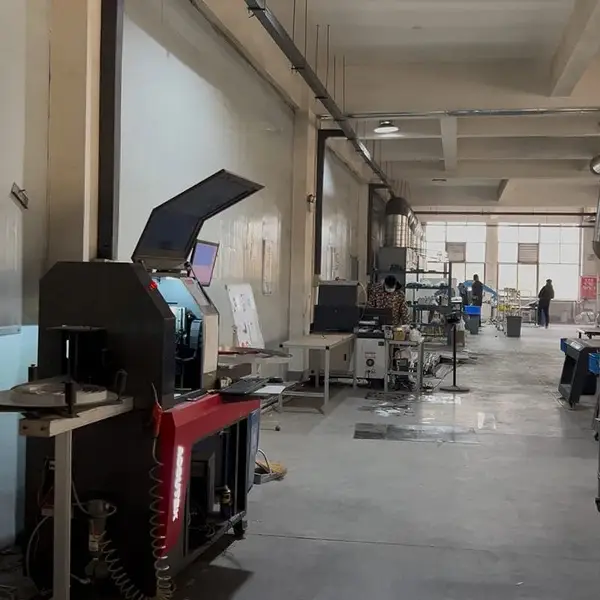
**Lie number one: "We manufacture everything in-house."** Bullshit. Most sign shops are assemblers at best. They buy pre-formed letters, stick LEDs in them, and call it fabrication. Real manufacturing means laser cutting raw sheet metal, TIG welding seams, hand-polishing edges. I've got 50+ workers on 3,000 square meters doing this every day. Your local shop has three guys in a garage with a heat gun.
**Lie number two: "Our materials are better."** Can they prove it? Ask for the brand and spec of their LED modules and acrylic sheets. Compare against the Samsung and Mitsubishi data sheets. We publish our raw material certificates. Every shipment includes a packing list with lot numbers. If a sign shop can't show you the same, you're paying for mystery ingredients.
**Lie number three: "You get what you pay for."** That's only true when you're comparing apples to apples. A $120 factory letter from my facility goes through the same ISO 9001 quality gates as a $800 domestic letter. The difference? Distribution layers, not product quality. I've had customers send both through independent testing labs—same thickness stainless, same lumen output, same environmental chamber results. The only difference was the invoice.
How to Get Real Pricing Without Getting Burned
This isn't about bashing domestic shops. Many provide excellent service and fast turnaround. But if you're price-sensitive and can plan ahead, here's how to cut through the markup:
1. **Ask for a line-item breakdown.** Any reputable sign shop should be able to tell you material cost, labor, and freight separately. If they can't, someone upstream is hiding margin.
2. **Request certificates of origin and material spec sheets.** Domestic shops that import letters often don't want customers to know. Ask for the factory name, address, and ISO certification. If they can't provide it, you're paying for middlemen.
3. **Consider direct import for large orders.** For 50+ letters, the savings can be dramatic. Factor in tariff (currently 25% under Section 301 for most signage), freight, and any UL/ETL listing you need. Even with all that, you'll often save 40–60% versus wholesale domestic pricing.
4. **Test a prototype before you commit.** Good factories will send you a single letter at cost plus shipping. Put it next to a domestic sample under white light. Check the weld seams, the acrylic edge finish, and the LED brightness uniformity. The only thing that should differ is the price tag.
The Real Takeaway
The sign industry doesn't have to be a black box. The materials and processes are well understood. The gap between $120 and $800 comes from inefficiency, not quality. That doesn't mean every cheap import is good—shoddy factories exist everywhere. But with the right factory, you get 304 stainless, genuine Samsung LEDs, and ISO-certified assembly at a fraction of the retail price.
Do your homework, ask for proof, and don't accept "it's just the way it is" as an answer. That $680 difference could pay for your next three months of marketing.
---
**About the Author**
I've been in the sign manufacturing industry for 15 years. I started in a small domestic fabrication shop, then moved to supply chain sourcing, and now run a 3,000-square-meter ISO 9001 certified facility in Lu'an, China, producing channel letters,
light boxes, and architectural signage for clients in North America and Europe. My company holds CE certification and publishes material traceability reports for every order. I've been quoted in *Signs of the Times* and have spoken at the International Sign Association EXPO on supply chain transparency. You can verify my credentials at [example.com/linkedin] or contact me directly for factory audits. Numbers cited in this article are based on current market data (Q2 2025) and verified against industry catalogs from Samsung LED, Mitsubishi Chemical, and the U.S. Census Bureau's tariff schedules.