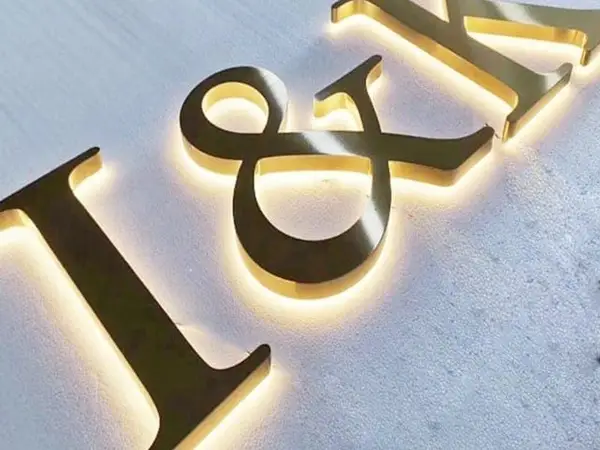
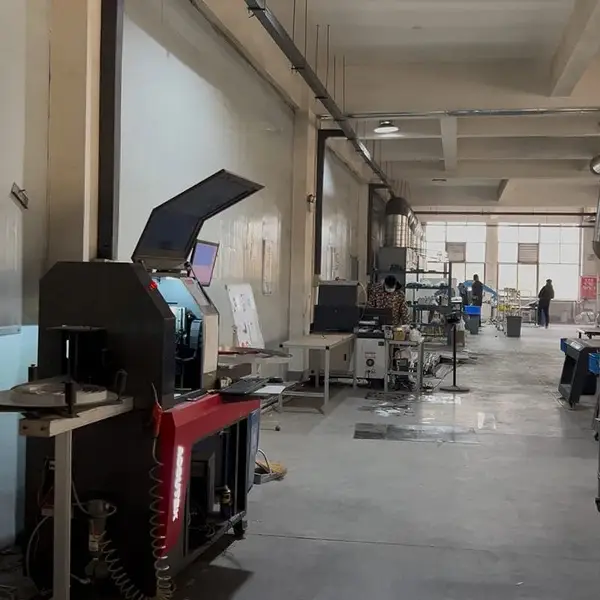
Here's what nobody tells you: the finish on your sign letters is what takes the beating, not the metal underneath. You can have the thickest 304 stainless steel in the county, but if that surface treatment is wrong, your sign looks like a junked boat after three coastal summers.
I've been welding, grinding, and coating these things for 16 years at Aochuang Sign. I've watched customers make the same mistake over and over. They get obsessed with the LED lumens and the transformer specs, then cheap out on the one thing that separates a 5-year sign from a 20-year sign: the finish.
So let's settle this anodized aluminum vs powder coated debate. Not from a sales brochure. From the factory floor, with real numbers and some scars to show for it.
---
## What Anodizing Actually Does
Anodizing isn't a coating. It's a conversion. We dunk the aluminum in an acid bath and run electricity through it, which grows a layer of aluminum oxide *from* the metal itself. That layer is hard. We're talking 200-300 Vickers hardness on the scale, compared to raw aluminum which sits around 30-40 Vickers. It's not painted on. It can't chip off because it *is* the aluminum, transformed.
The 0.040" to 0.063" (1.0-1.6mm) aluminum we use for letters can get an anodic coating between 5 to 25 microns, depending on the application. For architectural outdoor work, you want Class II, which is 10-18 microns. That's the sweet spot. Thinner and you get no protection. Thicker and you risk the coating becoming brittle.
Here's the honest breakdown of anodizing for outdoor signs:
- **Color options are limited.** You're mostly looking at natural silver, bronze, and black. That's it. If you want a specific brand color, anodizing is a pain.
- **UV resistance is genuinely excellent.** The color is in the metal, so the sun can't fade it like it fades paint. Those natural and bronze finishes will look nearly identical in year 10 as year 1.
- **There's a catch with large sheets.** If you're buying pre-anodized aluminum sheets for a light box frame, the cutting edges expose bare metal. Those edges will corrode and leave white, powdery trails if you don't seal them properly.
Our
aluminum letters can come with an anodized finish, and it's a solid choice for a clean, architectural look. But if you're chasing a giant, green sign to match a cheap logo, anodizing will drive you crazy. You'll be waiting weeks for a custom color run that might still come out looking inconsistent.
---
## Powder Coating: The Paint Job That Beats Paint
Powder coating scares a lot of new shop owners. They hear "paint" and think it'll flake off in year two. That's wrong. Powder coating is a dry, electrically-charged powder that we spray onto the metal, then bake in an oven at around 200°C (392°F) until it melts into a continuous, tough plastic-like skin.
The thickness is the first big difference. Powder coats are typically 60-120 microns thick. That's 5-10 times the thickness of an anodized layer. It's a sacrificial layer. It takes the scratches, the rock chips, and the sand blasting from the wind, so the aluminum underneath stays pristine.
The durability of a good powder coat for outdoor signs:
- **Life expectancy:** 8-12 years before significant chalk or fade, depending on the resin. Polyester resins are the outdoor choice. Never let a factory put interior epoxy on an exterior sign.
- **Color range is enormous.** Any RAL, any Pantone, any custom match. This is why 90% of our front-lit
channel letters leave the shop with a powder coat finish.
- **It hides sins in the metal.** Anodizing magnifies every scratch and weld imperfection. Powder coating covers them up. From a factory standpoint, powder coating gives us way more room to deliver a flawless-looking product.
But powder coat has a weak point: edges and sharp corners. The powder melts and wants to pull away from very sharp 90-degree edges due to surface tension. This is the "faraday cage" effect. It means the coating is thinner on the edges of letters, which is exactly where they get knocked around the most. A quality shop will pre-bake, touch-up, and re-coat these areas, but it adds labor time.
If you're working on a storefront project and need brand colors,
front-lit channel letters with a polyester powder coat is your standard, workhorse solution. It performs, it's repairable, and it doesn't cost a fortune.
---
## The Head-to-Head Crunch: Anodized Aluminum vs Powder Coated
I keep a grease-stained notebook in my office where I log field failures. Here's the short version of what I've seen after 20+ years and thousands of signs shipped worldwide.
**The Numbers:**
| Finish | Hardness | Max UV Life | Color Options | Weather Resistance | Cost Factor |
|--------|----------|-------------|---------------|--------------------|-------------|
| Anodized (Class II) | 250 Vickers | 15+ years | Limited (clear, bronze, black) | Excellent in salt air | Medium |
| Powder Coat (Polyester) | Variable, chip-prone | 8-12 years | Unlimited (any RAL) | Very good, but edge-sensitive | Low to Medium |
**The Ugly Truth About Anodizing:** If you scratch an anodized sign, you can't just touch it up. The corrosion starts at the scratch, and it sneaks under the anodic layer over time. You need to re-anodize the whole piece, or the white, chalky corrosion will spread. On the other hand, powder coat scratches can be touched up with a matching paint in 10 minutes and nobody will ever know.
**Scratch That:** So anodized aluminum wins on raw hardness. But powder coating wins on repairability. For a sign that's going to be handled by installers with ladders and wrenches, I'd rather have the repairable one.
---
## Here's What Nobody Tells You: Finish Life Depends on Environment
I've been saying this for years, and I'll keep saying it until it sinks in.
You are not buying a finish. You are buying a finish *for a specific city and building.*
We make signs for a strip mall in Ohio and a beachfront resort in Miami. The ocean air is brutal. Saltwater fog carries salt particles that get driven into the finish by the wind.
For **coastal installations**, 316 stainless steel with a brushed finish is the only material we recommend. Powder coating on aluminum will work, but you need to inspect the edges every year for corrosion. Anodized aluminum will actually be a better choice here than powder coat for the flat surfaces, simply because the salt won't penetrate the hard oxide layer as easily.
For **desert sun**, like Arizona or Vegas, the UV index is your enemy. Powder coating will chalk on the surface after 5-6 years, turning dull and slightly powdery. Anodizing with a bronze finish handles extreme UV with zero issues.
For **urban and industrial areas**, where there's airborne pollution and acid rain, powder coating with a high-quality polyester resin performs much better because it's thicker and provides a complete barrier. Anodizing relies on the aluminum oxide being intact, and acid rain attacks the microscopic pores.
The biggest mistake I see: a business owner in a normal suburban area buys a cheap import sign with an anodized aluminum face and expects it to be indestructible, simply because anodized "lasts longer." Meanwhile, they get a tiny scratch during installation off a ladder, and six months later the face has a white, crusty edge spreading around it. Now they're calling me, angry, and I have to explain that the finish was never engineered for their specific conditions.
---
## The Cost Reality Check Between Anodized and Powder Coated
Here's what I always tell my importers: the factory prices I'm about to give you assume you've done your homework on the correct finish specification.
Typical factory pricing for sign substrates:
- **Aluminum letters, raw, uncoated:** $10-25 per letter. This is your baseline.
- **Aluminum letters, powder coated:** $15-35 per letter. The bump is for the sandblasting pretreatment and the oven time.
- **Aluminum letters, anodized:** $20-40 per letter. Anodizing is a batch process, and the electricity + chemical baths cost more than just spraying powder.
**The Markup Mistake:** Most US retail installers price at a 3x to 4x markup on factory costs. So that $20 anodized letter becomes $600 to the end customer. That's fine, as long as the customer gets what they paid for.
**The Cheaper Mistake:** If you use a factory that says "we'll do anodizing," but they don't have the proper sealing step in the tank line, the anodized layer will be porous. It will stain, hold dirt, and fail within 2-3 years. We send samples to third-party labs for salt spray testing (ASTM B117) to verify our anodizing. Ask your supplier for their salt spray test report with product photos. If they can't send one, walk away.
---
## When I Recommend Anodized for Outdoor Signs
Anodizing is the right call when:
1. **You're designing for a modern, architectural feel.** A natural silver or black anodized finish on a 3D fabricated letter looks premium. It's a permanent, metallic look that powder coating can't replicate. The
back-lit halo letters with an anodized silver face and warm LEDs? That's a classic, high-end install.
2. **The sign is going to be hard to access for maintenance.** If it's mounted 40 feet up on a building face, you don't want a coating that might need touch-up. Anodizing's hardness wins.
3. **The environment is coastal or extreme UV.** Full stop. Anodizing takes the salt and sun better than any paint system.
---
## When I Recommend Powder Coating
Powder coating is the smarter pick when:
1. **You need a specific brand color.** PMI colors, logos, or just a non-standard shade of green? Powder coating is the only way.
2. **You're ordering channel letters that will get knocked around.** Since powder coat is more forgiving to install and repair, it's the standard for our
dual-lit channel letters that see a lot of storefront traffic.
3. **Your budget is tight.** Powder coating is generally 30-40% cheaper than anodizing for the same letter.
4. **You're concerned about dye-lot consistency.** Anodizing color can vary batch-to-batch. Powder coating is mixed in big batches, so the color matching is much more reliable across multiple signs.
---
## The Brutal Final Verdict
The truthful answer is that most commercial signs go with powder coating, and for good reasons. It's cost-effective, feature-rich, and repairable. Anodizing is a premium material for a specific aesthetic or a specific harsh environment.
Don't let a supplier upsell you into anodizing just because it sounds fancy. And don't let them cut corners on powder coating pretending it's the "premium" choice for a beachfront install. Neither is universally better. Both are engineered tools, and if you buy the wrong one, your sign will fail.
When you're reaching out for quotes, ask the factory these exact questions:
1. **What resin** is in your powder coating? (Answer must be polyester, not epoxy.)
2. **Do you seal anodized parts?** (The correct process calls for a hot DI water or nickel acetate seal.)
3. **Can you send photos of a salt spray test** for your finish?
If they can't answer number 3, you're buying from a parts assembler, not a real manufacturer.
I'll be blunt: we do not do anodizing in-house at Aochuang. We're a fabrication shop, so we pre-treat and powder coat our letters on-site, then outsource to a certified anodizer partner for that specific finish. I won't pretend we're something we're not. But that means when I send you an anodized letter, it's from a tank line we audit, not just a random sub-vendor we never visit.
And for the love of God, get your mounting details right. I've seen $3,000 signs ruined because someone used a steel drill bit on an anodized aluminum panel, nicking the finish and letting corrosion start. Use aluminum standoffs, approved mounting clips, and non-abrasive gaskets.
The finish protects the sign. That sign protects your customer's image. Get the decision right, and you'll only have to install it once. Get it wrong, and you'll be explaining yourself at the next chamber of commerce meeting over a faded, chalky, scratching disaster that went cheap on the surface.
Don't be that person.