Look, you can buy the best aluminum letters in the world and still ruin them with the wrong finish. I've been on the factory floor since before smartphones. I've watched signs come back faded, chipped, and corroded because someone saved $2 per square foot on finish.
Aluminum itself is naturally rust-proof. That part is easy. The finish is what takes the beating from UV, rain, salt, and the occasional idiot with a shopping cart. Get this wrong and you'll be replacing letters before the lease is up.
At Aochuang Sign, we make aluminum letters in 1.0mm to 1.6mm thickness. Outdoor life should be 8-12 years. But that number assumes you pick the right finish for the environment. Most people don't.
The two finishes you're comparing aren't equal. Anodizing changes the aluminum surface itself. Powder coating glues a plastic film on top. That's the whole argument in one sentence.
Here's what nobody tells you: anodized aluminum isn't a coating. It's an oxide layer grown from the metal itself. It can't peel, because it is the metal.
That means anodized letters shrug off UV better than any paint or powder. No organic pigments to break down. The color comes from dye trapped inside the oxide pores, then sealed. Salt spray, acid rain, bird droppings — anodized handles all of it without lifting.
Scratch resistance is excellent. A key dragged across an anodized face leaves a mark, but it doesn't expose raw aluminum to corrosion. The oxide layer is still there underneath.
The ugly truth is anodized color matching is a lie. You don't get Pantone 294C. You get "blue" — a range. If your client's brand manager holds a swatch next to the sign, expect a tense phone call. Anodizing is also limited in color choice. Blacks, silvers, bronzes, a few blues and reds. Anything else? Go powder coat.
I had a bank order 48 anodized blue letters. Three years later they looked purple. UV shifts the dye. The bank's facilities manager was not happy. We'd warned them. They wanted the "premium" finish. Premium doesn't mean color-stable.
Cut an anodized sheet and the edge is bare aluminum. That edge will start oxidizing before the letters even ship. A good fabricator will seal edges or design them to hide. Cheap shops won't bother. Guess which one you get when you buy on price alone.
Powder coat is polyester or epoxy powder sprayed on, then baked. It produces a thick film that hides minor surface scratches and gives you any RAL or Pantone color. Brand color match is nearly perfect. I've matched Coca-Cola red and Starbucks green without drama.
The film is thick enough to absorb small impacts. A pebble from a lawnmower bounces off. A shopping cart leaves a scuff you can buff out. That's why powder coating is the default for retail storefronts.
But here's what nobody tells you: powder coat fades. Slow at first, then all at once. Cheap powders start looking chalky after 3-4 years in direct sun. Good polyester powders last longer, but they still shift. Red is the worst. I've seen red powder coat turn pink in 18 months.
The ugly truth is powder coat chips. It doesn't matter who applies it. A rock from a commercial lawn mower, a hailstorm, a ladder bump. Once the film is breached, moisture gets under it and the coating lifts. Then corrosion starts at the edge of the chip and creeps sideways.
I've seen this go wrong: a customer in Texas installed powder coated letters near a parking lot. Six months later, every letter had chips along the bottom from gravel. The coating lifted in sheets. We replaced them with anodized and the problem went away until they repaved the lot.
Powder coat adhesion is only as good as the pretreatment. We phosphoric acid wash and dry every letter before spraying. Many factories skip the wash to save time. That's why their powder coat peels off in one piece after two winters.
UV and fading: anodized wins, but only if you accept limited colors. Powder coat loses over time, especially reds and oranges.
Impact and abrasion: powder coat absorbs small hits better. Anodized scratches but doesn't peel. For high-traffic areas with carts and ladders, neither is perfect. That's when we tell you to consider stainless steel letters.
Corrosion resistance: anodized wins in coastal and industrial air. The oxide layer is continuous on the face. Powder coat is great until it's not. One pinhole and salt air starts working underneath.
Color match: powder coat wins by a mile. Anodized can't do specific brand colors. If your client measures Delta-E, don't even try anodized.
Repairability: powder coat can be touched up with a paint pen. It won't be perfect, but it's something. Anodized can't be touched up at all. Damage is permanent.
Cost: at our factory, anodized and powder coat are close for standard colors. Custom powder colors add a small fee. Anodized custom colors add days to lead time and still aren't exact.
We do both finishes in-house. Anodized aluminum letters from our shop are standard architectural grade, not marine hardcoat. That means they're great for most of North America, but I wouldn't bolt them to a pier in Miami without expecting some pitting after a decade.
We can powder coat any RAL color. Yes, any of the 200+ colors. Lead time stays about 5-15 days for standard colors. Custom powder colors add 2-3 days if we have the powder in stock. If we don't, it's another week to order it.
Here's what nobody tells you: we can't anodize 1.0mm sheet to the same quality as 1.6mm. Thin aluminum flexes during the anodizing process, which causes micro-cracks in the oxide layer. For anodized outdoor signs, we strongly recommend 1.6mm or thicker. For powder coat, 1.0mm is fine because the film flexes with the metal.
We also can't guarantee anodized color consistency across different production batches. One batch of bronze might be slightly warmer than the next. If you're ordering 100 letters, we run them all at once to minimize variation. But reorder six months later and expect a subtle shift.
We can do brushed anodized, polished anodized, and matte anodized. Brushed is the most forgiving. Polished shows every fingerprint and scratch, but looks stunning indoors. Outdoors, polished anodized loses its shine in a few years without maintenance.
Honest truth number one: stop asking for anodized letters in a specific Pantone. I've seen importers spec "anodized PMS 186C" and then refuse delivery because the red was too orange. You're setting yourself up for a chargeback. Anodized red is red. That's all you get.
Honest truth number two: powder coating on sharp corners is a weak spot. The film pulls thin on edges and corners during curing. That's where the first chip happens. We radius the edges on our aluminum letters to reduce this, but if your design has sharp points, powder coat will fail there first. Anodized doesn't have that problem.
I've seen this go wrong: a contractor ordered 500 powder coated letters for a hospital wayfinding system. Every letter had a sharp corner on the number "7". Within a year, every "7" had a bare aluminum corner. The hospital complained. We'd told them to round the corners. They didn't. We still got blamed.
Another rookie mistake: thinking thicker aluminum fixes finish failure. It doesn't. 3mm aluminum with bad powder coat will still peel. Finish adhesion is about pretreatment and curing, not metal thickness.
And don't bury the finish spec in the fine print. If you're an importer, write "anodized, matte, clear or bronze" or "powder coated, RAL 7016, semi-gloss" on the purchase order. Vague specs get you whatever the factory has leftover from the last job.
If your client has strict brand colors, go powder coat. Accept that it may need replacement or repaint in 7-10 years. For a retail storefront, that's fine. The sign pays for itself long before then.
If your client wants zero maintenance and doesn't care about exact color, go anodized. Black, silver, bronze. It'll outlast the building's HVAC system. For coastal or industrial sites, anodized is the only aluminum finish I recommend.
If the sign is in a high-impact zone — drive-thru lanes, loading docks, parking lots near sidewalks — neither finish is bulletproof. Move to 304 stainless steel letters or at least 1.6mm aluminum with powder coat and expect touch-ups.
Here's what nobody tells you: the finish isn't the only variable. The aluminum thickness, the sealant on cut edges, the quality of the LED modules behind a front-lit channel letter — all of it matters. But the finish is the part your customer sees first when it fails.
We ship both anodized and powder coated aluminum letters from our Lu'an factory in about 5-15 days, MOQ one piece. One piece means you can order a single sample, bolt it to your own roof, and see what happens after a winter. I've done that myself with our own signs. It's the only test that tells the truth.
Don't let a sales rep tell you one finish is always better. That's a lie. The right finish is the one that matches the environment and the client's color expectations. Now you know enough to pick it without taking my word for it.

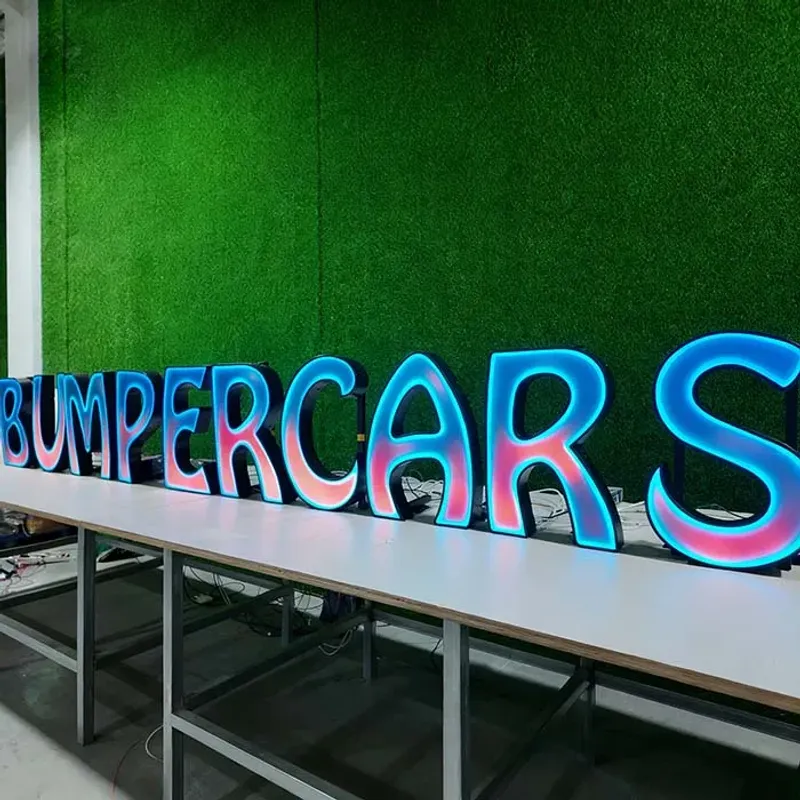
Real photo from our production floor — every sign we ship is made here.
Products mentioned or relevant to this topic — factory-direct, custom built.
From $24/letter · MOQ 1 piece · Flexible lead time · CE & UL certified · ships to 20+ countries
Custom sizes, colors, and finishes. Get a factory price in 24 hours.
Get a Free Quote Copy EmailWhatsApp +86 13865703472 · business@aochuangsign.cn
See pricing, specs, and get a free quote for the sign type you need. Built in our factory, shipped worldwide.