After 15 years building signs, I can tell you a bar's sign is the cheapest employee you'll ever hire. It works all night, never calls in sick, and pulls in people who've never heard of you. But only if you don't screw it up.
Most bar owners screw it up.
They buy a pretty face without asking what's inside. Then the LEDs die in 18 months, the acrylic yellows, or the landlord rejects the permit because the sign won't pass NEC Article 600. Then I get the call.
Look, the format you pick sets the whole game. Front-lit channel letters are my bread and butter for storefront bars. They're punchy, readable from two blocks, and factory cost runs $20–80 per letter. US retail installed? $200–700 per letter. That markup isn't magic; labor, permits, and a truck with a boom eat it up.
Back-lit halo letters cost more—$35–120 per letter from the factory, $400–1,000 installed. The halo effect looks premium, like a cocktail bar trying to be an architectural firm. But those letters need a solid wall behind them and proper standoff mounting. If your building facade is corrugated metal, halo letters fight you.
Cabinets—light boxes—run $80–250 per square metre from us. They're king for big graphics, but they're heavier and need more structural anchoring. Blade signs stick out perpendicular to the wall; they catch foot traffic on the sidewalk. Digital displays? I won't sell you one. Different supply chain, different maintenance nightmare. For a bar, a well-lit letter set beats a glorified TV nine out of ten.
Here's what nobody tells you: the cheapest option isn't the format. It's the one you can service without a $400 crane call.
Bars are wet, greasy, and full of drunk people leaning on things. Your sign has to survive that.
Stainless steel letters in 304 grade will give you 10+ years outdoors. 304 is 18% chromium, 8% nickel, density 7.93 g/cm³. For most street-level bars in Ohio or Denver, 304 is plenty. For Miami Beach or any coastal bar, pay the 20–30% premium for 316. 316 has 2–3% molybdenum—the difference between shiny letters and rust streaks after three salt seasons.
Acrylic is another story. UV-resistant acrylic from Mitsubishi or Degussa lasts 5–8 years before yellowing. Domestic acrylic? 1–2 years, maybe. If you're ordering acrylic LED letters for an interior bar, the UV issue matters less, but thickness still matters. Over 2.5 metres, you need 5mm+ or the face bows. For standard faces, 3mm acrylic cuts 92% light output; 2mm cuts 90%. The customer won't see the 2% difference but they'll see the cost bump—so don't oversell thickness unless the span demands it.
Most domestic acrylic on cheap signs isn't UV-stabilised. It yellows fast. Then the bar manager asks why the sign looks like it's been smoking since 2019.
I've seen this go wrong: a bar bought cheap channel letters from a guy with a website. Sixteen months later the LEDs started flickering like a disco strobe. They called me. I opened the back. The solder joints were dull gray. That means the factory used cheap lead solder. Shiny silver joints are proper lead-free. Dull gray modules won't last 18 months. Quality modules from Samsung, Osram, or Blueview run 5+ years real lifespan. SMD 2835 chips deliver 100–150 lumens per watt. L70 rating is ≥50,000 hours. Those cheap modules? They don't hit L70. They hit the dumpster.
For a bar, color temperature matters more than you think. 3000–3500K warm white makes people feel relaxed and ready to order another drink. 6000–6500K cool white works for a highway gas station, not a cocktail lounge. Don't make a bar look like a surgical ward.
Electrical compliance isn't optional. In the US, any illuminated sign falls under NEC Article 600. You need a disconnect within sight of the sign, and the power supply has to be accessible—not buried behind a sealed panel. UL 48 certification costs $4,000–15,000 and takes 4–9 months with quarterly audits. ETL works too and costs 10–30% less. If a supplier says they have CE, ask to see the certificate with today's date. CE costs 20,000–50,000 RMB and takes 2–8 weeks. Most factories claim they have it. Watch them sweat when you ask for the PDF.
IP65 means dust-tight and protected against water jets from any direction. That doesn't mean your sign survives a Florida hurricane. For coastal bars, spec IP66—powerful jets. For signs that might get submerged in a storm surge, you need IP68. But honestly, if the sign is underwater, you've got bigger problems than LED failure.
Look, a bar sign has one job at night: be readable from across the street before the Uber pulls up. If someone can't read the name in three seconds, you don't have a sign. You have wall art.
Nighttime visibility isn't about more LEDs. Contrast and letter height do the heavy lifting. A sign with great contrast in a 12-inch letter can beat a bigger sign that glows too uniformly.
But most cities cap sign size based on storefront width and zoning district. Some caps are brutal. I've seen a bar on a 60-foot frontage allowed only 30 square feet total sign area. Then the city rejected the owner's letters. Read the local code before you order. Landlord sign criteria can be even stricter than city code—especially in historic districts.
Here's what nobody tells you: the sign code section nobody reads is the one about illumination curfews. Some cities force you to turn off exterior signs at 2am. That's not a problem for bars open until 2, but for late-night bars, a timer on the circuit is code. Not optional. Install a photocell and a timer, and your electrician won't curse you later.
If you're using acrylic faces, remember a 3mm face cuts 92% light output. A 2mm cuts 90%. You can't just stack acrylic and expect the same glow. Test the actual ratio before you mass produce.
Interior bar signage is a different animal. You've got restroom signs, exit signs, and maybe directional signs to the rooftop. The ADA sets the rules for tactile signs: mounting height 48–60 inches from floor to the tactile text, non-glare finish, and Grade 2 Braille. Not Grade 1. Grade 2 is contracted Braille. If your fabricator doesn't know that, find another fabricator.
I've seen too many bars put a fancy mirror-polished restroom sign with tiny engraved text and call it good. That fails ADA and the drunk guy squinting at a dark wall. Interior wayfinding should be readable in low light, high contrast, and mounted where people actually look—not seven feet up on a doorframe.
Most contractors treat interior ADA signs as an afterthought. Then the fire marshal shows up for inspection and the bar doesn't open on schedule. Order your ADA signs before the painters, not after the grand opening invites go out.
Permits are where the pretty rendering goes to die. I've watched bar owners spend $5,000 on a sign design, then the landlord rejects it because the facade is landmarked, or the city refuses because the sign exceeds the allowed projection. Get the sign criteria in writing from the landlord before you pay for shop drawings. Not a verbal "looks fine." Written.
Here's what nobody tells you: the structural stamp is the hidden time sink. If your sign hangs over a sidewalk or weighs more than the wall's dead load allowance, a licensed engineer has to stamp the mounting details. That's a week or two if you're lucky. Some cities require wind load calcs. A heavier sign isn't always better. Aluminum weighs one-third of steel and gives you 8–12 years outdoors. A lighter sign can mean a simpler permit and a happier landlord.
If you're sourcing from overseas, remember the US Section 301 tariff on many sign products is roughly 30%. That's on the invoice value, before freight. Don't compare factory price to US installed price without adding tariff, freight, and brokerage. The savings are still real—factory-direct cuts 50–65% off product cost—but the landed number is what you pay, not the FOB number.
And for God's sake, file the permit before you book the crane. The crane company doesn't care that your permit is "in process." They charge in full when the truck rolls.
Here's the truth nobody puts in the brochure: the price you pay is maybe 20% of what that sign costs over ten years. The rest is installation, maintenance, repairs, and the bar owner's time dealing with a dead sign. If you can't service a sign from a standard ladder and you need a boom lift every time a module fails, you bought the wrong sign.
Factory pricing on front-lit letters runs $20–80 per letter. Halo letters $35–120. Stainless non-lit $15–40. That's the cheap part. The expensive part is when a cheap power supply dies in 18 months and the bar is dark for two weeks while someone ships a replacement from the cheapest vendor. We cover LEDs for 2 years and power supplies for 1. Quality modules from Samsung or Osram last 5+ years. Cheap modules die in 12–18 months. You do the math.
Sea freight LCL is cheaper—$80–200 per cubic metre—but your crate changes hands 6–8 times between our dock and yours. Every touch is a chance for damage. That's not in the brochure, but it's in my repair log. For a busy bar that needs signs now, express freight at $30–100 for small parcels or air freight at $4–12 per kilogram is worth the money. The bar loses more in a week of bad signage than you'd save on freight.
Plan for serviceability. Specify the power supply in an accessible junction box. Specify LED modules you can source from more than one supplier. And if you're in a coastal location, pay for 316 stainless and IP66 now. Replacing letters in 3 years costs more than the 20–30% 316 premium.
Q: Can I just buy the cheapest channel letters and replace them in two years?
You can. And then you'll pay for removal, disposal, new permits, and a new install while your bar sits there with an ugly patch on the facade. Cheap LEDs die in 12–18 months. Quality modules last 5+ years. The cheap sign isn't cheaper.
Q: Do I really need UL certification for a bar sign?
Yes, if it's illuminated and in the US. NEC Article 600 applies. UL 48 costs $4,000–15,000 and takes 4–9 months. ETL costs 10–30% less and passes inspection. If your sign shop says "we don't need that," walk away.
Q: What's the difference between IP65 and IP66 for outdoor bar signs?
IP65 handles dust and water jets from any direction. IP66 handles powerful jets. For a normal bar patio, IP65 is fine. For a coastal bar getting hit with salt spray and pressure-washed twice a month, spec IP66. IP65 won't survive a hurricane.
Q: Should I buy 304 or 316 stainless for a bar sign?
If your bar is more than 5 miles from salt water, 304 gives you 10+ years outdoors. If you're on the coast or near industrial fallout, pay 20–30% more for 316. 316 contains 2–3% molybdenum. That's the difference between a sign that looks new and a sign that looks like a shipwreck.

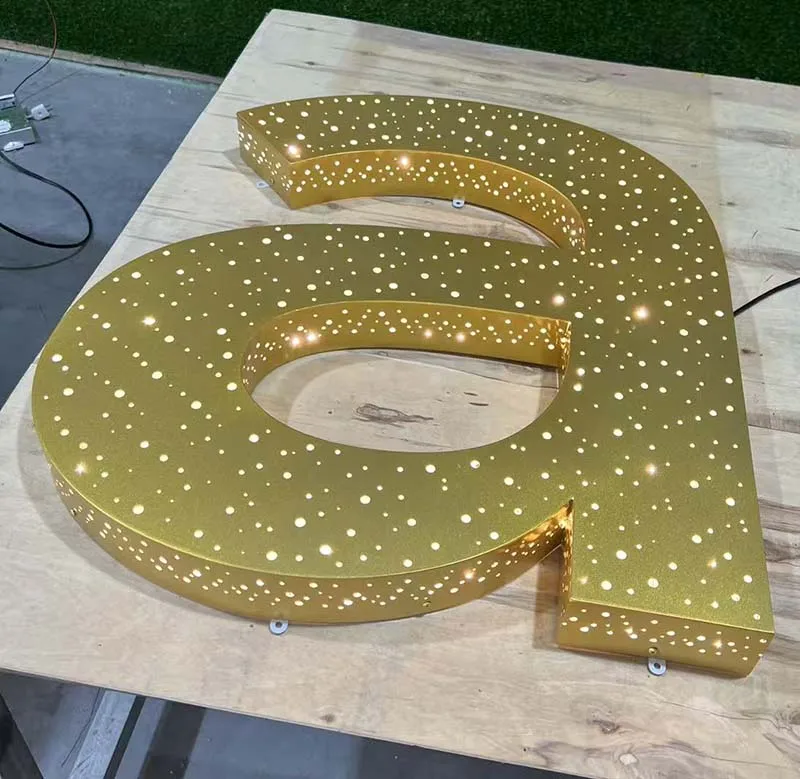
Real photo from our production floor — every sign we ship is made here.
Products mentioned or relevant to this topic — factory-direct, custom built.
From $24/letter · MOQ 1 piece · Flexible lead time · Project-specific compliance documents · ships to 20+ countries
Custom sizes, colors, and finishes. Get a factory price in 24 hours.
Get a Free Quote Copy EmailWhatsApp +86 13865703472 · business@aochuangsign.cn