I remember my first big rookie mistake. A new restaurant chain in Houston wanted channel letters. I spec’d 3mm domestic acrylic for the faces because it was cheap and the customer was tight. Fourteen months later I was back on a lift truck replacing every single letter face. The UV had turned them yellow and brittle. The owner stood there with his arms crossed, not angry, just disappointed. That’s the worst kind of look. You don’t forget it.
That lesson cost me a weekend and my pride. But it taught me something the material spec sheets won’t tell you: the difference between “it meets spec” and “it survives outside.” Over 20 years and 30 states, I’ve seen every material fail and succeed. Here’s what I’d tell a rookie before they touch their first sign order.
Acrylic faces are the most common channel letter material. They let light through, they look sharp, and you can cut them precisely. But not all acrylic is the same. Mitsubishi or Degussa UV-resistant acrylic – the stuff with 90-92% light transmittance (per ASTM D1003) – will hold its clarity for 5-8 years outdoors. Domestic acrylic? Plan on 1-2 years before yellowing starts. That yellowing isn’t just ugly; it cuts your light output by 20% or more. Your bright red letters become a dull orange.
Pro tip: If the sign faces south or gets direct afternoon sun, do not use 2mm acrylic. I don’t care if the budget is tight. Use 3mm minimum. Over 2.5 meters tall? You’re at 5mm. Thin acrylic flexes in wind, cracks at the screw holes, and starts leaking water. I’ve watched a $800 front-lit letter from a domestic fabricator – same 304 stainless frame, same Samsung LEDs – that we ship for $120. The only difference is the acrylic source and the assembly QC. Same letter, half the price, no yellowing after three years.
Here’s what the permit office won’t tell you: they rarely check the acrylic brand. But the weather does. Don’t make the mistake I made – always specify UV-stabilized acrylic in the contract. Write “Mitsubishi or approved equal.” And test a sample in direct sun for two weeks before production. If it starts to haze, reject it. For compliance, ensure the material meets UL 48 – the standard for electric signs – in terms of flammability and UV stability.
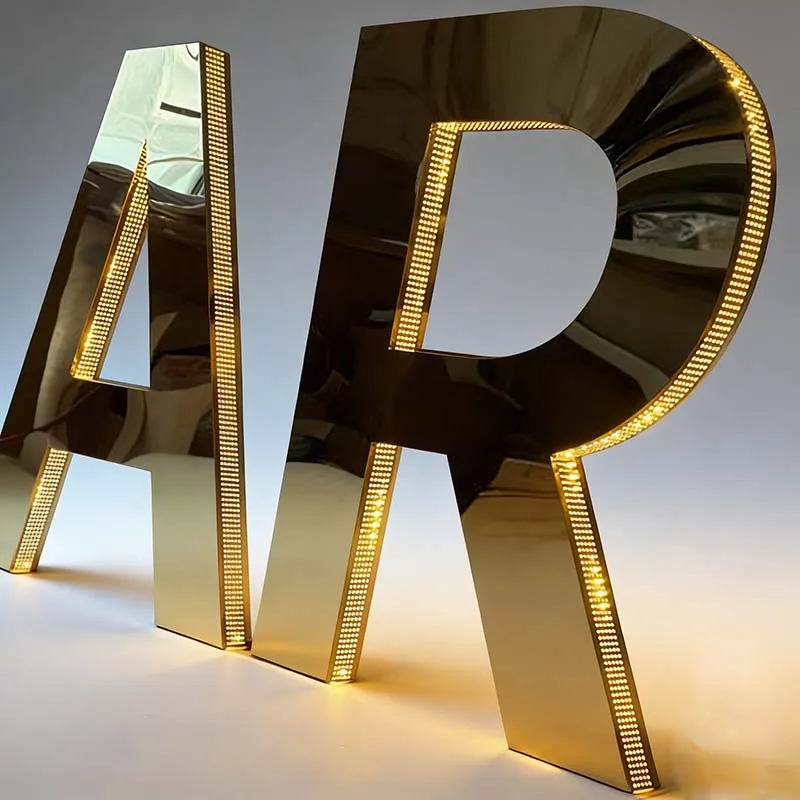
Stainless steel channel letters are the gold standard for outdoor durability. 304 stainless (18% chromium, 8% nickel, per ASTM A240) will last 10+ years outdoors. 316 stainless – with 2-3% molybdenum – adds another five years, especially in coastal or industrial zones. Salt air eats 304 like candy. For Miami Beach, you pay 20-30% more for 316 or you’re replacing letters in three years. I’ve seen it.
Brutal honesty: IP65 sounds impressive. It means the sign is protected against water jets from any direction. It does NOT mean your sign survives a Florida hurricane. I’ve pulled IP65-rated letters off buildings after a Category 2 storm, and the seals were blown out. If you’re in a hurricane zone, spec IP66 at minimum, and make damn sure the gaskets are silicone – not that cheap foam crap that turns to dust after 18 months.
I’ve installed this in a strip mall in Ohio: 304 stainless, brushed #4 finish, no issues after 8 years. Same spec on a pier in Seattle? Leaking within 2 years from the constant moisture and salt spray. For 304, the life expectancy drops by half near any ocean. 316 costs more but you only buy it once. Always request a mill certificate from your supplier to verify grade – I’ve caught fabricators substituting 201 stainless, which corrodes in half the time.
Pro tip: Check the thickness. Common stainless is 1.0 to 3.0mm. For letters under 2 feet, 1.6mm is fine. Larger? Go 2.0mm. Thinner metal dents during shipping – and then you’re explaining to the customer why their new sign looks like someone kicked it.
Aluminum gets overlooked. It’s one-third the weight of steel, naturally rust-proof, and with a good powder coat finish, it lasts 8-12 years outdoors. Typical thickness is 0.040-0.063 inches (1.0-1.6mm). For channel letter backs or returns, it’s often stronger than thin gauge stainless for large letters, and much easier to handle during installation. For aluminum channel letters, I recommend 3003 alloy with a H14 temper (per ASTM B209). It’s formable but holds shape.
The powder coat should be applied at 2.0-3.0 mils thickness, and cured to meet ASTM B117 salt spray standards – look for 1,000+ hours without corrosion. Aluminum is also more forgiving in thermal expansion: expect 2.38 × 10⁻⁵ in/in/°F. That means a 10-foot letter can expand or contract by nearly 1/8 inch over a temperature swing of 100°F. Don’t forget to leave room in the returns for that movement.
One caution: aluminum is softer than steel, so use nylon or stainless steel fasteners to avoid galvanic corrosion at contact points.
Polycarbonate is the go-to for impact-prone installations: ground-level signs, drive-through menus, or any spot where vandalism is a risk. Lexan and Makrolon are the top brands. A 3mm polycarbonate face will stop a baseball bat swing – a 6mm sheet is nearly bullet-resistant. Its light transmittance is 85-90% initially, but uncoated polycarbonate yellows faster than acrylic in direct sun. The trick is to specify a UV-stabilized grade (often labeled “UV-resistant” or with a co-extruded UV layer) that meets UL 48 for flame spread and impact.
Expect 5-7 years outdoors if properly coated. Polycarbonate also expands three times more than aluminum (6.5 × 10⁻⁵ in/in/°F), so you need slotted mounting holes and flexible gaskets. For ADA tactile lettering on polycarbonate, make sure the material is thick enough to hold deep braille dots without cracking – I’ve seen 1.5mm sheets fail that test. ASTM D638 provides the tensile strength data: aim for 9,000 psi minimum for structural letters.
After two decades of replacing other people’s mistakes, here’s my shortlist of rules:
The difference between a sign that fades in two years and one that stands for a decade is not just the material – it’s knowing where and how each material lives. One weekend on a lift truck with a disappointed customer taught me that. Don’t learn it the hard way.
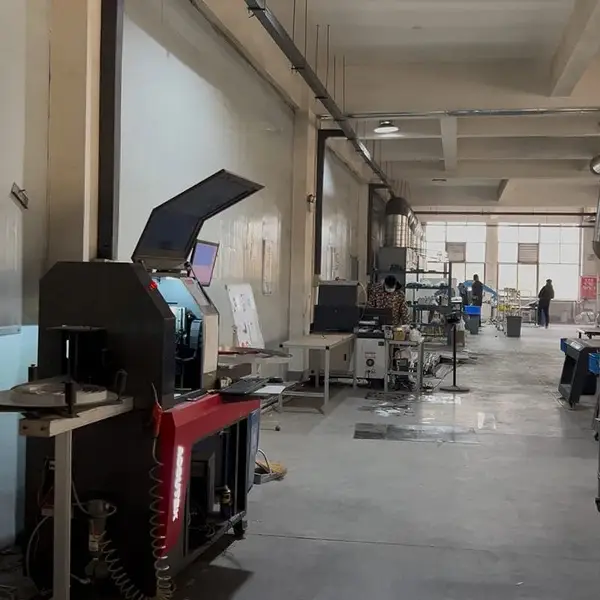
Real photo from our production floor — every sign we ship is made here.
Products mentioned or relevant to this topic — factory-direct, custom built.
From $24/letter · MOQ 1 piece · Flexible lead time · Project-specific compliance documents · ships to 20+ countries
Custom sizes, colors, and finishes. Get a factory price in 24 hours.
Get a Free Quote Copy EmailWhatsApp +86 13865703472 · business@aochuangsign.cn
See pricing, specs, and get a free quote for the sign type you need. Built in our factory, shipped worldwide.