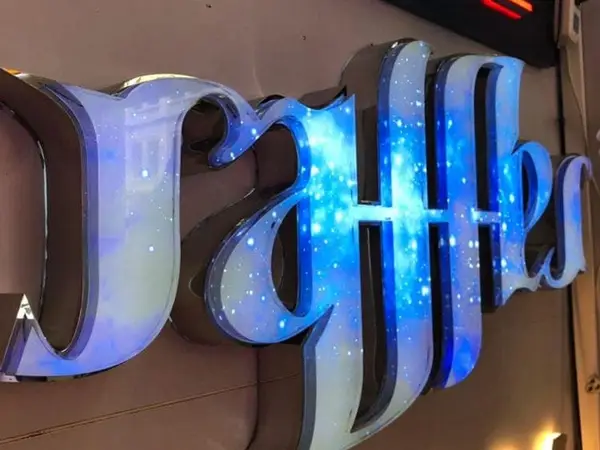
You've seen the glossy websites and the fake case studies. Every sign company promises "premium quality" and "industry-leading service." Most are lying. I've installed commercial signs across 30 states for two decades. I've watched $20,000 signs rot in three years because someone saved $200 on the wrong stainless steel grade. I've seen permits die because the inspector spotted a fake CE certificate from a factory that doesn't even own a soldering iron.
This guide isn't for the procurement team reading off a checklist. It's for you — the business owner, the project manager, the person who has to live with the sign for the next ten years. I'm going to tell you what the sales brochure leaves out. Spoiler: it's a lot.
I'll keep this simple: when a sign shop says "high-grade acrylic," ask which brand. Don't let them dodge.
Mitsubishi and Degussa acrylic offers 90-92% light transmittance and UV resistance that keeps the face clear for 5-8 years. The cheap domestic stuff? You'll see yellowing in 1-2 years. I've swapped out signs where the letters turned the color of old lemonade before the second winter. The client paid $800 a letter from a local fabricator. Same 304 stainless back, same Samsung LEDs — but the acrylic was trash. The factory I work with ships that same letter for $120, with verified Mitsubishi acrylic. The only difference is where the material comes from and whether someone checked the batch number.
Pro tip: ask for the supplier name and mill test certificate. If your fabricator hesitates, run. Don't walk.
Stainless steel is another minefield. 304 stainless has 18% chromium and 8% nickel. It'll survive 10+ years in normal outdoor conditions. But for coastal installations — anywhere within a mile of salt water — you need 316 with 2-3% molybdenum. That 20-30% cost premium is the difference between a sign that still looks new after five years and one that's bleeding rust streaks down your brick facade. I've seen it happen. A franchise chain saved $1,200 on letters for a Miami Beach location.
Three years later they spent $4,800 to replace them. Don't make the mistake I made: I once ordered 304 for a seafood restaurant in Galveston. Rookie error. I paid for it out of my own pocket on the replacement. Learned that lesson hard.
Aluminum for sign cabinets and mounting frames? It's one-third the weight of steel and naturally rust-proof. But not all aluminum is equal. The common thickness is 0.040 to 0.063 inches (1.0-1.6mm). If you're mounting a sign taller than 4 feet, go thicker. I've seen wind shear rip a 0.040-inch aluminum cabinet right off a T-bracket. No joke. The sign weighed maybe 50 pounds, but that thin metal flexed until the mounting bolts tore through. That's a lawsuit waiting to happen.
Here's what the permit office won't tell you: most LED modules on the market lie about their lifespan. They'll claim 50,000 hours, but they mean 5,000.
The industry standard L70 rating means the LED still produces 70% of its initial light at the stated hour. Quality modules using Samsung or Osram chips or the Lan Jing often exceed 50,000 hours real-world. That's 5+ years. The cheap stuff you find on Alibaba? Those modules use unknown chips that die in 12-18 months. I've replaced signs where every third letter was dark because the driver couldn't handle the current spikes. The client was furious — and they should have been. They paid $6,000 installed for a halo-lit channel letter set. They got a headache.
Quickest way to spot bad LED modules: look at the solder joints. Dull gray means poor-quality lead-free solder that'll crack with thermal cycling. Shiny silver means proper process. You can't see this on a product photo. You have to ask for a sample or a video of the production floor. Most factories will send you one if they're proud of their work. If they can't provide a close-up of a module under a microscope, move on. Seriously.
I've installed 2835, 5050, and 5730 SMDs for years. 2835 gives 100-150 lumens per watt — that's standard for white letters. 5050 is for RGB color-changing stuff. 5730 pumps out 40-60 lumens per chip, the brightest of the bunch. For a highway monument sign, you want 5730. For a storefront channel letter, 2835 with the right lens pattern does the job perfectly. Don't over-spec unless you need it. Overdriving a 2835 module will kill it in 18 months. I've seen it.
Color temperature matters more than you think. 3000-3500K warm white is great for hospitality — restaurants, bars, hotels. It feels inviting. 4000-5000K neutral white works for corporate and retail. Clean, professional. 6000-6500K cool white is for industrial zones and highway signs where visibility trumps ambiance. I've seen a steakhouse install 6000K letters. It looked like an operating room. They changed them out within a year. Don't be that guy.
IP65 sounds impressive. It means the sign is dust-tight and can handle water jets from any direction. It does NOT mean your sign survives a Florida hurricane. I've cleaned up after Category 3 storms. IP65 enclosures fill with salt spray faster than you think. For coastal areas, you need IP66 — powerful jets, or even IP68 for submersible applications. Most factories charge a small premium for the step up. It's worth it. Don't cheap out.
CE marking costs 20,000-50,000 RMB for the testing. Most factories will say they have it. Ask to see the certificate with today's date. Watch them sweat. I've had suppliers email me a PDF that expired three years ago. I've had others send a certificate for a different product category. The volume of fakes in this industry is staggering. If you're shipping into the US, CE means nothing for electrical safety — it's a European standard. But many importers use it as a shortcut because UL is expensive and slow. Don't fall for it.
UL 48 certification for electric signs runs $4,000-15,000 and takes 4-9 months. Plus quarterly audits. Most Chinese factories won't invest in it for custom small runs. But if your city requires UL — and many do, especially on the coasts — you have to pay for it. ETL is a legitimate alternative, typically 10-30% cheaper. I tell clients: if the local inspector accepts ETL, save your money. If they only accept UL, you have no choice.
Don't let a factory tell you "our sign is made to UL standards" — that means nothing. The sign must be labeled with the mark. Period.
NEC Article 600 applies to all electric signs in the US. That means proper grounding, correct wire sizing, disconnects within sight of the sign, and no exposed live parts. I've opened crates where the factory wired a 120V sign for 240V. I've found junction boxes with no strain relief. The NEC exists because people die when signs fall or catch fire. If your factory doesn't know NEC, find one that does. Non-negotiable.
ADA requirements for tactile signs: mounting height 48-60 inches to the baseline, non-glare finish, Grade 2 Braille. I've installed signs that looked great but failed inspection because the Braille dots were too shallow. The factory said they used "standard" — but there's no standard for Braille unless you specify ADA compliance. I now demand a Braille dimension report from every factory before I approve the artwork. Saves headaches.
Factory-direct savings are real. Front-lit channel letters run $20-80 per letter ex-factory. Back-lit halo letters: $35-120. Stainless steel non-lit: $15-40. The same sign installed by a US shop? $200-700 per letter for front-lit, $400-1,000 for halo. That 50-65% savings is tempting. But the cost doesn't stop at the factory gate. Here's what they don't tell you.
LCL sea freight: your crate gets handled 6-8 times between our dock and yours. Every touch is a chance for damage. That's not in the brochure. I've opened LCL containers where the crate was upside down, soaking wet, and missing two letters. The factory packed it well. The freight forwarder didn't. You need to budget for crating that can survive forklift impalement. Plywood crates are standard, but I specify a minimum 3/8-inch thickness and internal foam bracing for anything over 5 feet. It adds $50-100 to the shipping. It saves you $2,000 in replacement costs. Do it.
Express shipping (7-10 days) costs $30-100 for small packages. Air freight (about 10 days) runs $4-12 per kilogram. Sea freight (about 65 days) is $80-200 per cubic meter for LCL or $1,200-3,000 for a full container. Most small businesses think LCL is a no-brainer. It's not if your delivery date is non-negotiable. I've had LCL shipments sit at the port for two weeks because the consolidator was waiting to fill the container. The client's grand opening was delayed.
They lost $5,000 in revenue for a $2,000 sign. Plan your lead time accordingly: about 5-15 days factory production, plus shipping time, plus customs clearance, plus trucking to site. Figure 8-12 weeks minimum for a sea shipment. If you need it fast, pay for air.
Don't forget the US Section 301 tariff: roughly 30% on fabricated steel and aluminum signs from China. The factory price you see isn't the delivered price. Your customs broker should calculate this for you, but many importers forget and get a nasty surprise when the shipment clears. I've seen clients pay an extra $900 on a $3,000 order. That hurts.
I've watched sign shops pay $800 for a front-lit letter from a domestic fabricator. Same 304 stainless, same Samsung LEDs. We ship that letter for $120. The difference? The domestic shop has rent, payroll, and a sales guy in a polo shirt. The Chinese factory has a 3,000m² facility with 50 workers running two shifts. Their MOQ is 1 piece. Lead time about 5-15 days. They've been doing it since 2010 and export worldwide.
Not every factory is good — I've been to some where the soldering stations are just irons sitting on a concrete floor. But Aochuang (the one I work with) has CE, RoHS, ISO 9001, proper ESD mats, and a 2-year warranty on LEDs and 1-year on power supplies. That's not typical. That's the standard you should demand.
Light boxes run $80-250 per square meter ex-factory. Neon flex signs $30-200. 3D fabricated letters $40-120 per inch of height. Those numbers don't include shipping, tariffs, or installation. But they're real prices from a real factory. Use them as a baseline. If someone quotes you double without good reason, you're getting ripped off. Simple as that.
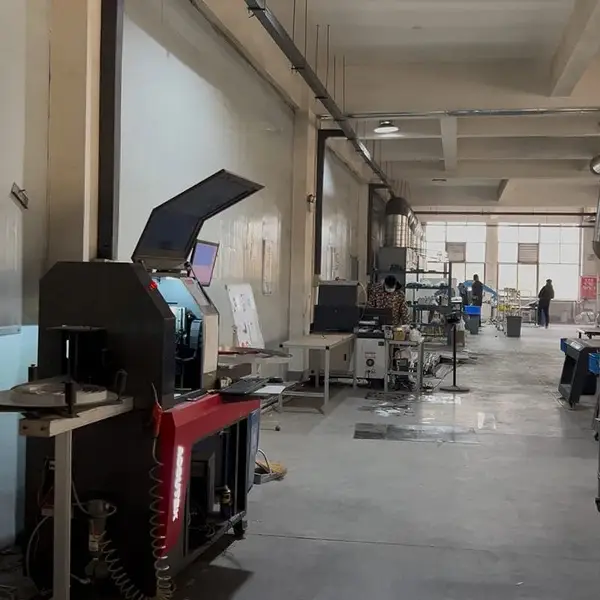
Real photo from our production floor — every sign we ship is made here.
Products mentioned or relevant to this topic — factory-direct, custom built.
From $24/letter · MOQ 1 piece · Flexible lead time · Project-specific compliance documents · ships to 20+ countries
Custom sizes, colors, and finishes. Get a factory price in 24 hours.
Get a Free Quote Copy EmailWhatsApp +86 13865703472 · business@aochuangsign.cn
See pricing, specs, and get a free quote for the sign type you need. Built in our factory, shipped worldwide.