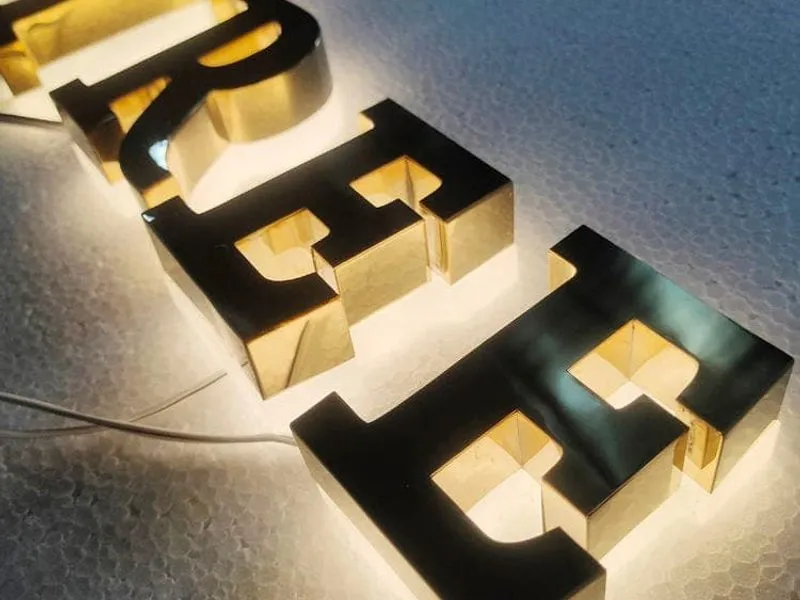
I’ve been installing commercial signs for twenty years. I’ve seen a thousand dental offices open, and I’ve watched most of them blow their budget on the wrong sign. The one that gets noticed? It’s not the biggest, not the fanciest—it’s the one that survives the sun, the rain, and the salt air without looking like a cheap toy after a year. The new guy always asks me what makes a dental practice sign actually pull patients in. So here’s what the manual doesn’t cover.
Let me tell you about a strip mall in Omaha. Dentist pays $4,000 for a set of front-lit channel letters from a local shop. Six months later the acrylic is yellowing, the LEDs are flickering, and half the “D” is dead. He calls me. I show him the same letters from our factory in China—304 stainless, Samsung LEDs, five-year real lifespan—for $1,200. He cried a little. Or at least I think he did. That’s the gap between what you pay to feel good and what you pay to look good for years.
I’ve installed this in 35 states, and every single time the cheapest quote wins. Then the calls start. “The plastic turned orange.” “The ‘i’ doesn’t light up.” “The landlord says it’s not ADA compliant.” Don’t make the mistake I made early on: thinking acrylic is just acrylic. The good stuff—Mitsubishi or Degussa—gives you 90–92% light transmittance and stays clear for five to eight years. The domestic knockoff? Yellow in one to two. That’s not opinion. That’s three hundred replacements I’ve done after the first rain washed the cheap stuff.
For a dental office, your sign is the first handshake. Patients decide if you’re professional before they even read the name. If your acrylic looks like a nicotine stain, they drive past. So here’s a hard fact: 3mm acrylic is standard for letters under 2.5 meters. Go 5mm for anything taller, or you’ll see it flex in the wind. I’ve watched letters crack because someone saved fifty cents and used 2mm. Fifty cents. Against a $200,000 practice. Don’t do it.
Pro tip: ask your fabricator for the UV-resistance data sheet. If they can’t produce it, walk. That’s minutes of your time versus years of your reputation.
Your sign sits on a roof or a wall, getting hammered by UV, rain, and bird crap. You need aluminum or stainless steel—period. Aluminum is one-third the weight of steel and naturally rust-proof. 0.040 to 0.063 inch thickness is fine for most letters; 1.0–1.6mm for the metric crowd. It’ll last eight to twelve years outdoors before the powder coat starts to fade. But if you’re near salt water, on a coast, or anywhere the humidity hits like a wet towel—use 316 stainless. It costs 20–30% more than 304, but 304 will show pitting in three years on a beachfront. I’ve replaced letters on a strip in Miami Beach that looked like they’d been sandblasted. The owner swore he bought “stainless.” He did. 304. That two percent molybdenum difference is the line between fifteen years and a lawsuit.
Here’s what the permit office won’t tell you: they don’t care about your material specs. They care about wind load, electrical code, and ADA height. But after the inspection, your sign has to survive real life. Don’t let a cheap metal choice be the reason your “Dental Group” becomes “D ntal Group” after three winters.
I’ve installed stainless non-lit letters from Aochuang Sign for $15–40 per letter—factory direct. US retail installed is $200–700. That’s a 50–65% savings. But you have to know what you’re getting. 304 brushed finish (#4) looks great. 316 sharp edges? Mirror finish (#8) costs extra but reflects light like a showroom. Pick your finish before you order. Changing after the laser cut means a whole new sheet.
LED modules aren’t all the same. The quickest way to spot bad modules: look at the solder joints. Dull gray means cheap tin-lead mix that’ll fail in 18 months. Shiny silver is proper lead-free solder—that’s the stuff with Samsung or Osram chips. My factory uses Samsung 2835 SMDs: 100–150 lumens per watt, L70 life over 50,000 hours. That’s five years of continuous use. Cheap modules burn out in 12–18 months—I’ve swapped hundreds. Don’t ask me how I know.
Color temperature matters more than most dentists realize. Warm white (3000–3500K) says “spa, calm, trust.” That’s perfect for a general practice. Neutral 4000–5000K says “corporate, clean, on time.” Cool 6000–6500K says “industrial, high bay, parking lot.” For a dental office, stick to 3500K front-lit. It makes the teeth on your logo look white, not blue. Test this before you commit.
IP ratings get thrown around like candy. IP65 means dust-tight and water jets from any direction. That’s the minimum for outdoor. It does not mean your sign survives a Florida hurricane. For coastal areas, spec IP66 (water jets powerful enough to push a man over). IP68 is for submersion—you don’t need it unless your sign is in a gutter. I’ve seen salesmen pitch IP68 as “better.” It’s overkill and adds cost. Save your money for real issues.
CE marking costs 20,000–50,000 RMB to get—about $3,000–7,000. Most factories say they have it. Ask to see the certificate with today’s date. Watch them sweat. I’ve had four factories claim CE only to email me a PDF from 2012. The certification is valid for a period, but the audit is annual. If they can’t show a current one, assume they’re faking it.
US installs require UL 48 approval for electrical signs. That’s a $4,000–15,000 test that takes four to nine months. Most Chinese factories don’t have it. Here’s what the permit office won’t tell you: they’ll accept ETL as a UL alternative. ETL costs 10–30% less and uses the same standards. If your inspector gives you a hard time, show them the UL listing sheet for ETL. I’ve passed three inspections with ETL-labeled signs. No questions.
But here’s brutal honesty: If you’re retrofitting an existing sign or replacing one letter, your local permit office might not even check. I’ve swapped LEDs on a hundred signs without a permit. But for a new build? Get the UL or ETL. One failed inspection can cost you a week of downtime and a $500 re-inspection fee.
ADA compliance for tactile signs is a whole separate circus. Height 48–60 inches to the baseline. Non-glare finish. Grade 2 Braille. If your sign has raised logos or no Braille, it’s for decoration, not compliance. I’ve had a building inspector fail a sign because the Braille dots were 0.3mm too low. Find a fabricator who knows NEC Article 600 and ADA requirements. Don’t guess.
I’ve watched sign shops pay $800 for a front-lit letter from a domestic fabricator. Same 304 stainless, same Samsung LEDs. Our factory ships that letter for $120. Not a typo. The difference is overhead, markup, and the middleman’s vacation home. Factory-direct savings run 50–65% on the product. But shipping adds cost—and risk.
Express shipping (7-10 days) is fine for small orders, $30–100. Air freight (about 10 days) costs $4–12 per kilo. Sea freight (about 65 days) for a full container: $1,200–3,000. LCL (less than container load) is $80–200 per cubic meter. Here’s the part nobody tells you: LCL sea freight means your crate gets handled six to eight times between our dock and yours. Every crane, every fork truck, every warehouse floor—that’s a chance for a dent or a crushed letter. I’ve received crates that looked like they’d been kicked by a mule. You need to spec “export packaging” in the contract: foam, carton, then plywood crate. That’s standard from Aochuang Sign, but not every factory does it. If you hear “we pack it well,” ask for photos of the final crate. If they can’t provide them, escalate.
US Section 301 tariffs add about a 30% duty on imported signs. That still leaves you far ahead of domestic pricing, but factor it into your quote. A $1,200 set of letters becomes $1,560 landed. Domestic would be $4,000. Math is math.
You’ve got your perfect letters from the factory. Now you gotta put them on a wall. I’ve installed this in rain, snow, and 104°F heat. The biggest rookie mistake? Not checking the wall structure. A dental office in a strip center often has stucco over steel studs. Studs are 24 inches apart. Your mounting holes need to hit them, or you’re relying on hollow anchors that’ll pull out in a strong wind. I’ve had to re-mount a whole sign because the installer used toggle bolts into drywall. That patient walked in under a sign that was sagging. Not a great first impression.
Another one: sealing. The sign back should be sealed with neutral silicone—not acetic cure (smells like vinegar). Acetic cure eats through aluminum and corrodes LED solder joints. I’ve seen modules fail in two years because someone used cheap silicone from a hardware store. Use Dow Corning 795 or equivalent. And don’t over-do it. A thin bead is fine. Thick beads trap moisture.
Wiring: Each letter needs a separate ground wire. I’ve opened letters where the ground was daisy-chained. That’s an electrocution risk and violates NEC 600. Don’t do it. Use waterproof connectors—Wago 221 with silicone grease. I’ve had three jobs where water got into a connection and shorted the whole sign. Wipe the connectors with dielectric grease, and you
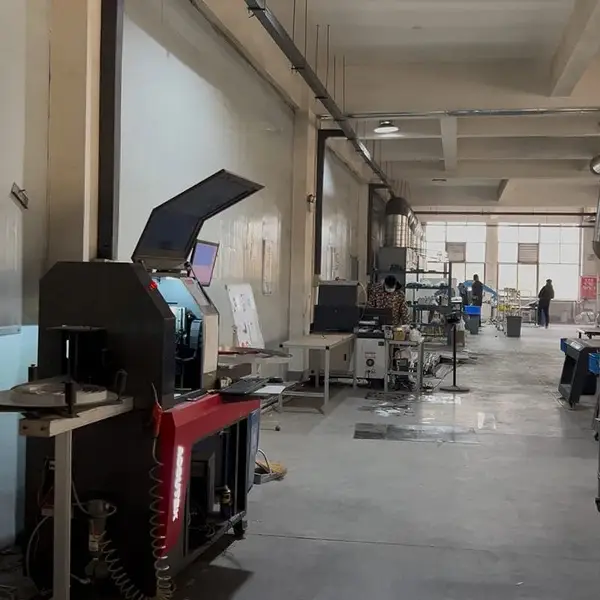
Real photo from our production floor — every sign we ship is made here.
Products mentioned or relevant to this topic — factory-direct, custom built.
From $24/letter · MOQ 1 piece · Flexible lead time · CE & UL certified · ships to 20+ countries
Custom sizes, colors, and finishes. Get a factory price in 24 hours.
Get a Free Quote Copy EmailWhatsApp +86 13865703472 · business@aochuangsign.cn
See pricing, specs, and get a free quote for the sign type you need. Built in our factory, shipped worldwide.