Look, if you're pricing LED neon flex from the first Google Shopping result, you're doing it wrong.
I've been on the factory floor since 2010. I've burned my hands on hot acrylic and argued with suppliers about LED lumen output. The factory price spread on neon flex is brutal—$30 to $200 per finished sign, same product type, wildly different guts. Nobody puts that in the brochure.
Cheap flex looks fine for six months. Then it yellows, cracks, or kills a power supply.
A finished neon flex sign at the factory gate runs $30 to $200. That range isn't random—that's three tiers of product.
The bottom tier is disposable. Uses no-name LED modules that die in 12–18 months. You'll see SMD 2835 chips rated at 100–150 lm/W, but the solder joints are dull gray and the silicone body feels like a pool toy. I've seen it go wrong. A bar owner in Austin bought 40 linear feet of the cheap stuff, saved $400 up front, then replaced the whole thing before the next liquor license renewal.
Mid-tier is the workhorse. Name-brand SMD 2835 modules, real lead-free solder, L70 rating of 50,000 hours. Expect 5+ years of real lifespan, not marketing lifespan. Factory price lands around $80–$120 per sign depending on length.
The top tier moves to SMD 5730 chips—40–60 lm per chip, highest brightness. That's for high-visibility applications or clients who demand punch. You pay $150–$200 per sign, but the light output justifies it.
Here's what nobody tells you: LED neon flex pricing is mostly about the LED module, not the silicone.
An SMD 2835 module from Samsung or Osram delivers 100–150 lm/W. A clone with the same model number might hit 70 lm/W in real conditions. The difference shows up in the solder joints—dull gray means it won't last 18 months. Shiny silver means proper lead-free solder. Our QC line checks this on every batch.
SMD 5050 is your RGB-capable workhorse. SMD 5730 is the brightest, 40–60 lm per chip. Color temperature changes the price too. 3000–3500K warm white for hospitality, 4000–5000K neutral for corporate and retail, 6000–6500K cool for industrial.
IP rating is where rookies get burned. IP65 means dust-tight and water jets from any direction—that's the bare minimum for outdoor. IP66 handles powerful jets, coastal. IP68 is submersible, extreme weather. None of them mean a Florida hurricane won't rip the sign off the wall.
The warranty tells you what the factory actually believes. Quality LED modules carry a 2-year warranty. The power supply? Usually 1 year. That's not a coincidence.
Ugly truth: if you're buying LED neon flex from a US distributor, you're already paying for three middlemen.
A factory like ours in Lu'an, Anhui runs 3,000 square meters with 50+ workers. We ship a finished neon flex sign for $30–$200. Factory-direct pricing runs 50–65% below what you'd pay domestically for the same product. That's not a discount—that's markup removal.
MOQ is 1 piece. That means you can order one sign, test it, install it, and then decide if you want a container. Lead time is 7–15 days, not three months. The factory process includes 8–12 hours of aging tests and 100% QC inspection before it ships.
Order volume changes freight, not product price. Sea freight LCL runs $80–$200 per cubic meter, but a full container costs $1,200–$3,000. LCL means your crate gets handled 6–8 times between our dock and yours. Every touch is a chance for damage. That's not in the brochure.
I've watched this go wrong. A restaurant owner bought real glass neon for a patio installation. It arrived cracked, the installer charged by the hour to rebend broken sections, and a hand-bent tube has no UL listing.
LED neon flex is not glass. Solid-state, with CE, RoHS, and ISO 9001 certification. Ships in a box, not a crate of fragile tubes. You can order one piece, MOQ 1, with 7–15 day lead time. The LED modules have an L70 rating of 50,000 hours.
When I compare installed cost, the glass neon always loses on labor. Cutting, bending, pumping, and wiring glass requires a craftsman. LED neon flex uses low-voltage power supplies and mounts with clips. The product itself costs $30–$200 per sign at the factory gate. Glass neon isn't a commodity—it doesn't come with a factory-direct price and a 7-day lead time.
Here's what nobody tells you: the per-meter price from a Chinese factory is not your landed cost.
A $200 neon flex sign shipped express costs $30–$100 extra and arrives in 7–15 days. Air freight runs $4–$12 per kilogram and takes 10–20 days. Sea freight is $80–$200 per cubic meter LCL or $1,200–$3,000 for a full container, but you'll wait 50–70 days.
Then you add Section 301 tariff, roughly 30% on top of the product value. So a $200 sign with $100 express shipping and a 30% tariff lands around $360. That's still half of what you'd pay a domestic fabricator for the same product category.
Regional price differences in the US are mostly installation labor, not product. In Miami, a coastal install with stainless steel mounting hardware and IP66-rated flex will cost more than a dry climate. But the product cost from the factory doesn't change.
If you think the sign is the whole budget, you're the guy who blows the quote by 40%.
A neon flex sign needs an aluminum channel or profile, mounting clips, a power supply, dimmers, and sometimes a controller. The power supply has a 1-year warranty. The LED modules have a 2-year warranty. Guess which parts we see fail first? The ones installers buy from Amazon for cheap.
IP65 means dust-tight and water jets from any direction. But if you drill through the silicone body without sealing with neutral silicone, you voided the rating. Our production process includes sealing, 8–12 hours of aging tests, and 100% QC. Not optional.
For exterior installs, use stainless steel or aluminum hardware. Stainless steel 304 lasts 10+ years outdoors. If you're in a coastal area, 316 stainless has 2–3% molybdenum and costs 20–30% more. Pay it or replace the hardware in three years.
Ask for the CE certificate with today's date. CE marking costs 20,000–50,000 RMB. Most factories will say they have it. Watch them sweat when you ask for a current copy.
Check the solder joints. Dull gray means cheap modules that won't last 18 months. Shiny silver means lead-free solder and a 5+ year LED lifespan.
Don't quote per meter alone. Quote landed cost per sign: product + freight + 30% tariff + power supply + mounting hardware + installation labor. That's the only number your client should see.
If you want a reliable product without the retail markup, compare front-lit channel letters to neon flex. Often the channel letter is the better buy for a storefront; neon flex wins for decorative outlines. Unlike acrylic LED letters, neon flex bends around curves, but the silicone body is the weak point. Choose accordingly.
Why is neon flex so cheap compared to glass neon?
Not cheap—mass-produced. Factory-direct product runs $30–$200 per sign. Glass neon is handcrafted and doesn't have a MOQ of 1 or a 7-day lead time.
What's a fair per-meter price from China?
Stop asking per meter. Ask for a finished sign price with 2-year LED warranty, CE/RoHS/ISO 9001 certs, and IP65 minimum. If they can't produce the certificate, move on.
How long does it last?
Quality modules are L70 rated at 50,000 hours and last 5+ years. Cheap modules last 12–18 months. The difference is the solder joints and the silicone.
Can I install it myself?
Sure. But if you don't seal the ends and use the right power supply, you'll void the warranty and then call me anyway.
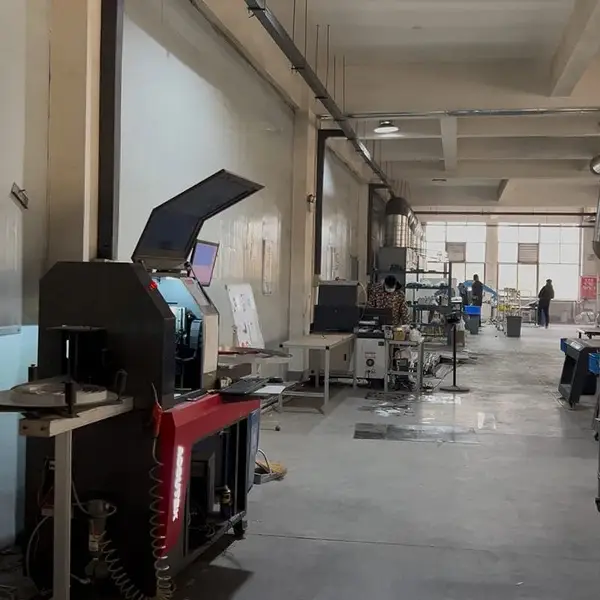
Real photo from our production floor — every sign we ship is made here.
Products mentioned or relevant to this topic — factory-direct, custom built.
From $24/letter · MOQ 1 piece · Flexible lead time · CE & UL certified · ships to 20+ countries
Custom sizes, colors, and finishes. Get a factory price in 24 hours.
Get a Free Quote Copy EmailWhatsApp +86 13865703472 · business@aochuangsign.cn