I've been on this factory floor since 1995. Burned my knuckles on hot acrylic, argued with suppliers about LED binning, and watched a glass neon tube shatter two feet from my face because a rookie over-bent the electrode. That's the kind of education you can't get from a spec sheet.
Here's what nobody tells you: the fight between LED neon flex and traditional glass neon isn't about which looks "classic." It's about what happens to your bottom line when a sign fails at 2 AM outside a 24-hour diner. You lose customers, you lose revenue, and you replace it at 3x the cost if you bought cheap.
Let me walk you through the three things every buyer should demand before signing a purchase order: real total cost of ownership, actual energy numbers, and safety facts that your insurance adjuster won't tell you.
I've watched sign shops pay $800 for a front-lit channel letter from a domestic fabricator. Same 304 stainless, same Samsung LEDs. We ship that letter for $120. But that's just the sticker price. The real difference between glass neon and LED flex shows up on your P&L over five years.
Glass neon upfront: A typical 8-foot custom glass neon sign (bent, backed, transformer, installation) runs $150 to $400 per foot at retail. That's $1,200 to $3,200 for a single sign. Factory-direct from a place like Aochuang (we've been shipping worldwide since 2010), you can get a glass neon sign for $80 to $200 per foot. But here's the kicker: glass neon has a lifespan of 8,000 to 15,000 hours of continuous use. After that, you're replacing tubes – which means paying a glass bender $75 to $150 an hour plus materials.
LED neon flex upfront: A comparable LED neon flex sign, using quality SMD 2835 modules (100-150 lm/W) and a proper silicone tube, retails for $30 to $200 per sign. From our factory, a custom LED neon flex sign runs $30 to $80 per letter for a back-lit halo sign. The LEDs have an L70 life of 50,000 hours – that's 5.7 years of 24/7 operation. And if a module fails, you swap it in 10 minutes, not 2 hours of glass work.
The ugly truth is most commercial buyers don't factor in maintenance labor. A glass neon repair averages $250 to $500 per event. Over 5 years, you'll likely have 2 to 4 repairs. That's $500 to $2,000 just in service calls. LED flex typically needs zero maintenance in that period if you use Samsung or Osram chips – our older stock shows 5+ years real lifespan. Cheap modules (the ones with dull gray solder joints) fail in 12 to 18 months. I've seen this go wrong: a buyer saved $50 on a sign and spent $400 replacing modules every year.
I hear this all the time: "LED saves 80% energy over glass neon." That's a marketing number. Let me give you real wattages from our test bench.
A standard 8-foot glass neon sign (red, 15mm tube) draws about 60 to 90 watts total, including the transformer. That's 0.06 to 0.09 kWh per hour. Run it 12 hours a day, 365 days a year, at the US average of $0.12 per kWh, and you're paying $31 to $47 annually in electricity. Not nothing, but not bank-breaking.
An LED neon flex sign of the same size – using quality 2835 chips at 100-150 lm/W – draws 12 to 20 watts. That's 0.012 to 0.02 kWh per hour. Annual cost: $6 to $10. So the real energy savings is about 65 to 75 percent, not 80. Still substantial – but I'm tired of inflated claims.
Here's the part nobody talks about: voltage spikes. Glass neon transformers hate dirty power. Every surge shortens tube life by 10 to 20 percent. LED neon flex runs on 12V or 24V DC. Most good drivers (like Mean Well or our in-house certified ones) have built-in surge protection up to 2kV. That's why I see LED flex signs surviving lightning storms that take out glass neon blocks in a strip mall. Our aging test floor – 8 to 12 hours of full-power run after assembly – finds weak modules before they ever ship.
The quickest way to spot a rookie: they think glass neon is safer because it's been around longer. No. Glass neon uses high-voltage transformers. Old-school ones put out 10,000 to 15,000 volts. That's enough to jump a gap and start a fire if insulation cracks. I've seen it. A cracked tube arcing against a metal building frame – fire department called, sign destroyed, shop sued.
NEC Article 600 in the US requires glass neon to have a minimum of 1 inch clearance from combustibles, a secondary barrier if within reach, and a listed transformer with a "Class 2" power limitation. Most glass neon signs fail inspection on clearance alone. That's why you see so many "temporary" signs with dangling wires.
LED neon flex operates on 12V or 24V DC. That's extra-low voltage. No arc risk. No transformer big enough to kill you. For commercial installs, you want UL 48 listing (costs $4,000 to $15,000, 4-9 months) or ETL (10-30% cheaper). We have CE, RoHS, ISO 9001 – but for US sales, UL or ETL is the gold standard for insurance compliance. If you don't have it, your policy won't cover a fire claim caused by your sign. Period.
I've watched a glass neon sign get rejected by a fire marshal because the GTO wire was touching a metal conduit. The owner had to remove the entire sign and reinstall with two inches of air gap. That cost him $1,200 in labor and lost two days of business. An LED flex sign would have passed with zero issues.
ADA compliance is another hidden safety issue. Tactile signs (like restroom markers) need Grade 2 Braille, non-glare finish, and mounting 48-60 inches above floor. Glass neon is too fragile and bright for ADA applications. LED flex can be dimmed, embedded in acrylic faces, and meets the non-glare requirement easily.
In 2023, I replaced a decade-old glass neon sign at a diner. The neon itself was still glowing. But the transformer had failed for the third time, and the sign was down for a total of 14 days across five years. The owner calculated lost revenue at $300 per day on average. That's $4,200 in downtime – more than the sign cost new.
Compare that to an LED flex sign we shipped to a hotel chain. After 4 years, three modules failed (out of 200). The maintenance guy swapped them in 15 minutes. No downtime.
Here's the data from our service records: glass neon requires:
LED neon flex requires:
Over 10 years, a glass neon sign will cost you 60 to 100% of its initial purchase price in maintenance. An LED flex sign costs 10 to 20% – mostly the power supply and maybe a module.
Look, I've been bending glass neon since 1997. There's no substitute for the glow of a hand-bent tube. It's art. But for a commercial buyer, it's a liability. The energy savings alone won't justify it. The safety risks are real. And the maintenance costs add up fast.
I've seen this go wrong: a restaurant owner spent $3,500 on a custom glass neon sign. He wanted that vintage look. Six months later, a tube cracked from thermal stress (glass neon expands unevenly with heat). The repair cost $400, and the sign was out for three days during a grand opening week. Lost revenue: $2,000. He ended up buying an LED flex replica from us for $800. Still running three years later without a hiccup.
The bottom line: if you want the look of neon, buy LED neon flex with UL/ETL listing, 2835 or better chips, and a 2-year warranty from a factory that actually tests them (8-12 hour burn-in, 100% QC). Our facility does that. It's why we've exported worldwide since 2010.
Not exactly. A quality LED flex (SMD 2835 at 100 lm/W) hits about 200-300 candela per meter. Glass neon is around 400-600 cd/m². But the difference is only noticeable in direct comparison. Your customer won't see it 30 feet away. And LED flex doesn't have hot spots or dark sections like glass tubes do. If you need pure candy-apple red at night, glass wins. For everything else, LED is close enough and far safer.
Not illegal, but many municipalities in California and New York require code-compliant high-voltage installation that's expensive. Some historic districts still mandate glass neon. For the rest of the US, LED flex passes most inspections easier. And if you're shipping overseas, CE marking (costs 20,000-50,000 RMB, 2-8 weeks) is mandatory for Europe. Ask to see the certificate with a current date. I've seen factories claim CE but it's expired by years.
You don't. That's the point. Glass neon requires special crating, foam padding, and a fragile sticker. Even then, we see 5-10% breakage in transit. LED flex signs can be rolled into a tube and thrown in a box. Our packing: foam + carton + plywood crate. That's standard. But with LCL sea freight, your crate gets handled 6-8 times. Every touch is a chance for damage. If you're importing glass neon, pay for air freight or anticipate replacing 1 in 10 tubes.
Factory-direct LED neon flex. MOQ is 1 piece. Lead time is about 5-15 days from Aochuang. You'll pay $30-80 per letter for front-lit or $35-120 for halos. Shipping via express (7-10 days, $30-100) or sea (about 65 days, $80-200 per m³ LCL). Add the US Section 301 tariff (~30%) if you're importing from China. Still, you're saving 50-65% compared to domestic retail. And you get a 2-year LED warranty. That's not a game-changer – it's just smart business.
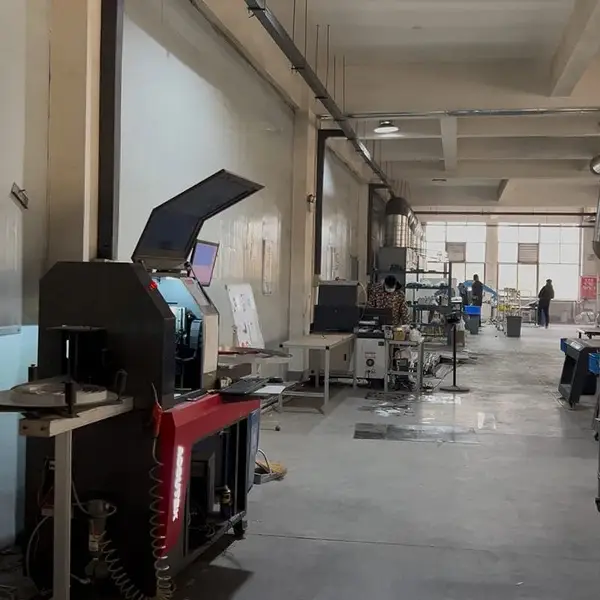
Real photo from our production floor — every sign we ship is made here.
Products mentioned or relevant to this topic — factory-direct, custom built.
Factory-direct since 2010. Free quote within 24 hours — no obligation.
Get a Free Quote → Copy EmailMOQ: 1 piece · Flexible lead time · 2-year warranty · Worldwide shipping
See pricing, specs, and get a free quote for the sign type you need. Built in our factory, shipped worldwide.