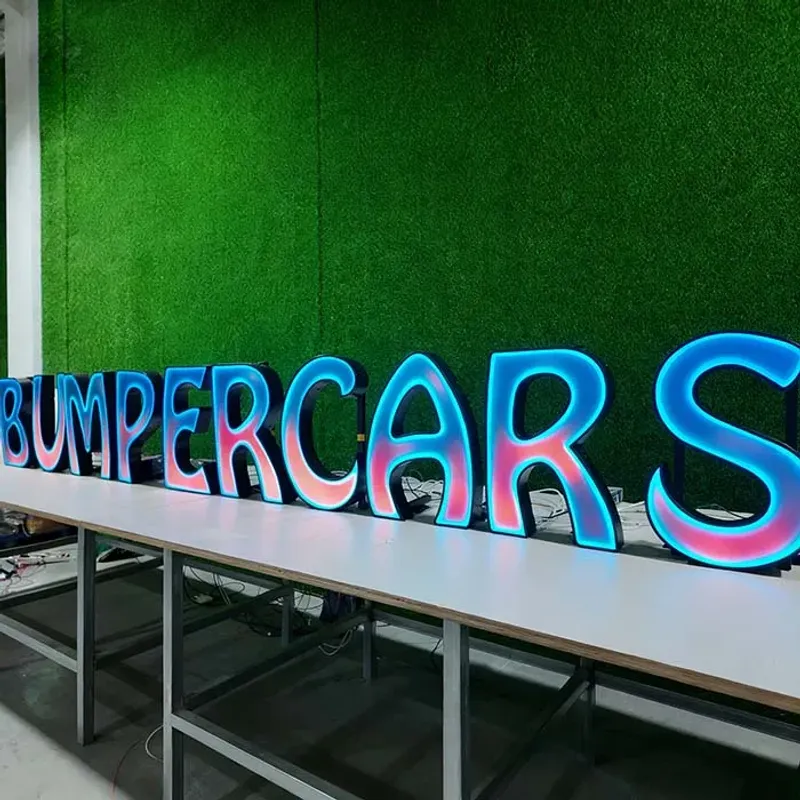
I've seen a glass neon sign arrive at a job site as a box of pink shards and broken dreams. That's not an exaggeration. That's a Tuesday.
So when a sign shop owner asks me whether LED neon is "as good" as traditional glass, I don't launch into a spec sheet. I ask how much they enjoy paying for crating, high-voltage transformers, and a glass bender who's booked until the next eclipse.
Then I tell them the truth. LED neon isn't a toy. Spec it right, and it's commercial-grade. Spec it wrong, and it's a landfill donation.
Look, glass neon still exists for a reason. It has a warm, continuous glow that cheap LED flex can't fake. But the maintenance and safety overhead is brutal.
Glass neon runs on a transformer cranking 12,000 to 15,000 volts through a sealed glass tube filled with gas. One hairline crack and the whole section goes dark. Most jurisdictions require a licensed sign tech to install the stuff, and the crating alone will make your accountant wince.
LED neon flex runs on 12V or 24V. That's laptop voltage. You can cut it, bend it, and mount it with nothing more exotic than a drill and some silicone.
Here's what nobody tells you: a factory-direct LED neon flex sign runs anywhere from $30 to $200 depending on size and complexity. The same glass piece from a US bender will cost you three to five times that before shipping. And the glass one won't survive a 900-mile truck ride without a custom crate that costs more than the sign.
Total cost of ownership is even worse for glass. LED neon from quality modules—think Samsung or Osram silicon-coated flex—will hit L70 at around 50,000 hours. That's over a decade of nighttime use. Glass neon tubes have to be replaced every few years if you're in a high-vibration or high-traffic area. No contest.
Most of the cheap LED neon flooding the market is PVC jacketed around no-name diodes. The PVC starts yellowing in 12 to 18 months. If you're buying for a restaurant or a retail chain, that's a callback waiting to happen.
Commercial-grade flex uses silicone instead of PVC. The difference is UV stability and heat dissipation. Silicone won't crack at -20°F, and it won't turn the color of a smoker's teeth after two summers.
Look, I can teach you to spot quality from across a warehouse floor. Look at the solder joints on the LED strip inside the flex. Dull gray means the factory used cheap solder with bad flux—those modules won't last 18 months. Shiny silver, properly spaced joints with no bridging, that's lead-free solder done right.
The LED itself matters more than the jacket. SMD 2835 chips are the industry standard, running 100 to 150 lumens per watt. If a supplier can't tell you which SMD chip they're using, they're hiding something. Quality modules from Samsung, Osram, or Blueview will give you 5+ years of real lifespan. Cheap no-name modules? 12 to 18 months before they start dropping like flies.
We run every sign through an 8- to 12-hour aging test before we box it. Then a 100% QC inspection. You'd be stunned how many factories skip the aging test and call a visual once-over "quality control."
Voltage first. 12V is fine for runs under 5 meters. Anything longer, spec 24V. Voltage drop on a 12V run over 20 feet will leave the end of your sign looking like a dying fridge light.
Now, IP ratings. IP65 is the minimum for any outdoor install. IP65 means dust-tight and protected against water jets from any direction. That doesn't mean your sign survives a Florida hurricane. If you're anywhere coastal—salt spray, wind-driven rain—step up to IP66. If some clever architect decides to mount it inside a fountain, you're in IP68 territory and I hope you charged accordingly.
Here's what nobody tells you: most "waterproof" LED neon flex sold online uses a self-adhesive backing that fails under UV in six months. Spec mechanical fastening. Use a UV-stabilized acrylic backer for anything mounted in direct sun, or a powder-coated aluminum backer if you need it to survive more than one lease term.
Mounting eats your margin. Too many shops underbid installation because they think a neon sign just "sticks on." A proper commercial mount means standoffs, a cut-to-shape backer, and a power supply hidden in an accessible junction box. Never tape.
Retail is the bread and butter. A 24-inch LED neon logo in a window runs off a 12V transformer and pulls less juice than the cash register's screen saver. Bump it with a stroller? No shatter. Put it on the same circuit as a high-voltage glass sign? No GFCI trip.
Hospitality jobs pay the bills if you spec them as architecture. Pair a back-lit halo letter set with a neon flex accent line and you've got a lobby feature that looks custom without the glass neon's maintenance liability. Hotel GMs love that pitch.
Events and OEM are a different animal. Event companies want lightweight, dimmable, and fast to deploy. They don't care about a 10-year lifespan; they care that it works every weekend for 3 years and packs flat. OEM buyers—think furniture makers, mirror manufacturers, bar suppliers—want a factory that can hit a 7-15 day lead time and hold a drawing tolerance of ±0.1mm. That's not every shop.
Look, if you're integrating 304 stainless steel letters with neon flex accents, make sure the fabricator understands thermal expansion. Steel moves. Silicone flex moves differently. If someone welds a rigid LED module to a stainless face, you'll get cracking at the joints in the first cold snap.
The tubing isn't where the cost sits. It's in the backer, the power supply, the LED density, and the QC. A 12-inch sign can cost $35 from one factory and $140 from another—and both look identical in a photo. The difference is what happens after 12 months.
Here's exactly where the margin hides for a B2B buyer. Factory prices for LED neon flex run $30 to $200 per sign depending on size and complexity. A US retail installed sign sells for $400 to $900. Even with a 30% Section 301 tariff and sea freight, a direct buy can save you 50-65% on product cost.
I've watched sign shops pay $800 for a front-lit letter from a domestic fabricator. Same 304 stainless, same Samsung LEDs. We ship that letter for $120. LED neon is the same economics, just smaller boxes and bigger markups.
Don't let MOQ scare you. A real factory like ours has an MOQ of one piece. One piece. Lead time is about 5-15 days, not 8 weeks. Express shipping for small signs runs $30-100 and lands in about 5-15 days. Air freight for bigger orders runs $4-12 per kilo. Sea freight is $80-200 per cubic meter LCL, but your crates get handled 6-8 times between our dock and yours. Every touch is a chance for damage. That's not in the brochure.
Quality LED modules on SMD 2835 chips have an L70 rating of 50,000 hours. That's where light output drops to 70% of original. Don't think the sign dies at 50,001 hours. It'll be dimmer but still working. Good to know when a client reads a competitor's spec sheet and panics.
Here's the ugly truth: your power supply will die before the LEDs do. That's why we warranty LEDs for 2 years but power supplies for 1 year. If someone offers you a 5-year warranty on a power supply, they're pricing in a lot of replacements or they're lying. Usually both.
Maintenance isn't zero, but it's simple. Clean silicone flex with a damp cloth and mild soap twice a year. Check the power supply connections for corrosion if it's outdoors. Don't power wash an IP65 sign, because IP65 doesn't mean pressure-washer-proof, and I've seen a handyman turn a $900 sign into a $900 paperweight in about 40 seconds.
If you need a sign for a coastal install, don't cheap out on the backing. 304 stainless steel letters are rust-proof for 10+ years. For a marine environment—Miami Beach, Galveston, anywhere with salt in the air—step up to 316 stainless, which costs 20-30% more but has molybdenum in the alloy to fight pitting. For a strip mall in Ohio, 304 is fine. For Miami Beach, pay for 316 or you're replacing letters in 3 years.
If you're importing from China, you need a checklist. Not a handshake. Not a "trust me." A checklist.
Ask for the CE certificate with today's date. CE marking costs 20,000-50,000 RMB and takes 2-8 weeks. Most factories will say they have it. Ask to see it. Watch them sweat.
UL or ETL for the US market is a different beast. UL 48 runs $4,000 to $15,000 and takes 4 to 9 months, plus quarterly factory audits. ETL is a legitimate alternative and it's 10-30% cheaper. Don't assume a Chinese factory that sells to Europe automatically has US electrical compliance.
IP testing reports should show IP65 at a minimum for outdoor. If they can't produce a signed test report, assume the IP rating is a sticker on the poly bag.
Tariffs. US Section 301 tariffs on most LED signs from China sit around 30%. Factor that into your landed cost before you quote a client. Sea freight for LCL is $80-200 per cubic meter, but that's about 65 days on the water. Express for small signs: about 5-15 days at $30-100. Air freight: about 10 days at $4-12/kg. If a client needs it next week, express is your only move and the tariff still applies.
I've seen this go wrong: a buyer ordered 40 neon signs, approved a photo of the sample, and didn't ask about packaging. They arrived in a container looking like neon spaghetti. The entire order got scrapped over a $2 packing decision.
Packaging matters. Foam, carton, plywood crate. Not a poly bag and a prayer. If your supplier can't tell you how they package a sign for export, find another supplier.
Can I use indoor LED neon outside? No. Indoor PVC isn't UV-stabilized and the "IP rating" is usually a marketing sticker. You'll be replacing it in 12 months and trying to explain to your client why their sign looks like a melted crayon. Buy outdoor-rated or don't take the job.
Is LED neon as bright as glass neon? A quality SMD 2835 module puts out 100-150 lumens per watt. That's plenty bright. The real problem is uniformity—cheap flex has hot spots you can see from across the parking lot. Spec a denser LED pitch if you want that continuous glass look.
How long does it really last? The LEDs will hit L70 at 50,000 hours if they're quality. The power supply will croak first. That's why I warranty the LED for 2 years and the power supply for 1. If someone promises 10 years on the whole sign, ask what they're smoking.
Why is one factory's quote $40 and another's $120 for the same sign? Solder joints, LED chip brand, silicone vs PVC, aging test, QC, packaging. Buy the $40 one and you'll buy it twice—once for the client, once for the redo when it fails. I've been on both ends of that phone call.
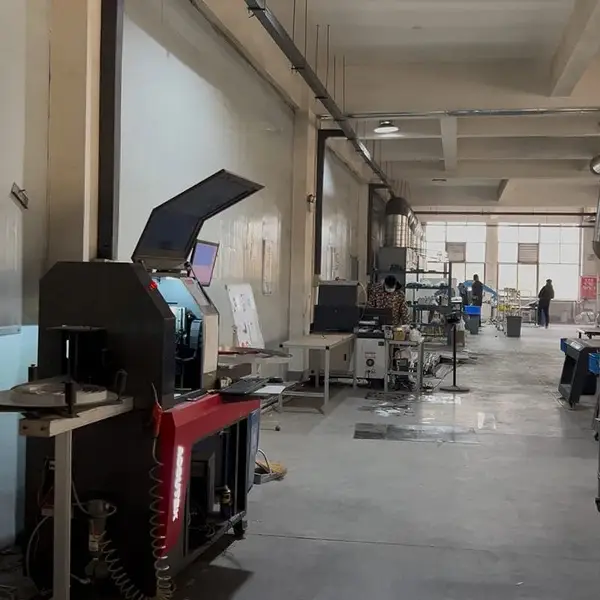
Real photo from our production floor — every sign we ship is made here.
Products mentioned or relevant to this topic — factory-direct, custom built.
From $24/letter · MOQ 1 piece · Flexible lead time · CE & UL certified · ships to 20+ countries
Custom sizes, colors, and finishes. Get a factory price in 24 hours.
Get a Free Quote Copy EmailWhatsApp +86 13865703472 · business@aochuangsign.cn