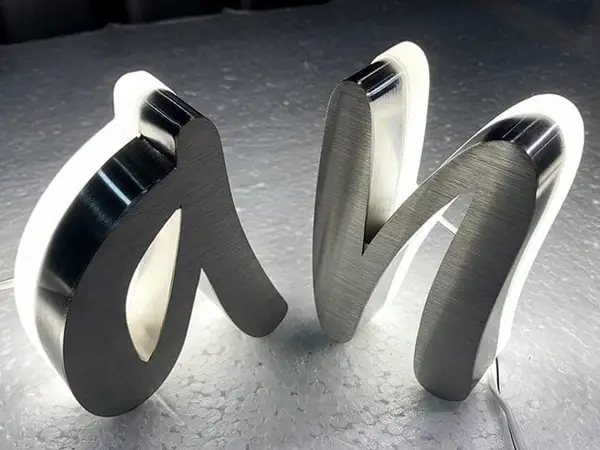
Here's what nobody tells you: your mall signage isn't really yours. It belongs to the landlord, the fire marshal, and the ADA compliance officer before it ever belongs to your tenant. Miss one line in the design criteria manual and you'll be ripping letters off a pylon at 2 a.m.
I've been on the factory floor since 2010, and I've watched a strip mall in Ohio lose a national tenant because the storefront sign didn't meet a private landlord's visibility clause. Not the city's fault. Not the fabricator's fault. The tenant didn't read the mall's design criteria manual until after the letters were cut. Those documents are 80 pages of "you can't do that" written by people who haven't held a TIG torch.
Signage drives foot traffic. In a mall, a customer decides in about 7 seconds whether to enter a store. If the sign's too dim, too small, or the wrong color temp, you've made the decision for them. A 4000-5000K neutral white front-lit channel letter reads clean and corporate. A 3000-3500K warm white reads hospitality. Put a 6000-6500K cool white on a spa and you've just told every shopper this is a doctor's office.
Tenant retention gets easier when signage is legible from the atrium railing, not just from 10 feet away. I've had tenants renew because the sign didn't yellow after three summers. That's UV-resistant acrylic doing quiet work. A mall tenant pays $50-150 per square foot in rent. If a bad sign costs them 10% of their impulse traffic, that's real revenue walking past the space.
Exterior mall signage breaks into three buckets: pylon signs, storefront channel letters, and fascia lightboxes. Front-lit channel letters are the workhorse for tenant storefronts. Landlords spec back-lit halo letters for the high-end wing where the mall charges three times the rent. The landlord'll usually let you use front-lit channel letters on every inline space, but ask about raceway requirements first.
Interior signage is a different animal. You're dealing with food court menu boards, restroom identification, and directory maps. Double-sided lightboxes do the heavy lifting in corridors. Wayfinding systems are where most projects blow their budget, because nobody evaluates sight lines from the escalator.
If you're speccing a mall-wide wayfinding package, don't cheap out on the mounting hardware. The wayfinding and directional systems we ship get powder-coated aluminum posts and stainless fasteners. Aluminum weighs a third of steel and lasts 8-12 years outdoors. The aluminum won't rust, so your parking garage signs don't streak orange after the first winter.
Sellers pitch digital signage as the future. Don't believe them. You're buying a maintenance contract with a screen attached. The only digital that pays for itself in a mall is the directory kiosk near the food court—and even that's just a map with extra steps.
The ugly truth is most mall landlords care more about their design criteria manual than about the IBC. They'll approve a sign, then kill it because the font height's 2 inches short of their spec. I've seen this go wrong: a fabricator cut 30 aluminum letters, the mall changed its mind on backer panel color, and the tenant ate the $6,000 re-fabrication.
Get the landlord's sign criteria in writing. Then get it stamped. Then email it to yourself. Mall design criteria aren't code, but they're enforceable by lease. If a landlord wants 5mm acrylic on all storefront letters, and you install 3mm, you'll be redoing it even if it passes code.
For life safety, NFPA 101 covers mall common areas more strictly than the IBC. Most enclosed malls require photoluminescent exit path markings, not just on the exit signs themselves. The path from an atrium to the nearest egress door needs continuous visibility when the power dies. That means photoluminescent strips and signs that meet UL 924 or equivalent, and no, paint from Amazon doesn't cut it.
ADA tactile signs in malls need mounting between 48 and 60 inches to the tactile text, non-glare finish, and Grade 2 Braille. I've seen contractors mount room signs at 66 inches because "it looked better." That's an ADA lawsuit, not a design choice.
Electrical signs fall under NEC Article 600 in the U.S. That means your channel letter power supplies need to be listed, and your LED modules better have a UL 48 or ETL mark. Don't accept a CE certificate alone for U.S. installs. CE is a self-declaration in many product categories. A UL 48 listing costs $4,000-15,000 and takes 4-9 months. ETL is a legitimate alternative and runs 10-30% cheaper.
Look, a sign is only as good as its substrate. For mall storefronts, stainless steel is the standard because it doesn't die. 304 stainless steel letters will give you 10+ years outdoors. 304 has 18% chromium and 8% nickel. If the mall's near the coast or in an industrial corridor, move to 316. That alloy has 2-3% molybdenum and costs 20-30% more, but for Miami Beach, that's not an upgrade. That's survival.
Aluminum is the budget pick. It weighs a third of steel and lasts 8-12 years. Powder-coated aluminum letters cost $10-25 per letter factory-direct. A stainless non-lit letter runs $15-40. The price difference is real, but so is the dent resistance. If a shopping cart hits an aluminum letter, it's done. If it hits stainless, you've got a scuff.
For lit letters, the acrylic face matters. Domestic acrylic lasts 1-2 years before it starts yellowing. UV-resistant acrylic from Mitsubishi or Degussa holds 5-8 years. A 3mm face transmits 92% of light. A 2mm face transmits 90%. Your customer won't notice the 2%, but they will notice the 40% cost bump when you switch to a cheap cast acrylic and it turns amber before the lease renewal.
LED choice separates a five-year sign from an 18-month one. SMD 2835 modules run 100-150 lumens per watt and are the industry standard. SMD 5730 modules push 40-60 lumens per chip for maximum brightness. The quickest way to spot bad LED modules: look at the solder joints. Dull gray means the factory used cheap solder and it won't last 18 months. Shiny silver means lead-free solder that'll actually hit the L70 50,000-hour rating.
For an acrylic-backlit look, acrylic LED letters work indoors and outdoors when sealed right. But sealing is where rookies fail. We use neutral silicone and run every sign through an 8-12 hour aging test before it ships. If that silicone bead's not continuous, water gets in and you'll be back on a ladder in six months.
I've seen this go wrong: a sign shop pays $800 for a front-lit letter from a domestic fabricator. Same 304 stainless, same Samsung LEDs. We ship that letter factory-direct for $120. That's not a typo. Factory prices for front-lit channel letters run $20-80 per letter. Back-lit halo letters run $35-120. Stainless non-lit runs $15-40. Domestic retail installed pricing? $200-700 per front-lit letter, $400-1,000 for halo-lit. The factory-direct savings on product alone is 50-65%.
Brokers and resellers thrive on one thing: your lack of time. They mark up the factory price and call it "project management." Most don't own a laser cutter. They've never bent a return or welded a seam. When the sign arrives with a scratch, they've got no idea how to fix it. You can buy direct with an MOQ of one piece, a 7-15 day lead time, and a 2-year LED warranty, 1 year on power supplies.
Shipping's where you need to pay attention. Express is about 5-15 days and costs $30-100 for small signs. Air freight is about 10 days at $4-12/kg. Sea freight is about 65 days at $80-200 per cubic meter for LCL. A full container runs $1,200-3,000. Remember the U.S. Section 301 tariff adds about 30% on Chinese-made signs. That's a real line item, not a surprise.
Quality control is why you go factory-direct. We run a 10-step process: design confirmation, laser cutting at ±0.1mm, TIG welding, grinding, CNC acrylic face, LED assembly, neutral silicone sealing, an 8-12 hour aging test, 100% QC inspection, then export packaging with foam, carton, and plywood crate. That crate changes hands 6-8 times between our dock and yours on an LCL shipment. Every touch is a chance for damage. Proper crating isn't optional.
One more thing: CE marking costs 20,000-50,000 RMB. Most factories will say they have it. Ask to see the certificate with today's date. Watch them sweat.
The ugly truth is IP65 sounds impressive. Dust-tight and water jets from any direction—that doesn't mean your sign survives a Florida hurricane. For coastal malls, you need IP66 rated fixtures at minimum. IP68 handles submersible conditions, overkill for a storefront but nice for a parking garage sign that floods twice a year.
Installation in a mall is never just bolting letters to a wall. You've got to coordinate with mall management for after-hours access, often between 10 p.m. and 6 a.m. You need a lift that fits through the service corridor. I've had installers show up with a 12-foot ladder for a 20-foot fascia. That's not a bad day. That's a bad week.
Maintenance is where cheap signs eat you alive. A quality LED module from Samsung, Osram, or Blueview will last 5+ years in real-world conditions. Cheap modules die in 12-18 months. If you're replacing letters every two years, your ROI is negative no matter how cheap the initial quote was.
ROI math isn't just the sign cost. A mall tenant pays $50-150 per square foot in rent. If a bad sign costs them 10% of their impulse traffic, that's real revenue. A $1,500 factory-direct front-lit sign that lasts 10 years costs $150 a year. A $5,000 domestic install that fails in 3 years costs $1,667 a year, plus two service calls. Math's not hard.
Do I need a permit for mall signage? Yes. You need mall landlord approval, a city permit, and fire marshal sign-off. No, the landlord's approval is not a permit. If you skip the city permit, the mall gets fined and you get back-charged.
Can I install my own sign in a mall? No. Most malls require licensed and insured installers with a COI. Your cousin with a drill doesn't count. The mall's insurance carrier won't accept it, and neither will the fire marshal.
What's the cheapest material for a mall sign? Aluminum. But cheap aluminum dents. You'll replace it before the lease ends, and the replacement will cost more than the savings. Don't ask me how I know.
How long does factory-direct shipping really take? Express is about 5-15 days if the sign's in stock and small. Sea freight is about 65 days. If someone quotes you 30 days sea freight, they're lying or they've never shipped a crate through U.S. customs.
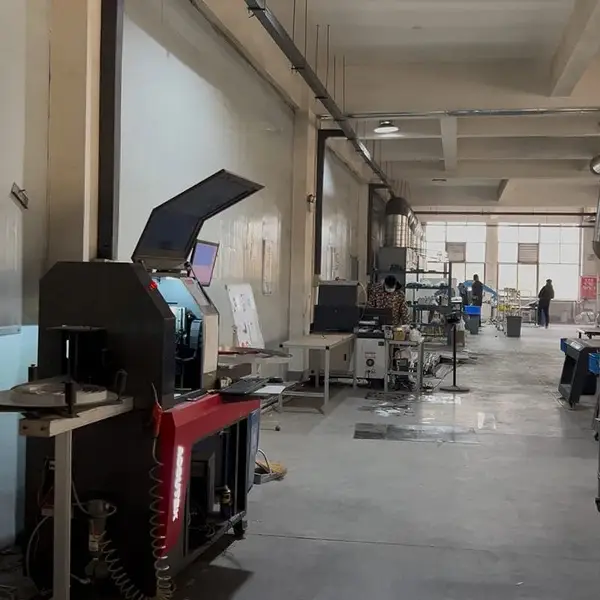
Real photo from our production floor — every sign we ship is made here.
Products mentioned or relevant to this topic — factory-direct, custom built.
From $24/letter · MOQ 1 piece · Flexible lead time · CE & UL certified · ships to 20+ countries
Custom sizes, colors, and finishes. Get a factory price in 24 hours.
Get a Free Quote Copy EmailWhatsApp +86 13865703472 · business@aochuangsign.cn