
Look, I've been on a sign factory floor since 2010, and I've watched this industry change more in the last five years than the previous fifteen. Some of it's good. A lot of it? Factories slapping a "premium" label on the same 304 stainless with cheap LEDs and marking it up 300%.
This isn't a glossy sourcing guide. I'm not here to sell you on a dream. I'm here to tell you what actually happens when you order from a sign factory — the materials, the QC, the shipping math, and the lies that cost you money.
Here's what nobody tells you: most buyers don't lose money on the sign itself. They lose it on freight, tariffs, and replacement LEDs they didn't ask about.
Forget the print shop with a router in the back. A real sign factory runs metal and acrylic fabrication under one roof — laser cutters, TIG welders, CNC routers, polishing stations, and an LED assembly line.
At our facility in Lu'an, Anhui, we run 3,000 square meters with 50+ skilled workers. Not a brag — that's the baseline you should expect. If a "factory" can't show you their laser cutting tolerance or their TIG weld certs, they're probably a trading company with a nice website.
The ugly truth is plenty of "manufacturers" never touch a sheet of acrylic. They buy finished letters from a real factory, mark them up, and ship them with their logo on the crate.
If you're ordering front-lit channel letters for a storefront, you want a factory that runs the full 10-step process: design confirmation, laser cutting at ±0.1mm, bending and TIG welding, grinding and polishing, CNC acrylic face cutting, LED assembly, silicone sealing, an 8–12 hour aging test, 100% QC inspection, then export packaging with foam, carton, and plywood crate.
That whole sequence takes 7–15 days. Not 60. If someone quotes you 45 days for standard channel letters, they're not the factory. They're waiting for someone else's production slot.
Let's talk materials, because this is where the money leaks.
304 stainless is the standard, with 18% chromium and 8% nickel. That gets you 10+ years outdoors. Stainless steel letters made from 1.0–3.0mm sheet with a brushed #4 or mirror #8 finish are the workhorses.
If you're in Miami Beach or anywhere with salt spray, 316 stainless with 2–3% molybdenum adds 15+ years but costs 20–30% more. For a strip mall in Ohio, 304 is fine. For coastal, pay the premium or replace letters in three years.
Acrylic is worse. UV-resistant acrylic from Mitsubishi or Degussa lasts 5–8 years before yellowing. Domestic acrylic? One to two years in direct sun. Light transmittance differs by 2% (90% vs 92%), and your customer won't notice that. They'll absolutely notice the yellowing at year three.
For acrylic LED letters, use 2mm or 3mm faces for standard sizes. If the letter height goes over 2.5 meters, step up to 5mm or the face will bow like a cheap motel sign.
LED modules are the other failure point. SMD 2835 chips running 100–150 lm/W are the industry standard. Quality modules from Samsung, Osram, or Blueview give you 5+ real years. Cheap no-name modules? 12–18 months, and then you're paying a service call to replace a $4 board.
Here's a QC trick I've used for years: look at the solder joints on the LED modules. Dull gray means cheap solder that'll crack. Shiny silver means proper lead-free solder. That takes ten seconds and tells you more than a 40-page spec sheet.
The ugly truth is most buyers never ask for the CE certificate. CE marking costs 20,000–50,000 RMB and takes 2–8 weeks. Many factories say they have it. Ask to see the certificate with today's date on it. Watch them sweat.
UL 48 is a different animal — $4,000–15,000, 4–9 months of testing, and quarterly audits. ETL is 10–30% cheaper and accepted in most US jurisdictions. If you're doing commercial installs under NEC Article 600, you need this. Not "sort of." Need.
IP ratings are also misunderstood. IP65 means dust-tight and protected against water jets from any direction. That doesn't mean your sign survives a Florida hurricane. IP66 handles powerful jets. IP68 is submersible. For standard outdoor signage, IP65 is the minimum. For coastal, IP66.
We run an 8–12 hour aging test on every batch and then do 100% QC inspection before crating. You'd be amazed how many factories skip the aging test and let the customer find the failures.
Here's what nobody tells you: the factory price isn't the landed cost. I've watched sign shops pay $800 for a single front-lit letter from a domestic fabricator. Same 304 stainless, same Samsung LEDs. We ship that letter factory-direct for $120.
But then you add freight, duties, and handling. Sea freight LCL runs $80–200 per cubic meter and takes 50–70 days. Your crate gets handled 6–8 times between our dock and yours. Every touch is a chance for damage. That's not in the brochure.
Express shipping is 7–15 days and runs $30–100 for small orders. Air freight is 10–20 days at $4–12 per kilogram. Sea FCL is $1,200–3,000, but you need volume.
Then there's the US Section 301 tariff at roughly 30% on signage. So that $120 letter lands at maybe $156 plus freight. Still 65% under domestic, but only if you do the math before you order.
For back-lit halo letters, factory pricing is $35–120 per letter. US retail installed is $400–1,000 per letter. Even with freight and tariff, factory-direct saves 50–65% on product cost. The real savings come when you order full signage packages, not one-offs.
CNC routers and fiber laser cutters changed everything. We hold ±0.1mm on letter returns, which means tight seams and clean welds without hours of hand filing.
SMD 5050 RGB modules made color-changing signs cheap enough for retail, not just casinos. SMD 5730 chips push 40–60 lumens per chip for high-brightness applications. But the real shift is IoT control — app-managed signs, DMX programmable shows, and diagnostics that tell you when a power supply is failing before the sign goes dark.
We still TIG weld stainless by hand for custom shapes. Robots can't match a skilled welder on a compound curve. Not yet.
I've seen this go wrong: a shop ordered 40 channel letters from a supplier with no in-house CNC. The faces were cut by hand, uneven gaps, and the letters looked drunk from ten feet away. They saved $400 and lost a $30,000 account.
Ask for video of the factory floor. Not photos. Video. Check for material storage — acrylic should be stored vertically, not flat on a concrete floor. Check the welding station for TIG torches, not just MIG. Ask if they have an in-house paint line or if they outsource powder coating.
Check their warranty. A real factory gives 2 years on LEDs and 1 year on power supplies. If they won't put that in writing, walk away.
Minimum order quantity matters. We do MOQ 1 piece, which means you can test a sample before committing to 200 letters. If a factory demands 50 pieces minimum, they're optimizing for their production line, not your project.
LED efficiency keeps climbing, but the bigger shift is lifespan. L70 ratings of 50,000 hours are standard now. That's 11 years at 12 hours a day. The weak link isn't the LED — it's the power supply and the sealing.
Aluminum is gaining on acrylic for weight and recyclability. Aluminum weighs one-third of steel and gives 8–12 years outdoors without rust. Anodized and powder-coated finishes look sharp and hold up.
Smart signs are moving from novelty to standard. IoT diagnostics, app-controlled color changes, and DMX programming are becoming standard on RGB and architectural projects. Not a gimmick when it cuts service calls by flagging a failing driver before it kills the whole sign.
If your supplier still sells "dumb" LED signs and can't talk about L70, lumen maintenance, or driver efficiency, they're already behind.
FAQ"Why is factory pricing so much lower than local?" Because you're cutting out two layers of markup and buying before freight, not after. A $120 front-lit letter isn't cheap because it's junk. That's cheap because it hasn't been marked up three times.
"Should I always buy 316 stainless for outdoor signs?" Only if you're within a few miles of salt water or heavy industrial fallout. Otherwise 304 is fine. Stop paying 20–30% extra for corrosion resistance you don't need in Ohio.
"Is CE marking enough for US installs?" No. CE is European. You need UL 48 or ETL listing and compliance with NEC Article 600. I can't believe I still have to explain this.
"How do I know the LEDs won't fail in 18 months?" Look at the solder joints. Dull gray is bad. Shiny silver is proper. And ask for the module brand — if they can't name Samsung, Osram, or Blueview, you're buying junk.
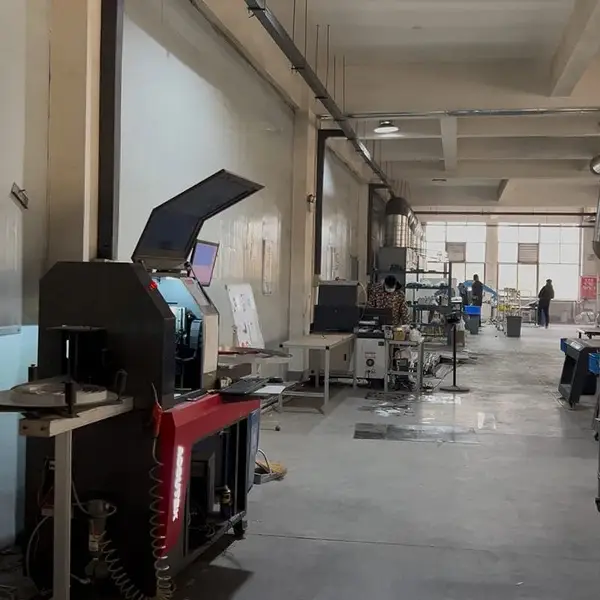
Real photo from our production floor — every sign we ship is made here.
Products mentioned or relevant to this topic — factory-direct, custom built.
From $24/letter · MOQ 1 piece · Flexible lead time · CE & UL certified · ships to 20+ countries
Custom sizes, colors, and finishes. Get a factory price in 24 hours.
Get a Free Quote Copy EmailWhatsApp +86 13865703472 · business@aochuangsign.cn