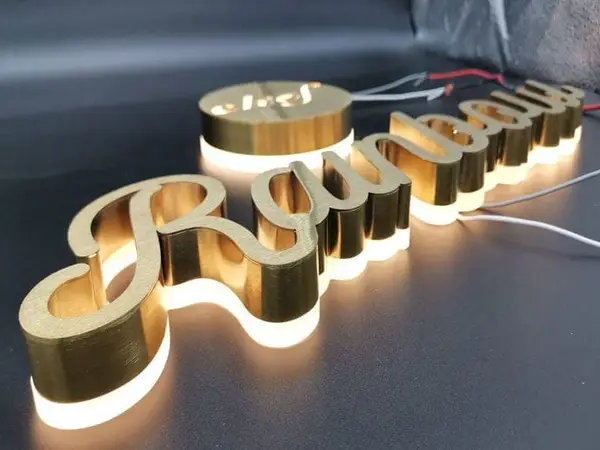
I’ve Seen a 40-Foot Letter Peel Off Like a Postage Stamp
That was a Friday afternoon. The arena had just dropped half a million on new exterior branding. Looked great from the parking lot. Then a gust came through — nothing crazy, maybe 45 mph — and the "M" on the stadium name started flapping like a flag. By Monday it was gone.
The ugly truth? Most sign shops and contractors treat stadium signs like they're just bigger versions of a storefront channel letter. They aren't. You're dealing with wind loads that can hit 120 mph on a bad day. Leagues have brand guidelines longer than the playbook. And the client expects that sign to look perfect for 10 years while being blasted by rain, snow, and parking lot salt.
I've been on the floor for 16 years. I've burned my hands on hot acrylic, argued with suppliers about LED lumen counts, and shipped signs worldwide. Here's what I know about stadium arena large-format signage that nobody puts in the brochure.
Substrate Wars: Aluminum Composite vs. Acrylic vs. Vinyl Mesh
Look, the material you choose determines about 60% of your success or failure. Here's the breakdown based on what I've actually seen hold up.
Aluminum composite panel (ACP) is the workhorse for stadium cladding. It's 1/3 the weight of steel — we use 1.0–1.6mm thickness — and it naturally resists rust. It'll go 8–12 years outdoors if you use a proper PVDF coating. I've seen signs that looked like new after a decade in Phoenix. But if you cheap out on the bond between the aluminum skin and the polyethylene core? It delaminates. I've seen it happen within 18 months. You want a reputable supplier who certifies the bond strength. Don't ask, don't get.
Acrylic is what you use for illuminated letters or sign faces. Mitsubishi or Degussa acrylic gives 90–92% light transmittance and UV resistance for 5–8 years. The domestic stuff? 1–2 years before it yellows like a nicotine stain. For stadium signs, faces over 2.5 meters must use 5mm minimum acrylic, not 2mm. I've watched a 3mm face crack during a hailstorm. The 5mm takes the hit and just flexes. Also, that 2% difference in light transmission between 3mm (92%) and 2mm (90%)? Your customer won't see it. But they'll see the 40% price bump. Don't upsell what they don't need.
Vinyl mesh is for perimeter banners or temporary signage. It's cheap, lightweight, and wind passes through it. But it's not permanent. The grommets tear in two years if you don't reinforce the edges. Use it for season-opening banners only. Don't try to replace a permanent sign with mesh. I've seen that too — the client later asks why it looks like a tarp.
Here's what nobody tells you: for really big exterior letters (over 8 feet tall), you need an aluminum or steel substructure welded inside. The self-supporting frame has to be engineered for wind loads at 1.3 times the expected max gust. Most domestic fabricators do this. But when you're importing? Ask for the engineering drawings. If they can't produce them, walk away.
Zoning, League Guidelines, and the Paperwork Hell
The ugly truth is that about 30% of my customers' stress comes from municipal zoning and another 30% from league branding rules. The sign itself is the easy part.
First, zoning. Most cities limit sign height to 30–60 feet near stadiums. Some have "sign illumination curfews" that shut off your LEDs after 11 PM even if there's a game going. I had a project in Cleveland where the code required the sign to be setback 40 feet from the property line because it was over 100 square feet. We had to redo the whole layout. Find the local code before you start designing. Call the building department. They're cranky but they know their book.
Second, league guidelines. NFL, MLB, NBA — each has a rulebook for exterior branding. The NFL has a section on "no competing brand within 50 feet of the primary sponsor" that makes you position your signs like a chess game. I once saw a stadium tear down a $15,000 sign because it was six inches too close to the Budweiser logo. No joke. Get the league's "signage location template" before you cut any metal.
Third, ADA compliance for any pedestrian-accessible signage. It doesn't apply to roof signs, but if your stadium exterior has signs near entrances or walkways, you need tactile letters at 48–60 inches mounting height, non-glare finish, and Grade 2 Braille. Most municipal inspectors check. Miss it and you're delaying opening day.
Cost-benefit tip: The biggest money sink is rework. Spend $2,000 on a zoning consultant instead of $20,000 on fabrication changes. I tell every client: budget 10% of the sign cost for permits and compliance. It won't be fun, but it's cheaper than the alternative.
Factory-Direct Sourcing: The Numbers That Actually Matter
Here's the part everyone wants: how to save money. I've watched sign shops pay $800 for a single front-lit channel letter from a domestic fabricator. Same 304 stainless steel, same Samsung LEDs. We ship that letter from our factory in Lu'an, China, for $120. Factory-direct savings of 50–65% on product is real. But you have to do your homework.
Our factory — Aochuang Sign — has been at it since 2010. We've got 3,000 square meters, 50 workers, CE, RoHS, and ISO 9001. MOQ is one piece. Lead time is 7–15 days. But I'm not here to pitch. I'm here to tell you what to look for.
First, check the certifications. CE marking costs 20,000–50,000 RMB. Most factories will say they have it. Ask to see the certificate with today's date. Watch them sweat. For US projects, you need UL 48 for electrical safety. That costs $4,000–15,000 and takes 4–9 months with quarterly audits. ETL is a cheaper alternative (10–30% less). If you're supplying a US stadium, UL or ETL is non-negotiable. Period.
Second, material specs. For stainless steel, 304 is fine for most places — 18% chromium, 8% nickel. It lasts 10+ years. But if your stadium is on the coast, you need 316 marine grade with 2–3% molybdenum. It costs 20–30% more but for Miami Beach or San Diego, you'll be replacing 304 letters in 3 years from salt corrosion. Don't cheap out.
Third, shipping reality. LCL sea freight takes about 65 days. Your crate gets handled 6–8 times between our dock and yours. Every touch is a chance for damage. We pack with foam, cartons, and plywood crates — but I've still seen a forklift spear through a crate. Air freight is faster (about 10 days) but costs $4–12 per kg. For a 200 kg sign, that's $800–2,400. Sometimes worth it for the peace of mind. And don't forget the US Section 301 tariff: roughly 30% on Chinese-made signs. Factor that into your pricing.
LEDs at Stadium Scale: Don't Let Them Go Dark
I've seen this go wrong: a $250,000 stadium sign goes dark six months after installation because the client bought cheap LED modules to save $5,000. The sign company had to eat the replacement cost because the warranty was a joke.
For stadium signage, you need SMD 2835 LEDs at 100–150 lumens per watt. That's the industry standard. If you use SMD 5730 chips, you get 40–60 lm per chip — higher brightness but more heat. For large illuminated letters, 2835 is your best balance of brightness and lifespan. Color temperature matters too: 4000–5000K neutral white for most stadium exteriors. You want 3000–3500K for hospitality zones, 6000–6500K for highway-visible signs. Check the stadium's light pollution ordinance first. Some cities ban cool white after 10 PM.
Quality modules from Samsung or Osram have a real lifespan of 5+ years at L70 (70% brightness). Cheap modules give you 12–18 months. Quickest way to spot bad LEDs: look at the solder joints. Dull gray = won't last 18 months. Shiny silver = proper lead-free solder. I tell my team: if you can't see the solder, ask for a photo. If they won't send one, walk.
Also, IP rating. IP65 is the minimum for outdoor signs — dust-tight and protected against water jets. But it's NOT enough for a Florida hurricane or a Nor'easter. For coastal or high-wind areas, demand IP66 or even IP68. That's dust-tight, powerful jets, and submersible. It costs more but your sign won't short out when the monsoon hits.
One more thing: our factory runs an 8–12 hour aging test on every sign before it leaves. Modules are powered at full brightness. If any fail, we replace the whole string. If your supplier doesn't do this, you're gambling.
Packing and Installation: The Part Everyone Skips
The sign is perfect. The LEDs are Samsung. The crate is plywood. Then the installation crew opens it and the acrylic face has a 6-inch crack because someone dropped it during unloading. I've seen it happen.
For large-format stadium signs (letters 6 feet tall and up), we pack each letter individually in foam, then a carton, then a plywood crate. The crate is strapped and tied down. But if you're using LCL, your crate goes on a ship, gets offloaded, sits in a warehouse, then goes on a truck. It's handled half a dozen times. I recommend paying for a "crate inspection" at the port — $200–400 but catches damage before you accept delivery.
Installation is where most cheap Chinese imports fail. The sign might be good, but the mounting brackets are flimsy or the instructions are in pidgin English. Always request mechanical drawings in your language. Check the bracket thickness — for a 6-foot
stainless steel letter, the bracket should be at least 3mm thick (0.125 inch). Anything less and it'll bend under wind load.
And for the love of your reputation, use stainless steel fasteners, not zinc-plated. 304 bolts for the brackets, 316 for coastal. I've replaced signs where the rusted bolts caused the whole letter to fall off. That's a liability nightmare.
FAQ: The Questions I Get at 2 AM
How long does it really take to get a stadium sign from a Chinese factory?
Production? 7–15 days tops with a real factory. But add about 65 days for sea shipping, then customs clearance (3–7 days), then last-mile trucking. Realistic timeline from order to your warehouse: 10–12 weeks minimum. Air freight cuts that to 4–5 weeks but costs 4x more. Plan accordingly.
Can I get a single letter or do I have to order 50?
Most serious factories have an MOQ of one piece. That's right — you can order a single letter if that's all you need.