You’re staring at a $50,000 line item for brand-new outdoor signage, and your CFO just asked, “Why not the cheaper option from the same fabricator we used last time?” Here’s the damn truth from 12 years of sourcing signs from Chinese factories, local shops, and everyone in between: the cheapest quote is the most expensive mistake you’ll make this year. Compliance isn’t a checkbox—it’s a cost center you ignore at your own risk. Let me show you the numbers.
I crunched the numbers on a 500-letter installation for a regional bank chain. The “compliant” option—with UL 48 certification, IP66 rating, and marine-grade stainless hardware—cost 35% more upfront than the non-compliant alternative. But what about total cost of ownership over five years? The non-compliant signs needed full replacement after 36 months. Plus two electrical code violations that triggered city fines totaling $12,000. Pay now or pay three times as much later. That’s the only formula that matters.
Outdoor signs in the US must meet NEC Article 600 wiring requirements, local zoning ordinances, and often ADA guidelines for tactile signs if they include any text that’s part of a building directory. The moment a sign fails inspection, you’re paying for reinstallation, lost business hours, and contractor markups that eat your profit.
I watched a client spend $4,000 on a sign that passed inspection year one, then get slapped with a $7,000 correction order because the LED modules—cheap ones from a factory without a proper aging test—started flickering after 14 months. That client paid for scaffolding, a new power supply, and a rush order from a local shop. The original “savings” vanished.
Here’s what your boss will ask: “Can’t we just buy the same thing from the guy we’ve used for ten years?” The answer depends on how that guy sources his materials. If he’s buying Chinese channel letters from a factory that claims CE but can’t show you a certificate with today’s date, you’re gambling. I’ve seen 316 stainless sold as “marine grade” that was actually 304 with a fake PVD coating—it pitted within 18 months on a Miami Beach storefront. That’s not an outlier; it’s a pattern. Factories that skip compliance do it by cutting corners on material thickness, sealing quality, and LED binning. And you’re the one who gets a surprise when the sign shorts out in the first rainstorm.
Line by line, here’s where the money goes: a CE marking costs the factory 20,000–50,000 RMB and takes 2–8 weeks. Most factories have one, but I’ve caught three different suppliers claiming CE on their website who couldn’t produce a single dated certificate during a video call. If your sign is sold in the US, CE is irrelevant—it’s a European standard. What you need is UL 48 or ETL. UL 48 runs $4,000–15,000 per product and takes 4–9 months with quarterly audits.
ETL is a UL alternative that costs 10–30% less and often passes just as quickly. If your sign doesn’t carry one of these marks, local inspectors can and will red-tag it. Simple as that.
Brutal honesty: IP65 sounds impressive, but it only means the enclosure is dust-tight and protected against water jets from any direction. It does not mean your sign survives a Florida hurricane. For coastal zones, you need IP66 at minimum, and for submergence situations like flood-prone areas, IP68. I’ve seen a chain of donut shops in Houston install IP65 signs, then lose every single one during a tropical storm—water got in through the drain holes and fried the LEDs. The manufacturer blamed the installer, the installer blamed the weather, and the owner was stuck with $30,000 in replacement costs. Don’t be that owner.
The quickest way to spot bad LED modules: look at the solder joints. Dull gray means they used low-temperature lead-free solder that’s prone to cold joints; it won’t last 18 months. Shiny silver joints indicate proper reflow soldering and high-quality materials. If you’re buying direct from a Chinese factory, ask for photos of the LED assembly line and a video of the 8–12 hour aging test. If they can’t provide them, walk away. A factory that skips the aging test is saving 60 minutes of electricity—and costing you a full sign replacement. Think about that.
When I crunched the numbers for a 20-letter outdoor monument sign in a Midwest climate, the difference between 304 stainless and 316 was $2,300. For that project, 304 was fine—temperatures moderate, no salt spray. But for a coastal client in Charleston, we spec’d 316 stainless at a 20–30% premium, and that choice saved them from a corrosion failure within three years. The 316 contains 2–3% molybdenum, which resists chloride pitting. Without it, the letter edges start rusting before the warranty runs out.
Acrylic is another trap. Domestic acrylic (Mitsubishi or Degussa) has 90–92% light transmittance and UV resistance for 5–8 years before yellowing. Cheap domestic acrylic? Yellowing in 1–2 years. I’ve seen a pharmacy chain install illuminated channel letters with budget acrylic, and by month 18 the white background looked like old eggshell. They had to replace all the faces—$14,000. The grand total would have been $11,000 less if they’d paid for the good acrylic upfront. Always ask your supplier for the material spec sheet.
If it doesn’t say “UV-resistant” and “water-clear,” demand a switch or get a quote from Aochuang Sign, where they use Mitsubishi by default for exports to demanding markets.
Aluminum is the workhorse for most non-lit sign structures. It’s a third the weight of steel, naturally rust-proof, and lasts 8–12 years outdoors if finished properly. But I see rookie buyers order 0.040” aluminum when the wind load in their area demands 0.063”. That mistake costs you a bent frame in the first windy season. Check your local building code’s wind pressure tables before you specify material thickness. A 1.0mm sheet (0.040”) flexes more than a 1.6mm sheet, and once it bends, the sign face cracks. End of story.
The ROI works out to roughly 50–65% savings buying factory-direct from China, but only if you account for US Section 301 tariffs. At ~30% on Chinese-made metal and electrical signs, your landed cost can jump from 60% of domestic retail to 80–90%. Still a discount, but not a slam dunk. I’ve had bosses say, “Just add the tariff into the price,” not realizing that the tariff calculation includes the product cost plus freight plus insurance.
A $1,200 FCL sea shipment from China to LA adds $200–$400 in brokerage and tariff handling. And if you use LCL (less than container load), your crate gets handled 6–8 times between the factory dock and your loading bay. Every touch is a chance for damage. That’s not in the brochure.
Here’s what your boss will ask: “Why can’t we just buy from a US distributor and skip the tariff problem?” Because the US distributor’s price already includes the tariff, plus their markup, plus warehousing. I’ve watched sign shops pay $800 for a front-lit letter from a domestic fabricator. Same 304 stainless, same Samsung LEDs. We ship that letter from the factory for $120. Even after tariffs, freight, and brokerage, you’re still at $180–$200—less than a third of the domestic price.
The catch is lead time: 7–15 days by air, about 65 days by sea. If you plan ahead, sea freight is your friend. If you need it in two weeks, pay for air or buy local.
Brutal honesty about shipping: express couriers (DHL, FedEx) are fine for small samples under 5kg. For anything bigger, sea freight is mandatory. I’ve seen air freight quotes of $8–12/kg for larger signs—that adds up fast. A 50kg channel letter set shipped air costs $400–600 just in freight. Sea freight for the same volume is $80–200 per cubic meter. Do the math: if you have a 5m³ order, sea shipping costs $400–$1,000. Air shipping would be $2,000–$3,000.
And the difference in lead time is only about six weeks if you’re replacing existing signs. Six weeks is nothing when your old sign is already failing compliance.
Line by line, here’s where the money goes in production: design confirmation (1 day), laser cutting (±0.1mm tolerance, 1–2 days), TIG welding and bending (1–2 days), grinding and polishing (1–2 days), acrylic face CNC routing (1 day), LED assembly (1–2 days), sealing with neutral silicone (1 day), 8–12 hour aging test, 100% QC inspection, then export packaging (foam + carton + plywood crate). Total: 7–15 days. A factory that claims a 5-day lead time is either skipping QC or using preassembled parts from another supplier—and you don’t want that supplier.
The sealing step is where most compliance failures happen. Neutral silicone is mandatory for outdoor signs because acid-cure silicones outgas and corrode LED contacts. I’ve had a factory try to swap in cheap sealant to save $0.30 per meter. When I asked for the SDS sheet, they couldn’t produce one. I walked. A year later, that factory’s signs were failing in a Southern chain—LED boards were shorting from acetic acid corrosion. Always get a sample sealant test before full production. It’s a $50 investment that can save you a $5,000 re-manufacture.
Another non-negotiable: the aging test. A quality factory runs every single sign for 8–12 hours with power on, measuring current draw and temperature. If a factory says “we test randomly,” that’s a red flag. I’ve seen 10% failure rates on signs that skipped the test—LED modules that worked fine for two hours then died at hour 10. The aging test catches those. It costs the factory a few yuan in electricity. Not doing it costs you everything.
Q: My local sign shop says Chinese signs don’t meet US codes. Is that true?
A: No, but it’s a comfortable lie they tell to protect their markup. A factory like Aochuang Sign exports worldwide, holds ISO 9001, CE, RoHS, and can produce to UL standards if you pay for the listing. The difference is that the local shop marks up materials by 300%, while the factory sells at cost plus 15% margin. Ask the local shop for their material supply source—I guarantee they buy from the same Chinese factories. The only thing the local shop adds is a few days of local installation labor and a markup that includes their overhead.
Q: How do I know a Chinese factory’s LED modules are actually Samsung or Osram?
A: You don’t, unless you control the supply chain. A factory might show you a bin label from Samsung, but the modules
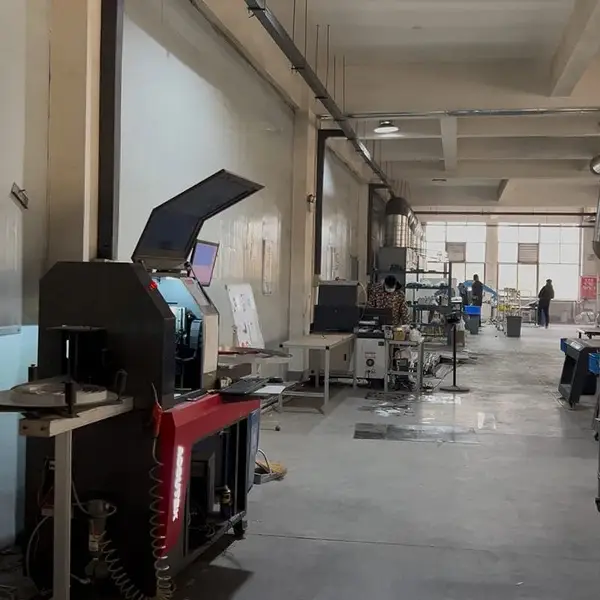
Real photo from our production floor — every sign we ship is made here.
Products mentioned or relevant to this topic — factory-direct, custom built.
From $24/letter · MOQ 1 piece · Flexible lead time · Project-specific compliance documents · ships to 20+ countries
Custom sizes, colors, and finishes. Get a factory price in 24 hours.
Get a Free Quote Copy EmailWhatsApp +86 13865703472 · business@aochuangsign.cn
See pricing, specs, and get a free quote for the sign type you need. Built in our factory, shipped worldwide.