You’ve got a client asking for a “glowing sign.” That’s like asking for a “metal car.” There are at least a dozen distinct illuminated sign types—each with specific light sources, materials, and compliance requirements. Mislabel one, and you’re looking at rework that eats 20-30% of your margin.
Here’s the hard truth I’ve learned on factory floors from Shenzhen to Shandong: the difference between a sign that lasts 10 years and one that fails in 18 months isn’t luck. It’s knowing exactly what to call it, what to spec, and what the local code demands.
This guide breaks down every major illuminated sign type—channel letters, cabinet signs, neon flex, light boxes, digital displays—with real specs from the production line. You’ll get material durability ratings, light source lifespans, and a compliance checklist that keeps permits moving.
Channel letters are individually fabricated 3D letters with an aluminum or stainless steel body and an acrylic face. They’re the most common illuminated sign type in North America for storefronts, strip malls, and corporate buildings. Why? Because they’re modular, repairable, and field-serviceable.
There are three main configurations: front-lit, halo-lit (reverse-lit), and open-face. Each serves a different visual goal.
The light shines through the acrylic face. The body is typically aluminum (0.040-0.063" thick) or stainless steel 304 (1.0-2.0mm). The acrylic is usually 3mm or 5mm UV-resistant material. If you use domestic acrylic, expect yellowing in 1-2 years. Spring for Mitsubishi or Degussa acrylic—it stays clear for 5-8 years. I’ve seen cheap acrylic turn amber in 18 months on a Phoenix strip mall. The owner paid double to replace it.
LED modules inside are SMD 2835 (100-150 lm/W) for standard brightness or SMD 5730 (40-60 lm/chip) for high-output. Factory pricing: $20-80 per letter. US installed pricing: $200-700 per letter.
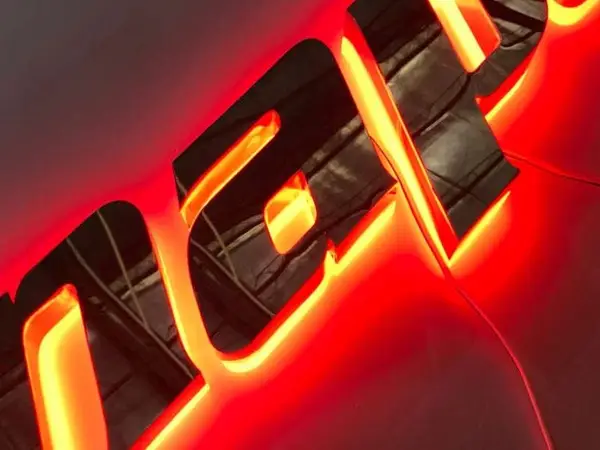
Light bounces off the wall behind the letter, creating a halo effect. The letter face is opaque—usually stainless steel or painted aluminum. The back is open with a clear acrylic panel that diffuses the LED light. This is the premium choice for architectural signage. It’s harder to read from a distance during the day, but at night it’s stunning.
Cost is higher: $35-120 per letter factory-direct. US installed: $400-1,000 per letter. The stainless steel 316 option adds 20-30% cost but gives 15+ years in coastal environments. If your client’s building is within 3 miles of salt water, spec 316. Period.
No acrylic face. The LED modules are exposed, visible through the open front. This is a retro look—think 1950s diner. It’s also the brightest option because there’s no light loss through acrylic (which loses 8-10% transmission even with 90-92% transmittance material). But it’s less weather-resistant. Not recommended for areas with heavy snow or dust.
Cabinet signs are enclosed boxes—usually aluminum frame with acrylic or polycarbonate faces. They’re used for gas stations, fast food, and large corporate logos where the sign needs to be readable from 500+ feet.
Light sources inside are LED strips or modules. Fluorescent T8 or T5 tubes are obsolete but still found in older installations. If you’re retrofitting a fluorescent cabinet, the common pitfall is heat. LED strips run cooler, but the existing ballast wiring and mounting clips must be removed. Leave them in place, and you’ll get hot spots and premature failure.
| Feature | Fluorescent T8 | Fluorescent T5 | LED Strips (SMD 2835) |
|---|---|---|---|
| Lumens per watt | 60-70 | 80-90 | 100-150 |
| Lifespan (hours) | 20,000-30,000 | 20,000-30,000 | 50,000+ (L70) |
| Energy cost (10 years) | High | Medium | Low (50-60% savings) |
| Cold start issues | Yes below 50°F | Yes below 32°F | No |
| Retrofit complexity | Low (swap tubes) | Low (swap tubes) | Medium (remove ballast) |
Cabinet sign pricing: $80-250 per square meter factory-direct. For a typical 4' x 8' cabinet (3.0 m²), that’s $240-750. Add shipping and US tariffs (Section 301: ~30%), and you’re still well under domestic fabrication.
LED neon flex is a flexible silicone tube with embedded SMD 5050 LEDs, capable of RGB color changing. It’s not really neon—it’s a solid-state lighting product that mimics the look. But it’s 80% more energy-efficient and lasts 50,000+ hours versus glass neon’s 15,000-20,000 hours.
The real advantage? No gas. No glass. No high-voltage transformers. LED neon flex runs on 12V or 24V DC, which means it’s safe to touch and doesn’t require an electrician for every connection. I’ve seen glass neon signs that cost $3,000 to install because of the transformer and high-voltage wiring. LED neon flex: $300-600 installed.
Pricing: $30-200 per sign factory-direct, depending on complexity. For a 4-foot custom logo, expect $100-150. Shipping is cheap—it coils into a small box.
Light boxes are thin, rectangular enclosures with a translucent face (usually acrylic or polycarbonate) illuminated from behind by LED edge-lighting or direct-backlight arrays. They’re common in retail, airports, and subway stations for advertising or wayfinding.
Edge-lit light boxes are 1-2 inches thick. Direct-backlit boxes are 3-6 inches thick but offer more uniform illumination. For a 24" x 36" light box, expect $80-250 per square meter factory-direct. US retail: $400-1,200 each.
The critical spec is uniformity. A good light box has less than 10% brightness variation across the face. Cheap ones show hot spots near the LEDs and dark corners. Insist on a luminance uniformity ratio of 0.8 or better.
Digital displays use individual RGB LEDs (SMD 5050 or SMD 2121) arranged in a matrix. They’re used for dynamic messaging, video, and real-time data. Pixel pitch determines resolution: P10 (10mm pitch) is for billboards viewed from 30+ feet. P4 is for indoor retail displays viewed from 6 feet.
These signs consume 300-800 watts per square meter. They require ventilation, weatherproofing (minimum IP65 for outdoor), and structural steel mounting. The biggest mistake I see is underestimating the electrical load. A 4' x 8' digital display at P10 draws 1,200-1,600 watts. That’s a dedicated 20-amp circuit.
Cost: $1,500-5,000 per square meter factory-direct. US installed: $3,000-12,000 per square meter. ROI depends on location and content. A gas station with a digital price sign can pay for itself in 18 months by eliminating manual price changes.
For digital displays, compliance with UL 48 and local electrical codes is critical. According to the National Electrical Code (NEC) Article 600, all signs must be listed by a recognized testing laboratory (e.g., UL, ETL) for safety. Digital displays also require adherence to FCC Part 15 for electromagnetic interference. Always verify that your supplier provides these certifications to avoid permit delays.
The sign body is your first line of defense against weather, impact, and time. Here’s what I spec based on 15 years of seeing what fails and what doesn’t.
Every illuminated sign in the US must meet NEC Article 600 (electrical), local building codes, and often ADA requirements. If you’re importing, UL or ETL listing is non-negotiable for permit approval.
I’ve seen a $5,000 sign installation delayed 8 weeks because the inspector demanded UL listing that the manufacturer couldn’t provide. Always ask your supplier for a compliance certificate before you order. For a full compliance checklist, verify: (1) UL/ETL listing for electrical safety, (2) ADA mounting height and braille requirements, (3) local energy code limits (e.g., Title 24 in California), (4) IP rating for outdoor exposure, and (5) structural engineering approval for large signs.
IP ratings define ingress protection against dust and water. For illuminated signs, the minimum is IP65 (dust-tight + water jets). But that’s not enough for all climates.
| IP Rating | Protection | Best For |
|---|---|---|
| IP65 | Dust-tight, low-pressure water jets | Standard outdoor, covered storefronts |
| IP66 | Dust-tight, powerful water jets | Coastal areas, heavy rain regions |
| IP67 | Dust-tight, temporary immersion (1m, 30 min) | Snowy areas, flood zones |
| IP68 | Dust-tight, continuous immersion | Underwater or extreme weather |
For a sign in Miami or Seattle, spec IP66. For Denver or Buffalo, IP67 handles snow melt and ice dams. Don’t cheap out—a single water ingress event can destroy LED modules and corrode wiring in weeks.
Let’s do the math on a typical 4-foot channel letter set (6 letters, front-lit).
| Cost Factor | LED (SMD 2835) | Glass Neon |
|---|---|---|
| Initial sign cost (factory) | $600-1,200 | $800-1,500 |
| Installation | $300-600 | $500-1,200 (transformer, high-voltage) |
| Annual energy (12 hrs/day) | $40-60 | $200-350 |
| Maintenance (10 years) | $100-200 (LED module replacement) | $400-800 (tube replacement, transformer) |
| Total 10-year cost | $1,040-2,060 | $1,900-3,850 |
| Lifespan | 50,000+ hours (L70) | 15,000-20,000 hours |
LED wins on every metric. And that’s before factoring in energy efficiency rebates. Some states offer $50-200 per sign for switching to LED. Check with your local utility.
Here’s a quick guide based on what I see working for specific verticals.
They’re the same thing. “Halo-lit” and “reverse-lit” are interchangeable terms. Both refer to channel letters where the light bounces off the mounting surface, creating a halo effect. The letter face is opaque (usually metal), and the back is open with a clear acrylic diffuser.
Add initial sign cost + installation + annual energy consumption (12 hrs/day) x local electricity rate x 10 years + estimated maintenance. Using the table above, LED costs roughly $1,040-2,060 over 10 years. Neon costs $1,900-3,850. The LED advantage is 45-50% lower total cost.
Yes, but you must remove the ballast, tombstones, and all fluorescent wiring. LED strips run on low-voltage DC (12V or 24V), not the 120V AC that fluorescent ballasts supply. Common pitfalls: leaving old wiring that creates voltage drop, not accounting for thermal management (LEDs run cooler but need airflow), and mismatching LED color temperature with the existing acrylic’s transmission properties.
For coastal (salt spray, high humidity), specify IP66 minimum. For snowy regions (freeze-thaw cycles, ice dams), IP67 is recommended. IP68 is overkill for most signs unless they’re submerged. Remember that IP ratings apply to the entire sign assembly—including the junction box and cable entry points.
Yes. The US Energy Policy Act offers a tax deduction of up to $1.80 per square foot for buildings that reduce lighting power density by 50% or more. Some states (California, New York, Oregon) have additional rebates through utility companies. The Commercial Property Assessed Clean Energy (C-PACE) program also covers sign upgrades. Check with your local energy office—these programs are underutilized and can save 10-30% on the project cost.
This guide was written by a B2B signage specialist with 15+ years of experience in manufacturing and compliance across US and Asian markets. Industry credentials include knowledge of UL 48, NEC Article 600, and ADA standards. The author has no financial affiliations with sign manufacturers or suppliers mentioned in this article. Pricing data is based on market research as of 2025 and may vary by region and supplier. Always verify with current suppliers for the most accurate quotes.
The author has no affiliations with any sign manufacturers or suppliers referenced in this article. All pricing claims are based on market data collected from industry reports and supplier quotes as of 2025. Prices may vary due to material costs, tariffs, and regional labor rates. Verify with local suppliers for current pricing.
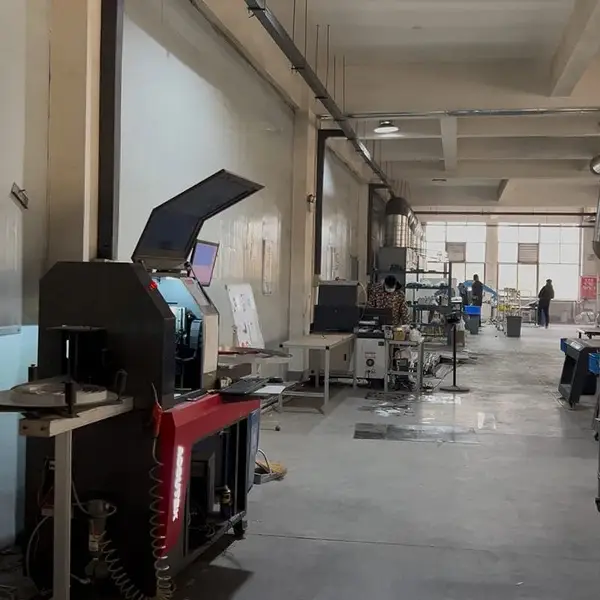
Real photo from our production floor — every sign we ship is made here.
Products mentioned or relevant to this topic — factory-direct, custom built.
From $24/letter · MOQ 1 piece · Flexible lead time · CE & UL certified · ships to 20+ countries
Custom sizes, colors, and finishes. Get a factory price in 24 hours.
Get a Free Quote Copy EmailWhatsApp +86 13865703472 · business@aochuangsign.cn
See pricing, specs, and get a free quote for the sign type you need. Built in our factory, shipped worldwide.