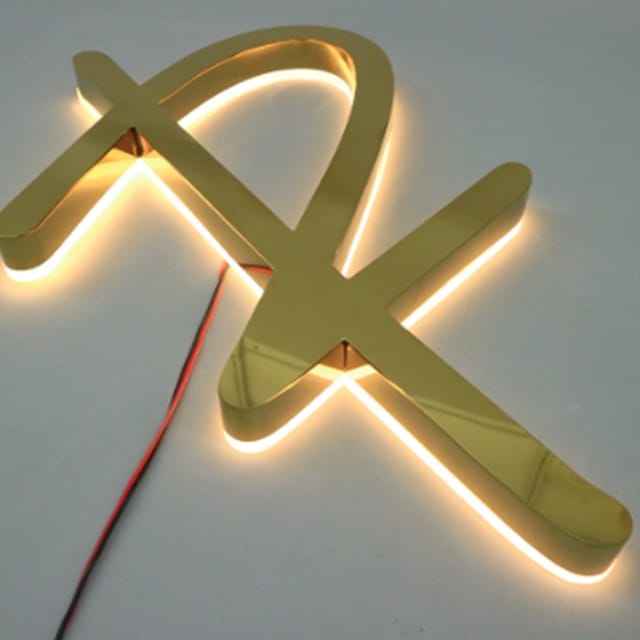
A design proof is the document that will save you $2,000 in rework if you actually read the damn thing. At our factory in Lu'an, Anhui, we won't cut a single sheet of acrylic until the proof is signed off. That's not bureaucracy—it's the cheapest insurance in this trade.
You'd be amazed how many people treat it like a JPEG to glance at.
Here's what nobody tells you: the proof isn't a suggestion. That proof is the last thing between you and a 40-foot container of letters that don't fit the storefront or a power supply buried behind drywall.
A design proof is a technical drawing that says exactly what I'm going to build for you, down to the millimeter, the finish, the LED color temperature, and where the drill holes go. That's not a pretty sales render. That's a contract in pictures. If you're ordering front-lit channel letters for a storefront, your proof should show the face thickness, return depth, trim cap detail, and where the power supply sits. No power supply location on the drawing? That's a field failure waiting to happen.
The proof also locks the materials. It says 304 stainless, not just "stainless." It says 5mm acrylic face, Mitsubishi or Degussa grade, 90-92% light transmittance, not just "white plastic." It says LED modules from Bluesky or Rishang, L70 ≥50,000 hours. If those words aren't on the page, the factory gets to guess. And factories always guess cheap.
Look, I've burned my hands on hot acrylic enough times to know that a proof with vague callouts is a proof that will cost you. We include two revision rounds. After that, you're paying for engineering time. That's standard. Any vendor who says unlimited revisions is either padding the price or hasn't done production.
Look, a PDF layout and a pretty 3D render are not the same thing. A PDF is a 2D line drawing with dimensions, weld symbols, color codes, and mounting details. That's what my laser operator reads. A rendered mockup is a sales tool for your client to sign off on aesthetics. It won't show stud spacing, it won't show access panels, and it sure as hell won't show the junction box.
Here's what nobody tells you: a 3D render will lie to you every single time. It makes acrylic look deeper, stainless look glossier, and LEDs look brighter than they are in real life. Use renders for client approval. Use PDFs for manufacturing. Use physical samples when your name is on the invoice and you can't sleep at night.
A physical sample costs money and takes about 5 days. We make it from the same materials and same LEDs as the real order. You can touch the finish, turn it on in daylight, and hit it with a hammer if you want. When you're ordering 50 pieces of 304 stainless steel letters, a $150 sample saves you a $4,000 reorder. Do the math.
The ugly truth is a signed proof is a contract. If you approve a drawing that says 4000K neutral white LEDs and then call me three days later wanting 6000K cool white because the client changed their wallpaper, that's a new production order, not a revision. The laser already cut the back panel. The welder already TIG-welded the returns. Scrap metal, scrap time, scrap money.
I've seen this go wrong: a client approved a proof for 20 back-lit halo letters without checking the spacer depth. The letters looked gorgeous in the mockup. On the wall, the halo bleed was so tight the light never hit the fascia. He blamed us. The proof said 15mm standoff, and he signed it. We built exactly what he approved. That's why we call it a quality gate—because it stops idiots from becoming victims.
At our factory, the 10-step production process starts only after proof sign-off: design confirmation, laser cutting at ±0.1mm, TIG welding, grinding and polishing, acrylic face CNC, LED assembly, sealing with neutral silicone, an 8-12 hour aging test, 100% QC inspection, then export packaging. If you change the proof after step two, you start over. Read the damn drawing before you sign.
Here's your checklist. Print it. Tape it to the monitor. Check every box before you send me an email that says "Approved."
First, dimensions. Overall height, width, stroke width, return depth. If it's a 40cm letter, make sure that's the cap height, not the overall height including the mounting studs. A 5mm difference on a drawing becomes a 50mm disaster across ten feet of storefront.
Second, materials. 304 stainless is 18% chromium and 8% nickel, good for 10+ years outdoors. 316 adds 2-3% molybdenum for marine-grade life, but it costs 20-30% more. For a strip mall in Ohio, 304 is fine. For Miami Beach, pay for 316 or you're replacing letters in 3 years. The proof has to say which one. If it just says "stainless," send it back.
Third, the acrylic face. Our standard is 5mm thickness with 90-92% light transmittance. A 3mm face transmits 92% light output. A 2mm face transmits 90%. Your customer won't notice the 2% but they will notice when the thin face cracks in the first hailstorm. Don't cheap out on the face.
Fourth, colors. Don't write "gold." Write PVD gold, or RAL 1036, or brushed #4. "Gold" means the factory picks whatever anodizing bath was cheapest that week. We do mirror #8, brushed #4, PVD, powder coat—every one of those has a different appearance under LED. The proof has to name the finish.
Fifth, electrical. LED module brand and model, color temperature, and lumen output. SMD 2835 runs 100-150 lm/W and is the industry standard. SMD 5050 is RGB capable. Warm hospitality is 3000-3500K, corporate retail is 4000-5000K, industrial highway is 6000-6500K. If the proof doesn't say it, your client will notice the color is wrong after the crew bolts it to the wall.
Sixth, mounting. Stud locations, wall anchors, power supply access. Is the sign going on drywall, concrete, or a monument? Is there a raceway? Does the install crew have a template? If the drawing doesn't show the back of the letter, it's not a proof—it's a wish.
Seventh, permits and ratings. For the US, that's UL 48 and NEC Article 600. For Europe, CE. IP65 means dust-tight and protected from water jets. IP66 means powerful jets for coastal. IP68 means submersible. One more truth: IP65 sounds impressive. That means water jets from any direction. That doesn't mean your sign survives a Florida hurricane. Check the spec, not the marketing.
I've seen this go wrong: a client approved a proof for 20 front-lit letters, then the installer opened the crate and couldn't access the power supply because the proof didn't show a junction box. That cost him an extra day of labor and a hole in drywall. The drawing was beautiful. You just couldn't build from it.
Second common error: missing finish callouts. "Gold" on a proof is meaningless. You'll get a letter that looks green under LED. If you don't specify PVD gold, mirror #8, or brushed #4, the factory picks the cheapest process and calls it done.
Third: no mounting detail. A proof that doesn't show stud locations is a field failure waiting to happen. We once shipped 50 letters to a mall that required non-penetrating mounts. The proof said flush wall mount. Guess who paid return freight and shipping again? Not the mall.
The ugly truth is that most sign buyers never read past page one. They see the pretty render, they see the logo, and they sign. The proof is there to protect you from yourself. The factory doesn't need it—we know how to build. You need it to know what you're buying.
One more brutal honesty: CE marking costs 20,000-50,000 RMB. Most factories will say they have it. Ask to see the certificate with today's date. Watch them sweat. Same with UL 48—that's $4,000-15,000 and 4-9 months of quarterly audits. If a vendor can't produce the certificate, they don't have it. Walk away.
Once you sign the proof, my line gets moving. Design confirmation is one day. Laser cutting close behind at ±0.1mm. Bending and TIG welding take a day or two. Polishing, acrylic CNC, LED assembly, sealing with neutral silicone, all in sequence. Then we run an 8-12 hour aging test on every single unit and a 100% QC inspection before we build the crate.
Sample lead time is roughly 5 days. Bulk production takes about 15 days, and we confirm that case by case depending on quantity, size, and complexity. We ship worldwide, MOQ is 1 piece, and the warranty is 2 years on LED, 1 year on the power supply. That's factory-direct: no middleman to blame, no distributor markup, and no proof that says one thing while the factory builds another.
Look, when you're buying from an overseas factory, the proof is your only line of defense. The proof is the document that says what I'm building, how it's wired, what it's made of, and where it mounts. If you can't read it, ask. If the vendor can't explain it, run. If they won't show you the back view, run faster.
We're Aochuang Sign, 3,000 square meters in Lu'an, Anhui, 50-plus skilled workers, exporting since 2010. I don't care if you need one 20cm letter or five hundred. You still approve the proof before we fire the laser. That's not a delay. That's the only way this trade works without bleeding money.
Q: Do I really need to sign the proof before production?
Yes. Read the damn thing. If you don't sign, we don't cut. That's not us being difficult—it's how you avoid paying for rework. Signing a proof is you saying, "This is exactly what I want." Own it.
Q: Can I get unlimited revisions on my proof?
No. We include two revision rounds. After that, you're buying engineering time. Unlimited revisions just means the cost was buried in the quote somewhere else. Nothing in this business is free, especially my CAD guy's overtime.
Q: What if the sign arrives and doesn't match the pretty 3D render?
Did you approve the PDF or the pretty picture? A render is a sales tool. The signed PDF is the contract. If they don't match, you signed the wrong one. Next time, check the dimensions and materials before you click "approved."
Q: How long does a design proof take?
A first-pass PDF takes 24-48 hours. A physical sample takes about 5 days. If a vendor says they need two weeks just for a drawing, they're not making it in-house. They're shopping it around. That should scare you.
Products mentioned or relevant to this topic — factory-direct, custom built.
From $16/letter · MOQ 1 piece · 7–15 day production · CE & UL certified · ships to 20+ countries
Custom sizes, colors, and finishes. Get a factory price in 24 hours.
Get a Free QuoteWhatsApp +86 13865703472 · cairuisheng@aochuangsign.cn