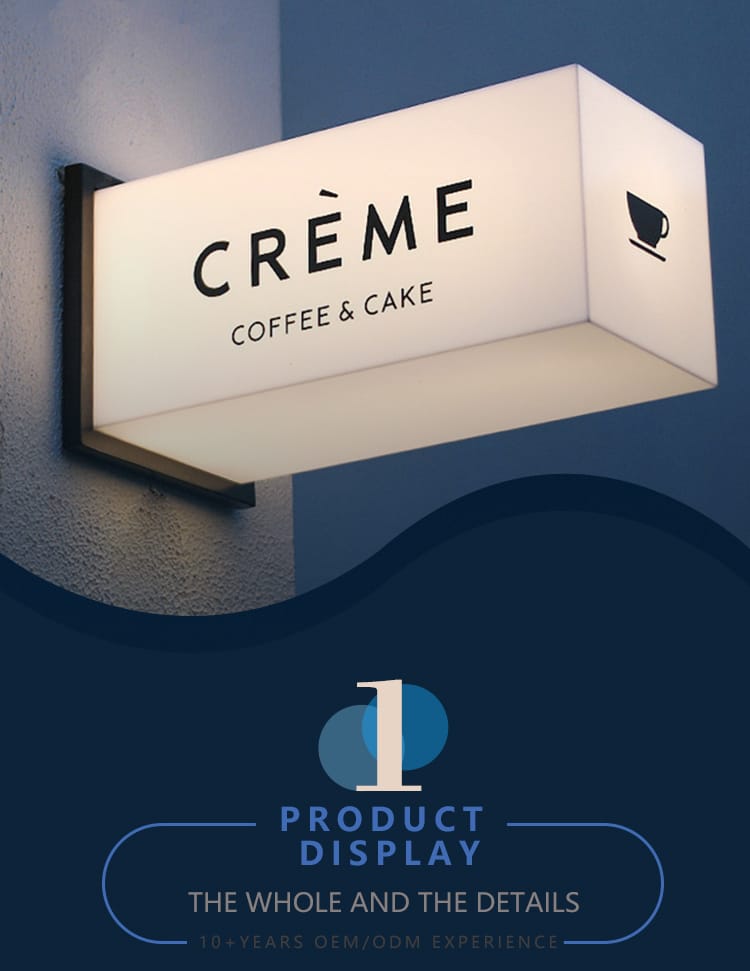
11pm and I'm still thinking about the $80,000 office signage order that went sideways because someone specified 3mm acrylic for a 9-foot wayfinding sign. That face sagged like a wet newspaper within six months. Don't be that guy.
I've burned my hands on hot acrylic, argued with suppliers about LED quality, and watched contractors lose their shirts on office projects. This isn't a blog post. Consider this the conversation I'd have with you over a beer after a long shift. Pay attention.
Office signage isn't just a logo on the wall. Think room numbers, directional signs, ADA door plates, lobby branding, and the occasional exterior building ID. Each one has a specific job.
If you're ordering front-lit channel letters for a storefront, you're buying the workhorse. Factory price per letter runs $20-80. Have a domestic shop install them? $200-700 per letter. That's the single biggest cost gap in the industry, and it's why importers exist.
Here's what nobody tells you: lobby signs don't need outdoor-rated everything. A 2mm acrylic face cuts 90% light output. A 3mm face cuts 92%. Your customer won't notice that 2% but they will notice the 40% cost bump if you over-spec UV-resistant acrylic from Mitsubishi for an interior sign that never sees sunlight. Interior acrylic LED letters are fine with domestic material. Save the money.
Door signs and room identifiers are the quiet profit center. A stainless steel non-lit room number costs $15-40 from the factory. Mark it up, bundle it with installation, and you've got a tidy margin. Just don't cheap out on the mounting hardware—I've seen adhesive tape fail on textured drywall in less than a month.
Look, ADA compliance isn't a suggestion—it's federal law in the US. Tactile letters, Grade 2 Braille, non-glare finish, mounting heights between 48 and 60 inches. Get any of those wrong and the inspector will fail your entire project, not just the sign.
The ugly truth is most sign shops don't stock ADA-compliant materials. They fake it with laser-engraved acrylic that looks right but lacks the proper raised letter profile. Then they wonder why they're redoing 120 door signs at their own cost.
Here's what nobody tells you: CE marking costs 20,000-50,000 RMB. Most factories will say they have it. Ask to see the certificate with today's date. Watch them sweat. Same goes for UL 48—that certification runs $4,000-15,000 and takes 4-9 months with quarterly audits. If a supplier claims they have UL 48 but can't produce the file number, walk away.
For interior office signs, UL listing isn't required in most jurisdictions. NEC Article 600 covers electric signs, but if your sign is low-voltage LED and plugged into a standard outlet, you're often exempt. Check local amendments before you spend $8,000 on unnecessary certification.
Here's where I see rookies make the most expensive mistakes. They spec materials based on what looks cool, not what survives.
Stainless steel 304 is the default for a reason. 18% chromium, 8% nickel, 10+ years outdoor life. Rust-proof in normal conditions. If you're on the coast or near industrial exhaust, step up to 316 stainless—it has 2-3% molybdenum and costs 20-30% more, but it buys you 15+ years instead of 3. For a strip mall in Ohio, 304 is fine. For Miami Beach, pay for 316 or you're replacing letters in three years.
If you want stainless steel letters, don't settle for domestic recycled stock. Ask for the mill certificate. I've seen Chinese fabricators use 201 grade and call it 304. A magnet test tells you nothing—both are non-magnetic. You need a chemical analysis or at least a reputable supplier who stands behind the grade.
Aluminum is the underrated choice for interior wayfinding. It weighs one-third of steel, lasts 8-12 years outdoors, and anodized finishes hold up better than powder coat on high-touch surfaces. Factory price per aluminum letter runs $10-25. For a 200-room office tower, that's real money saved without sacrificing durability.
Acrylic is fine—if you use the right thickness. Under 2.5 meters, 3mm works. Over that, go 5mm or the face will bow. UV-resistant acrylic from Mitsubishi or Degussa lasts 5-8 years outdoors. Domestic acrylic starts yellowing in 12-18 months. For interior signs, domestic is fine. For exterior, pay for the good stuff.
A proper wayfinding system is more than a bunch of arrows. Think of it as a logic tree that anticipates where people get lost and gives them the next sign before they have to ask.
Look, I've walked through office buildings where the room numbers jump from 210 to 245 because someone thought it looked cool. That's not wayfinding, that's a prank. Number sequentially. Use consistent terminology. Put directional signs at every decision point, not just at the elevator bank.
Total installed cost per room for ADA-compliant office signage—tactile letters, Braille, mounting hardware, installation labor—is where most quotes go vague. Distributors love to quote product-only prices and then hit you with $85/hour install labor plus travel time. Get an itemized quote. Product is cheap; labor and project management are where you make or lose margin.
I've seen this go wrong: a client ordered 80 wayfinding signs from three different vendors because they were chasing the lowest unit price. The finishes didn't match, the mounting heights were inconsistent, and the whole project looked like a garage sale. One supplier, one material spec, one finish. That's how you get a system that looks professional.
Here's the math nobody wants to talk about. A factory in China sells a front-lit channel letter for $20-80. That same letter, imported and installed by a US shop, goes for $200-700. The product cost is maybe 15-20% of the installed price. The rest is labor, overhead, and markup.
Factory-direct sourcing saves 50-65% on product. I've watched sign shops pay $800 for a front-lit letter from a domestic fabricator. Same 304 stainless, same Samsung LEDs. We ship that letter for $120. The only difference is the middleman.
Shipping from China isn't free, and anyone who tells you it's simple is lying. Express takes about 5-15 days and costs $30-100 for small orders. Air freight runs about 10 days at $4-12 per kilogram. Sea freight takes about 65 days at $80-200 per cubic meter LCL, or $1,200-3,000 for a full container. Then you've got US Section 301 tariffs of roughly 30% on top. Do the math before you quote.
The ugly truth is many importers quote sea freight and forget to mention the tariff, then act surprised when customs holds the shipment. Budget 35% over product cost for landed cost, not 10%.
Hybrid work changed office signage. A static room sign that says "Conference Room B" is useless when the room gets booked, released, and rebooked five times a day. Enter smart signage.
When you look at IoT smart signs, you're buying an LED display or e-ink panel that syncs with your calendar system. Room availability, occupant name, meeting duration—all updated in real time. Not cheap, but for a 50-room office with hot desking, it pays for itself in reduced booking conflicts.
LED quality matters here. SMD 2835 modules run 100-150 lumens per watt. Good modules from Samsung, Osram, or Blueview last 5+ years. Cheap modules die in 12-18 months, and you'll be swapping them out on a ladder while the office manager glares at you. Check the solder joints—dull gray means lead-free solder done wrong. Shiny silver is what you want.
Don't over-spec RGB for office signage. RGB looks cool in a lobby, but for room signs, a single color at 4000-5000K neutral white is easier to read and less likely to trigger a migraine. Keep the light show for retail.
Installation is where good signs go to die. I've seen perfectly good channel letters destroyed by a contractor who used drywall anchors on a masonry wall. Read the substrate spec. Use the right fasteners. Seal every penetration with neutral silicone—acidic silicone eats acrylic and corrodes metal.
Before shipping, a factory should run an 8-12 hour aging test on every LED sign and do a 100% QC inspection. That catches the early failures that would otherwise show up on your customer's wall. Export packaging should be foam, then carton, then plywood crate. If your supplier wraps a sign in bubble wrap and calls it good, find a new supplier.
Here's what nobody tells you: LCL sea freight means your crate passes through 6-8 hands between our dock and yours. Every touch is a chance for damage. That's not in the brochure. If you're shipping expensive signage, pay for the plywood crate and mark it "fragile" in three languages.
Maintenance planning is simple: schedule a cleaning every six months, check for loose connections, and replace any LED module that flickers. A 2-year LED warranty and 1-year power supply warranty are standard. If a factory offers less, walk. If they offer more, ask what's the catch.
Look, I've been doing this since 2010. Office signage isn't rocket science, but it rewards people who sweat the details. Get the compliance right, pick materials that match the environment, source smart, and install like you mean it. Then go home and sleep.
Do I need UL listed signs for interior office use?
No, not in most US jurisdictions. NEC Article 600 covers electric signs, but low-voltage LED signs plugged into a standard outlet are usually exempt. Check your local amendments. Don't pay $8,000 for a UL listing you don't need.
What's the minimum order quantity?
One piece. Aochuang Sign has an MOQ of 1. If a factory tells you the MOQ is 50, they're either trying to sell you stock or they don't want your business. Run.
How long does shipping from China take?
Express: about 5-15 days. Air freight: about 10 days. Sea freight: about 65 days. Add 3-5 days for customs. If you need it next week, pay for express and stop complaining about the cost.
Can I get ADA compliant signs from China?
Yes, but you need to specify Grade 2 Braille, tactile letters with 1/32" raised profile, and non-glare finish. Don't assume the factory knows US ADA requirements. Send them the spec sheet and have them confirm in writing before production.

Real photo from our production floor — every sign we ship is made here.
Products mentioned or relevant to this topic — factory-direct, custom built.
From $24/letter · MOQ 1 piece · Flexible lead time · CE & UL certified · ships to 20+ countries
Custom sizes, colors, and finishes. Get a factory price in 24 hours.
Get a Free Quote Copy EmailWhatsApp +86 13865703472 · business@aochuangsign.cn